
How Are Air Compressors Rated?
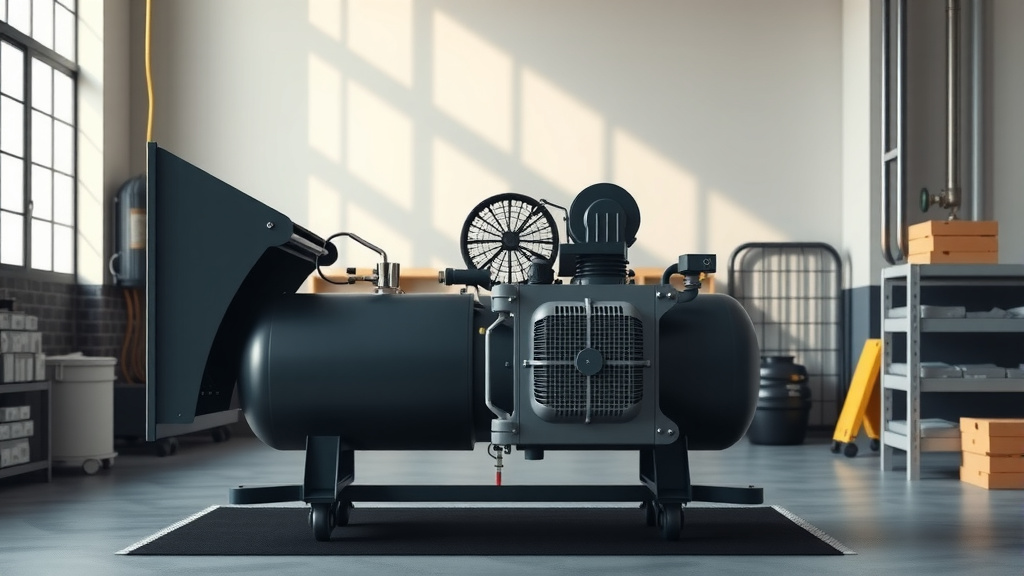
Air compressors are primarily rated by their Cubic Feet per Minute (CFM) output, which measures airflow, and Pounds per Square Inch (PSI), indicating pressure.
Understanding these crucial air compressor ratings is key to knowing how a unit performs, alongside its horsepower (HP) and tank size.
Before diving deep, here’s a quick rundown to get you started:
- Understand key metrics like CFM, PSI, and HP to match compressor power.
- Always compare the compressor’s output to your air tools’ requirements.
- Tank size affects how long you can use air, not the compressor’s raw power.
- Look at duty cycle if you plan on heavy, continuous operation.
- It’s smart to pick a compressor that slightly exceeds your minimum needs.
How Are Air Compressors Rated?
Air compressors are rated using specific metrics like CFM, PSI, and horsepower to help you match them to your job needs.
These ratings tell you about the compressor’s power, speed, and how much air it can store for your projects.
Understanding CFM: Your Airflow Lifeline
CFM stands for Cubic Feet per Minute. This rating shows you how much air an air compressor can deliver per minute.
Think of it like the flow rate of water from a faucet. A higher CFM means more air, faster, for your tools.
Many air tools, like sanders or grinders, have specific CFM requirements at certain PSI levels. Matching these is vital (Compressed Air & Gas Institute).
Decoding PSI: The Power of Pressure
PSI means Pounds per Square Inch. This rating indicates the maximum pressure the compressor can build up.
It’s like the force behind the water from that faucet. Higher PSI lets you use tools needing more pressure, such as impact wrenches.
Most common air tools operate between 90 and 100 PSI. Your compressor needs to meet or exceed this for proper function.
Working PSI vs. Max PSI
You might see both a “maximum PSI” and a “working PSI” listed for a compressor.
Maximum PSI is the highest pressure the tank can hold. Working PSI is the pressure available consistently to your tools.
Always focus on the working PSI to ensure your tools get the air pressure they need.
Horsepower (HP): The Engine’s Strength
Horsepower, or HP, relates to the power of the compressor’s motor or engine.
While often seen as a primary rating, HP doesn’t directly tell you the air delivery.
We’ve found that higher HP generally suggests a more powerful motor capable of producing more CFM and PSI.
However, focusing solely on HP without considering CFM and PSI can be misleading, experts often advise.
Tank Size: Storage, Not Power
The tank size, measured in gallons, indicates how much compressed air the unit can store.
A larger tank means the compressor runs less frequently, as it holds more air for tasks (many technical guides point this out).
It doesn’t make the compressor more powerful, but it does allow for longer continuous use of air tools before the motor kicks on again.
Why Tank Size Matters for Your Projects
For quick jobs like inflating tires, a smaller tank is fine. For continuous painting or sanding, a larger tank is helpful.
Think of it like a gas tank in your car. A bigger tank doesn’t make the engine stronger, but you can drive longer between fill-ups.
Duty Cycle: Continuous Workability
Duty cycle is a less common but important rating, especially for industrial or heavy-use compressors.
It’s expressed as a percentage, indicating how long the compressor can run continuously within a specific time frame.
For example, a 50% duty cycle means it can run for 30 minutes in an hour before needing to cool down.
Ignoring duty cycle with continuous tasks can overheat the motor and shorten the compressor’s life.
Why Do These Ratings Matter for You?
Choosing the right air compressor depends entirely on what you plan to do with it.
A simple tire inflator won’t power a heavy-duty impact wrench, and a large industrial unit is overkill for small DIY projects.
Matching your compressor’s ratings to your tools’ needs is like getting the right size shoe; it makes everything more comfortable and efficient.
Matching Your Tools to Your Compressor
Every air tool, from nail guns to paint sprayers, will list its required CFM and PSI.
We often recommend adding about 20-30% to the tool’s CFM requirement as a buffer.
This buffer ensures the compressor doesn’t constantly run at its absolute maximum, extending its lifespan.
| Air Compressor Metric | What It Measures | Why It’s Important |
|---|---|---|
| CFM (Cubic Feet/Minute) | Volume of air delivered | Powers tools requiring constant airflow (sanders, grinders). |
| PSI (Pounds/Sq Inch) | Air pressure generated | Drives tools needing force (impact wrenches, nail guns). |
| HP (Horsepower) | Motor/Engine power | Indicates the unit’s overall capability to produce air. |
| Tank Size (Gallons) | Air storage capacity | Allows longer tool use without the motor restarting often. |
| Duty Cycle (%) | Continuous run time | Crucial for heavy industrial or extended tasks to prevent overheating. |
Considering Your Power Source
Air compressors come in electric and gas-powered versions.
Electric models are often quieter and cleaner, perfect for indoor use.
Gas-powered compressors offer portability and more power, ideal for outdoor or remote jobs (many professional users confirm this).
Portable vs. Stationary Units
Do you need to move your compressor around? Then a portable model is your friend.
For dedicated shop use, a stationary unit might offer more power and capacity without moving it.
Think about where you’ll be using it most before making your decision.
Important Checklist Before Buying
Here’s a quick checklist to help you choose wisely:
- Check the CFM requirements of your most demanding tool.
- Verify the PSI needs for all your intended applications.
- Consider the tank size based on how long you need continuous air.
- Determine if a high duty cycle is important for your tasks.
- Look at the power source (electric or gas) for your work environment.
Conclusion
Understanding how air compressors are rated isn’t just about reading numbers; it’s about making an informed choice for your projects.
By focusing on CFM, PSI, HP, tank size, and duty cycle, you can select a compressor that not only meets your needs but also works efficiently and lasts longer.
Remember, a well-matched compressor makes your work easier, more effective, and a lot more fun. Choose wisely, and enjoy the power of compressed air!
How do I know what CFM my air tools need?
Most air tools will have their required CFM (Cubic Feet per Minute) listed directly on the tool itself, in the user manual, or on the manufacturer’s website. You’ll usually see it specified at a particular PSI, like “4 CFM at 90 PSI.” Always find the CFM requirement for your most air-intensive tool to size your compressor correctly.
Does a larger air compressor tank mean more power?
No, a larger air compressor tank does not mean more power. Tank size, measured in gallons, determines how much compressed air the unit can store. A bigger tank allows for longer continuous tool use before the compressor’s motor needs to cycle on again, providing more reserve air, but it doesn’t increase the actual CFM or PSI output capabilities of the pump itself.
What is the difference between maximum PSI and working PSI?
Maximum PSI refers to the highest pressure the air compressor’s tank can safely hold. Working PSI, also known as operating PSI, is the sustained pressure that the compressor can consistently deliver to your air tools after accounting for pressure drops in the lines. When evaluating a compressor for your tools, always prioritize its working PSI.
Is horsepower (HP) the most important rating for an air compressor?
While horsepower (HP) indicates the power of the compressor’s motor, it is not the most important rating on its own. Experts agree that CFM (airflow) and PSI (pressure) are more critical as they directly relate to how effectively a compressor can power your air tools. HP is a contributing factor, but CFM and PSI tell you the actual performance.
Should I buy an air compressor with higher ratings than my tools need?
Many experts and guidelines suggest buying an air compressor with slightly higher CFM and PSI ratings than your tools strictly require. This buffer helps the compressor run more efficiently, cycle less frequently, and often extends its lifespan. Aim for about 20-30% more CFM than your most demanding tool to avoid constantly running the compressor at its limit.
