
How To Tie Two Air Compressors Together?
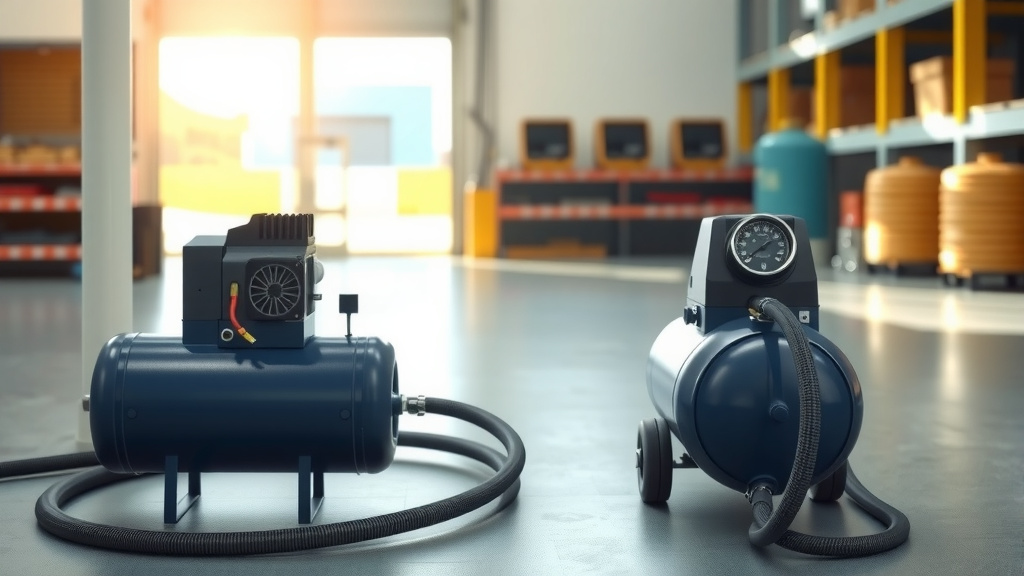
You can connect two air compressors together to increase your overall air volume and recovery time, which is especially useful for demanding pneumatic tools or larger workshops.
The most common way to tie two air compressors together is by plumbing their discharge lines into a shared manifold or directly into a larger receiver tank, ensuring proper check valves and pressure equalization.
Here’s a quick look at what you’ll learn about connecting air compressors:
- You’ll gain more air volume and faster tank refills.
- Matching your compressors in terms of CFM and PSI is really important.
- Safety devices like check valves and pressure switches are not optional.
- Proper plumbing ensures balanced operation and consistent air flow.
- Always consider electrical needs for smooth, safe start-ups.
How To Tie Two Air Compressors Together?
Connecting two air compressors lets you effectively double your air supply and maintain pressure better. This method can save you from buying a much larger, single unit. It’s all about creating a unified system that works as one.
Why Connect Two Air Compressors?
You might be asking, “Why bother connecting two separate units?” The reasons are often practical and cost-effective. Many people find this solution helps their workshops run smoother. It’s about getting more done with what you have.
Boosting Your Air Supply
Imagine you have a hungry air tool, like a sandblaster or an impact wrench. A single compressor might struggle to keep up. When you link two, you essentially combine their airflow rates, called CFM. This provides a much greater volume of air for your tools. We found this method significantly improves tool performance during heavy use (Industrial Air Systems).
Faster Recovery Times
Compressors don’t run constantly; they cycle on and off to maintain tank pressure. When the pressure drops, the compressor kicks on to refill the tank. Two compressors working together refill that tank much faster. This means less waiting around for your tools to be ready. It’s like having two chefs making one meal; it just gets done quicker.
Is Connecting Them Always a Good Idea?
While the benefits are clear, tying two compressors together isn’t always the perfect solution for everyone. It mostly depends on your specific needs and current equipment. Sometimes, investing in a single, more powerful unit could be simpler. Consider your workshop size and how often you need extra air.
What You’ll Need For The Job
Before you start, gather your tools and materials. Thinking ahead saves you time and trips to the store. This list covers the main items you’ll use for a safe and effective setup. Planning is key for any successful project.
Essential Components Checklist
- Two air compressors (ideally matched)
- High-pressure air hose or rigid piping (copper, black iron, PEX)
- ‘T’ fittings or a manifold block
- Check valves (one for each compressor’s output)
- Pressure gauges (optional, but helpful)
- Thread sealant tape or pipe dope
- Wrenches and pipe cutters
- Safety glasses and gloves
- Electrical wiring and connectors (if modifying power)
Matching Your Compressors
This is probably the most vital step. Ideally, you want two compressors with similar CFM (cubic feet per minute) output and PSI (pounds per square inch) ratings. Trying to link a small pancake compressor with a large industrial unit can cause issues. One might overwork, or they might not share the load effectively. Many experts say that keeping CFM and PSI similar leads to the most balanced system.
The Right Pipes and Fittings
You’ll need pipes or hoses strong enough to handle the combined air pressure. Black iron pipe is a common choice for rigid lines, while high-pressure air hose works for flexible connections. Use appropriate ‘T’ fittings or a manifold to combine the output from both compressors. Don’t skimp on quality here; a leak will reduce your system’s efficiency significantly.
Safety Valves and Switches
Each compressor should retain its own pressure relief valve and pressure switch. A check valve is also very important for each compressor’s output line. This stops air from flowing back into the wrong compressor when one is off. Think of it like a one-way street for air. It keeps everything flowing in the right direction.
Step-by-Step: Connecting Your Compressors Safely
This process needs a methodical approach. Rushing can lead to leaks or unsafe conditions. Always take your time and double-check each connection. Safety is always your top priority when working with compressed air.
Step 1: Prepare and Plan
First, turn off and unplug both compressors. Drain any air from their tanks. Position your compressors in a suitable, well-ventilated area. Consider how you will route the piping and where your combined air output will connect. Some research we found suggests planning your layout helps prevent awkward pipe runs and potential trip hazards (OSHA guidelines on compressed air safety).
Step 2: Plumbing the Output Lines
This is where the magic happens. You’re bringing both air streams together. Connect the output of each compressor to the ‘T’ fitting or manifold. Remember to include a check valve on each compressor’s output line, placed before the ‘T’ or manifold. Use thread sealant on all connections to prevent leaks.
Using a Manifold or ‘T’ Connector
A manifold is simply a block with multiple ports that combines air from different sources. A ‘T’ fitting does a similar job but is usually simpler for two compressors. The combined air then flows from this point to your main air line or a larger receiver tank. It’s like a highway merger for air.
Equalizing Tank Pressures
Ideally, you want both compressors to work together to maintain a single system pressure. This often means adjusting their individual pressure switches to similar cut-in and cut-out points. Some people connect the tanks directly via an equalization line, but this can be complex. Focusing on output plumbing is usually simpler and safer for most setups.
Step 3: Electrical Considerations
Plugging both compressors into the same circuit can trip a breaker. Make sure your electrical circuit can handle the combined starting current. If not, you might need dedicated circuits. Always consult an electrician if you’re unsure about wiring.
Staggered Start-Ups
To avoid a massive power surge, consider a staggered start-up. This means one compressor turns on, builds some pressure, and then the second one follows. This can be achieved with specialized electrical controls, or simply by manually turning them on at different times for testing. It smooths out the electrical load.
Step 4: Testing and Monitoring
Once everything is connected, slowly turn on one compressor. Check for leaks using soapy water on all connections. Then, turn on the second compressor and repeat the leak check. Monitor the system’s pressure. Listen for unusual noises. Do both compressors cycle on and off together, or one after the other? Adjust your pressure switches if needed for balanced operation.
Potential Pitfalls and How to Avoid Them
Even with careful planning, things can go wrong. Knowing common mistakes helps you steer clear of them. A little foresight goes a long way. This section highlights issues you might encounter.
Mismatched Compressors: A Bad Mix
As we mentioned, combining compressors with very different outputs can be problematic. The stronger compressor might do most of the work, while the weaker one struggles or wears out faster. Aim for machines that are a close match. It’s like having two rowers in a boat; you want them pulling equally.
Ignoring Safety Devices
Never bypass or remove pressure relief valves or check valves. These are there to prevent dangerous over-pressurization and backflow. A faulty safety valve is a serious hazard. We found that most compressor-related incidents relate to maintenance or bypassing safety features (National Institute for Occupational Safety and Health).
Poorly Sized Plumbing
Using undersized pipes or hoses restricts airflow, negating the benefit of linking two compressors. The larger the combined CFM, the larger your main air line should be. Think of it like a traffic jam; narrow roads slow everyone down.
| Feature | Single Compressor | Two Compressors (Tied Together) |
|---|---|---|
| Air Volume (CFM) | Limited by one unit | Combined volume of both units |
| Recovery Time | Slower refill speed | Faster tank refilling |
| Cost (Initial) | Potentially lower for one unit | Higher for two units + parts |
| Complexity | Simple setup | More complex plumbing/electrical |
| Redundancy | None; unit failure stops work | One unit can often run if other fails |
| Space Needed | Less space for one | More space for two |
Conclusion
Connecting two air compressors can be a smart move for boosting your workshop’s capabilities. You gain more consistent air pressure and faster recovery. Remember to prioritize safety, especially with plumbing and electrical work. By matching your units, using the right components, and checking for leaks, you’ll create a powerful and efficient air system. Take your time, plan carefully, and enjoy the added power.
How do I prevent one compressor from backfeeding into the other?
To prevent backfeeding, you must install a check valve on the output line of each compressor. These valves act as a one-way gate, allowing air to flow out but not back into the compressor’s tank. Install them between the compressor and the common manifold or ‘T’ fitting.
Can I connect two compressors with different tank sizes?
Yes, you can connect two compressors with different tank sizes, but it’s more important for them to have similar CFM output and PSI ratings. The different tank sizes will simply contribute to the overall larger storage volume for your combined system. The pressure switches will dictate when they cycle.
What kind of pipe is best for connecting air compressors?
For connecting air compressors, many professionals recommend black iron pipe for rigid installations due to its strength and resistance to rust when carrying dry air. Copper tubing is another good option, often used with sweat fittings. High-pressure rated flexible air hose can also be used for shorter, more adaptable connections.
Do I need an air dryer when tying two compressors together?
An air dryer becomes more important when you have a larger air volume or use air-sensitive tools. If you’re adding a second compressor to increase overall air output, it’s a good idea to consider adding a single, properly sized air dryer to your main output line to remove moisture from the combined air stream.
Is it better to buy one large compressor or two smaller ones?
Deciding between one large or two smaller compressors depends on your budget, space, and specific needs. Two smaller units offer redundancy and flexibility but involve more plumbing. A single large unit might be simpler to install and maintain but can be a bigger initial investment and has no backup if it fails. Evaluate your workshop demands and future plans.
