Brad Nailer vs Nail Gun: What Is the Difference? (November 2026)
A brad nailer is a type of nail gun made for thin finish work, not a separate category of tool opposed to all nail guns. In a nail gun vs brad nailer choice, pick a brad nailer for trim and molding, and a larger nail gun for framing, fencing or construction.
On this page (12 sections)
- Nail gun vs brad nailer: the quick verdict
- The two brad nailers side by side
- Where brad nailers fit among nail gun types
- Power source: battery, air or manual
- DEWALT DCN680B: best for cordless trim work
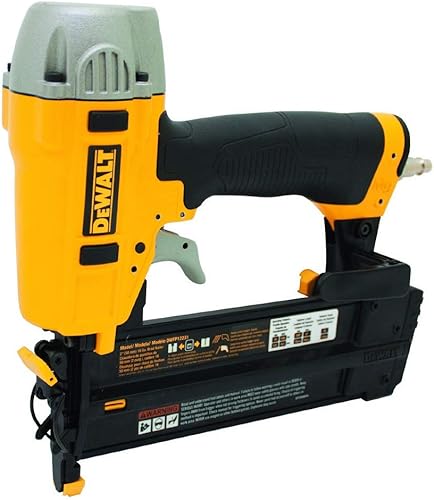
- DEWALT Brad Nailer Kit: best for pneumatic shop use
- Fastener size decides the job
- Staple guns vs brad nailers
- Accuracy features that matter on trim
- Setup, safety and care habits
- Who should buy which tool
- Final verdict on nail gun vs brad nailer
A brad nailer is a nail gun for finish work, so the real choice is which nail gun type fits your job. In this nail gun vs brad nailer comparison, brad nailers drive thin 18 gauge nails for trim, while other nail guns drive thicker fasteners for structure.
The four tools here show the split clearly. Two DEWALT brad nailers drive 18 gauge nails to about 2 in, one cordless and one pneumatic.
Two staplers handle upholstery and crafts, one manual and one cordless.
Our score weighs specs, features and buyer feedback against what you're shopping for. We compared the fastener types, power sources and nail lengths so you can match the tool to the material.

Nail gun vs brad nailer: the quick verdict
Pick a brad nailer for trim and a different nail gun type for construction. A brad nailer is not weaker in general, it is simply built for thin finish fasteners.
The DEWALT DCN680B drives 18 gauge brad nails from 5/8 in to 2-1/8 in. The DEWALT pneumatic kit drives 18 gauge nails from 5/8 in to 2 in.
Both suit decorative molding, casing, kitchen crown and shoe molding.
If your job is framing, decking, fencing or roofing, neither brad nailer is the right tool. Those jobs need a nail gun type built for thicker nails.
Our nail gun guide maps the main types and where brad nailers fit.
The two brad nailers side by side
The cordless DEWALT wins on mobility and the pneumatic DEWALT wins on shop use. Both drive the same 18 gauge fastener family, so power source is the main difference.
The DEWALT DCN680B 20V MAX* XR® 18 GA is 100% battery powered. DEWALT says it removes the need for gas, a compressor and a hose.
Its brushless motor is meant to give longer runtime and better durability.
The DEWALT Brad Nailer Kit is air powered and weighs 2.65 pounds. It has a long life maintenance-free motor that DEWALT says helps keep staining off the work surface.
It also has a rear exhaust to keep contaminants away from the work.
| Feature | DEWALT DCN680B cordless | DEWALT pneumatic kit |
|---|---|---|
| Power | 20 volt battery | Air powered |
| Nail length | 5/8 in to 2-1/8 in | 5/8 in to 2 in |
| Weight | 1.8 kg | 2.65 lb |
| Depth adjustment | Tool-free | Tool-free with detents |
| Jam release | Tool-free | Tool-free |
| In the box | Tool only | Carrying case and manual |
Where brad nailers fit among nail gun types
Brad nailers sit at the finish end of the nail gun family, beside finish nailers and below framing nailers. Each type is shaped by the fastener it drives.
Framing nailers drive thick nails that hold studs and plates together. For connector-specific fasteners, see nail sizes for joist hangers.
Roofing nailers drive short, wide-head nails that hold shingles.
Finish nailers drive thinner nails for trim, and brad nailers are the thinnest common finish type.
That placement matters for the hold you get. An 18 gauge brad leaves a small hole and holds light trim well.
It will not give the same hold as a thicker finish nail or a framing nail in structural joints.
Think of the brad nailer as a trim specialist. If your list is baseboards, casing, crown and picture frames, it fits.
If your list includes sheathing, subfloor or deck boards, look at a larger nail gun type instead.
Power source: battery, air or manual
Choose the power source by where you work and what you already own. The tool you have to drag, charge or fuel will shape how often you use it.
The cordless DEWALT runs on a 20V MAX battery and is sold as tool only. That means you need a compatible battery and charger before the first job.
Once powered, it gives you the reach of a cordless tool without a hose.
The pneumatic DEWALT needs a compressor and hose. If you already own a suitable compressor, that is simple.
Our Best Air Compressor For Brad Nailer guide helps you match compressor size and pressure to a brad nailer.
The manual YEAHOME stapler needs no power source at all. You set power with a screw lever and squeeze the handle.
It suits short bursts of work rather than long runs of trim.
DEWALT DCN680B: best for cordless trim work
This is the pick for trim work away from a compressor. It drives 18 gauge brads from 5/8 in to 2-1/8 in, which covers molding, casing, crown and shoe molding.
Its micro nose is meant to improve your line of sight and nail placement. That helps when you are aligning trim on a wall and want to see the point of contact.
Tool-free depth adjustment helps you set nails to sit just below the surface.
A low nail lockout helps prevent dry firing and marks on the material. Tool-free jam release helps you clear a jam fast.
The selectable trigger lets you use sequential or contact actuation modes.
The LED lights help with workspace light and tool diagnostics. A stall release lever helps reset the driver blade after a stall.
The belt hook can go on the left or right side.
The trade-off is the box contents. This is tool only, so battery and charger are separate.
The long nail range also means you should match nail length to the trim thickness so the point does not break through the back.
DEWALT Brad Nailer Kit: best for pneumatic shop use
This is the pick if you already run pneumatic tools in a shop or garage. It drives 18 gauge nails from 5/8 in to 2 in for the same trim jobs as the cordless model.
Tool-free depth-of-drive adjustment has detents, so you can repeat a setting for a run of trim pieces. Tool-free jam release makes nail removal simple.
A removable non-marring nose tip helps protect soft woods and leaves storage on the tool for the tip.
The kit includes a carrying case and an owner's manual. An adjustable belt hook keeps the tool near you.
An integrated rubber grip improves comfort during longer runs.
DEWALT uses a sequential style trigger on this model. That suits careful placement on trim where you fire one nail at a time and check each one.
It is a more deliberate style than contact firing.
The trade-off is mobility. A hose ties you to the compressor, and you need a compressor that can keep up.
If you work mostly on site or on ladders, the cordless model is easier to move.
Fastener size decides the job
Fastener size matters more than the tool name. An 18 gauge brad is thin and short, so it holds light finish pieces without splitting them.
The two DEWALT brad nailers both use 18 gauge nails. The cordless model reaches 2-1/8 in and the pneumatic model reaches 2 in.
That extra 1/8 in is small, so base your choice on power source rather than that gap.
The YEAHOME manual stapler accepts D-shaped, U-shaped, T-shaped and pin staples. Staples spread the hold across two legs, which suits fabric, upholstery and thin materials.
It comes with 1000 of each staple type, for 4000 total.
The Bielmeier cordless tool uses T50 staples as its main fastener. It recommends 1/2 in T50 staples for upholstery, fabric, foam, canvas, cardboard and thin softwood.
Its 18 gauge brads go up to only 9/16 in for light trim and picture frames.
That short brad range is the key limit. It can pin a small frame or light detail, but it cannot anchor trim the way a 2 in brad can.
Treat it as a stapler first and a mini brad tool second.
Staple guns vs brad nailers
Staples win for fabric and upholstery, and brads win for trim. The fastener shape changes how the piece looks and how it holds.
A staple holds fabric down over a wide area and resists pulling through. That is why upholstery and craft work lean on staples.
A brad creates a small, neat hole that can be filled and painted on trim.
The YEAHOME Upholstery Staple Gun Heavy Duty has chrome steel construction and a power adjustment lever. You move the lever between low and high to match soft and hard materials.
Its bottom load design and steel magazine make loading quick.
The populo Bielmeier 2-in-1 Cordless T50 Staple Gun charges by Type-C in about 2 hours. It runs at up to 50 fasteners per minute and weighs 1.6 lb.
It includes 1200 T50 staples and 400 brad nails.
Neither stapler is built for hardwood, plywood, OSB, thick lumber or framing. The Bielmeier maker states that limit plainly.
Test on scrap first, since soft materials and thin softwood are its field.
Accuracy features that matter on trim
Depth control and nose design matter more on trim than top speed. A nail set too deep leaves a dent, and a nail left proud needs a second pass.
Both DEWALT brad nailers have tool-free depth adjustment. That lets you dial in countersinking for the trim and nail length in use.
Test on a scrap piece of the same material before you start on the finished piece.
The cordless DEWALT adds a micro nose and low nail lockout. The micro nose helps you see the nail point, and the lockout helps prevent dry firing marks.
The pneumatic DEWALT adds a non-marring nose tip for soft woods.
The Bielmeier tool needs the contact nose pressed flat at 90 degrees before you pull the trigger. That habit helps with both staples and its short brads.
Load the magazine from the bottom and use the specified T50 staple length.
For a larger project with several tools, our best nailer combo kit roundup shows how different nailer types pair up. A combo can cover trim plus a bigger nailing task in one set.
Setup, safety and care habits
Good setup takes a few minutes and prevents most bad results. Load the right fastener, set the depth on scrap, then start on the real piece.
Check the magazine for the correct fastener length before you load it. A brad that is too long can break through thin trim or the back of a frame.
A staple that is too short may not hold fabric with enough grip.
Wear eye protection and keep your hands clear of the firing area. Use the safety switch on the Bielmeier tool.
Keep the nose flat on the work piece so the fastener drives straight.
Set depth with the tool-free adjuster, then fire a test nail into scrap. Adjust until the head sits just below the surface on trim.
On fabric or foam, adjust power so staples hold without cutting the material.
Keep the magazine clean and store the tool dry. Clear jams with the tool-free release rather than forcing parts.
For pneumatic tools, follow your compressor maker's air and hose guidance, including the Best Air Compressor For Nail Gun notes on matching pressure and air volume.
Who should buy which tool
Match the tool to your main material and where you work. Trim, fabric and light repair each point to a different pick here.
Choose the DEWALT DCN680B if you install trim on site and want no hose. Choose the DEWALT pneumatic kit if you already have a compressor and work mostly in a shop.
Choose the YEAHOME manual stapler if you want a no-power tool for upholstery and crafts. Choose the Bielmeier cordless tool if you want a light stapler for décor and repair.
If you are deal hunting across types, our best nail gun on sale page tracks current offers. Price changes often, so check the exact model and fastener type before you buy.
If you lean toward VEVOR tools, our best vevor nail gun guide covers that brand's options. Compare fastener size first, since a VEVOR framing or finish tool may suit a different job than a brad nailer.
Final verdict on nail gun vs brad nailer
A brad nailer is the right nail gun for trim, and the wrong one for construction. That rule settles most of the nail gun vs brad nailer debate for home users.
Pick the DEWALT DCN680B for cordless trim work with 18 gauge brads to 2-1/8 in. Pick the DEWALT pneumatic kit for the same work when a compressor is already in your shop.
Pick a stapler when fabric, foam or upholstery is the main material.
Start with the fastener your job needs, then choose the power source you will actually use. Check fastener length and depth on scrap before the first finished piece, and you will get cleaner holes and stronger holds.
Frequently asked questions
Is a brad nailer the same as a nail gun?
Yes, a brad nailer is a type of nail gun. The term nail gun covers many types, including framing, roofing, finish and brad nailers.
A brad nailer is the smaller finish type that drives thin 18 gauge brads for trim and molding.
Which is better, a nail gun or a brad nailer?
Better depends on the fastener and the job. A brad nailer wins for trim, casing and crown molding because its thin brads leave small holes.
A larger nail gun wins for framing, sheathing and construction where thicker fasteners are needed.
Can a brad nailer replace a nail gun?
No, not for construction work. The brad nailers here drive 18 gauge nails up to about 2 in, which suits decorative molding and casing.
Framing, fencing and structural work need larger nail guns that drive thicker nails and longer fasteners.
Do I need a compressor for a brad nailer?
Only for a pneumatic model. The DEWALT pneumatic kit needs a compressor and hose, while the DEWALT cordless model runs on a 20V MAX battery.
A manual stapler and a 4V cordless stapler need no compressor at all.
Can a staple gun do the work of a brad nailer?
For upholstery, fabric and thin materials, yes. For trim and molding, no, because staples show in a different way and hold differently.
The YEAHOME manual tool and the Bielmeier cordless tool are built around staples, with the Bielmeier adding short brads for light details.


