
What Does Bar Mean On Air Compressor?
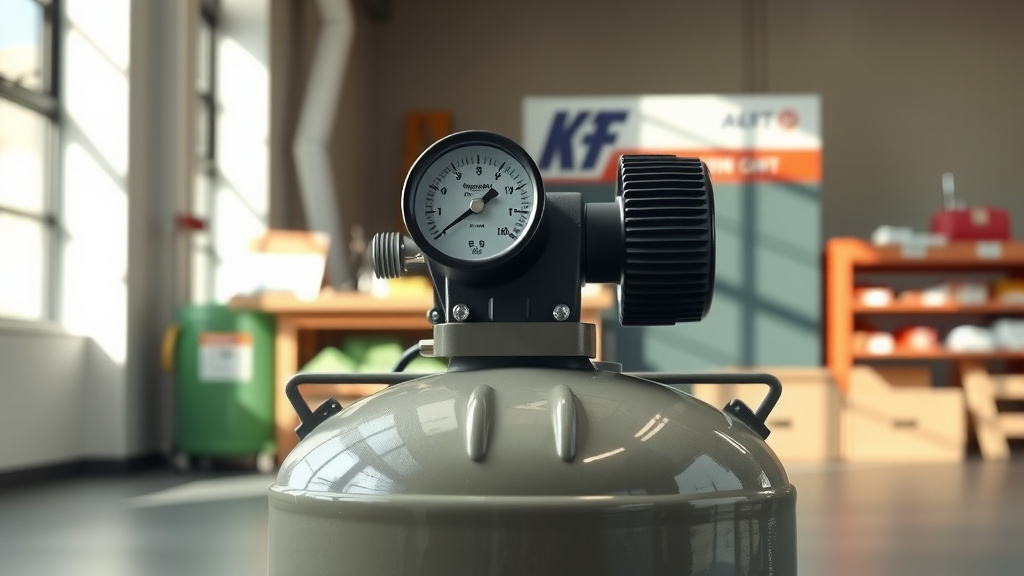
On an air compressor, BAR stands for Barometric Absolute Pressure, but in common usage for compressed air, it simply means “bar,” a metric unit of pressure. It helps you understand the force your compressor can deliver, much like PSI (pounds per square inch) in the imperial system.
Knowing what BAR means is crucial for safely and effectively operating your air compressor and matching it correctly with your pneumatic tools.
- Understanding BAR helps you choose the right air tools for your compressor.
- It tells you the maximum pressure your compressor can produce safely.
- BAR is a metric pressure measurement, similar to PSI in the imperial system.
- Using the correct BAR prevents tool damage and ensures efficient work.
- Always check your tool’s required pressure to avoid mistakes.
What Does Bar Mean On Air Compressor?
BAR on an air compressor refers to a unit of pressure measurement. It’s widely used in Europe and other metric countries. Think of it as a way to quantify the force of the air pushed out by your compressor.
Essentially, one bar is approximately equal to the atmospheric pressure at sea level. This makes it a very intuitive unit for many, as we often experience atmospheric pressure daily.
Why Understanding Compressor Pressure is Key
Imagine trying to inflate a car tire with a tiny bike pump. It just won’t work, right? The same goes for air tools. Each tool needs a specific amount of air pressure to function properly and safely.
Your air compressor’s BAR rating tells you its capability. Without this understanding, you could either underpower your tools or, even worse, damage them by over-pressurizing.
BAR Versus PSI: A Quick Comparison
You’ve probably heard of PSI (pounds per square inch) if you’re in North America. BAR is simply the metric equivalent. It’s like comparing meters to feet – both measure length, just with different units and scales.
For context, we found that 1 BAR is approximately equal to 14.5 PSI. This conversion is handy if you’re used to one system but encounter the other (research from various technical manuals confirms this).
Converting BAR to PSI (and back)
Converting between BAR and PSI is straightforward. If you know your compressor’s BAR rating, you can easily find its PSI equivalent. This helps when your tools list one unit and your compressor shows another.
You simply multiply the BAR value by 14.5 to get PSI. To go the other way, divide PSI by 14.5. Easy peasy!
| Pressure Unit | Approximate Value in PSI | Common Use |
|---|---|---|
| 1 BAR | 14.5 PSI | Metric regions, industrial, automotive |
| 1 PSI | 0.069 BAR | Imperial regions, general consumer |
Reading Your Air Compressor Gauge
Most air compressors have a pressure gauge that displays the current air pressure. If your compressor uses BAR, the needle will point to a number on the BAR scale. Sometimes, gauges will show both BAR and PSI.
It’s important to read the gauge carefully. Many experts say to ensure the compressor is running and building pressure. This gives you the most accurate live reading of its output (technical guidelines often suggest this).
Matching Tools to the Right BAR
Think of it like buying shoes. You wouldn’t buy a size 6 if you wear a size 9, right? Air tools are the same. Each tool, from a nail gun to an impact wrench, has a recommended operating pressure.
We found that most pneumatic tools specify their required pressure in their user manuals. Always check this before connecting. Using too little BAR means your tool won’t perform. Too much BAR can cause tool failure or damage.
Common BAR Ranges for Home Use
For typical home and DIY tasks, you generally won’t need extremely high BAR values. Many small tasks, like inflating tires or blowing dust, require relatively low pressure.
For example, a car tire might need around 2.0-2.5 BAR (30-36 PSI). A blow gun for cleaning might need 6-8 BAR. It really depends on the specific job at hand.
Safety First: Staying Within Pressure Limits
Safety is paramount when working with compressed air. Every air compressor has a maximum BAR rating. Exceeding this limit is dangerous and can lead to equipment failure or injury.
Always respect the manufacturer’s guidelines. Don’t try to push your compressor beyond what it’s designed for. This protects you, your tools, and the compressor itself. Many safety guidelines point to adherence to manufacturer specs as a primary rule (OSHA standards relate to this).
Maintenance and Your Compressor’s Pressure
A well-maintained air compressor generally holds and delivers pressure more consistently. Regular maintenance, such as checking for leaks or draining the tank, can affect your BAR output.
If your compressor struggles to reach its rated BAR, it might be a sign of a problem. Research often connects poor maintenance with reduced efficiency and pressure issues. A healthy compressor performs better!
When Your Compressor’s BAR is Off
What if your gauge isn’t showing the BAR you expect? Here’s a quick checklist:
- Check for air leaks: Listen for hissing sounds.
- Inspect air hoses: Look for cracks or loose connections.
- Examine fittings: Ensure all couplers are tight.
- Verify tool settings: Some tools have their own pressure regulators.
- Clean the air filter: A clogged filter can restrict airflow.
- Check the pressure switch: It might need adjustment or replacement.
Expert Tips for Pressure Management
We found that many seasoned pros offer similar advice: always start with a lower BAR and increase it only as needed. This prevents accidental over-pressurization of tools or workpieces.
Also, investing in a good inline pressure regulator for delicate tasks can make a huge difference. It gives you finer control over the output BAR to your specific tool.
When to Ask for Professional Help
If you’ve checked everything and your compressor still isn’t delivering the correct BAR, or if you hear unusual noises, it might be time to call in a professional. Some issues, like internal valve problems, are best left to experts.
Don’t try to tackle complex repairs yourself if you’re not experienced. It’s safer and often more cost-effective in the long run to get professional assistance for serious compressor malfunctions.
Conclusion
Understanding what BAR means on your air compressor is more than just knowing a measurement unit; it’s about operating your equipment safely, efficiently, and effectively. It allows you to confidently match your compressor to your tools, ensuring every project runs smoothly.
By paying attention to BAR ratings, performing regular maintenance, and knowing when to convert between BAR and PSI, you become a smarter, safer air compressor user. Always prioritize safety and enjoy the power your compressor provides!
What is a good BAR pressure for inflating car tires?
For most standard car tires, a good BAR pressure range is typically between 2.0 and 2.5 BAR, which translates to about 30-36 PSI. Always check your car’s specific recommended tire pressure, usually found on a sticker inside the driver’s door jamb or in the owner’s manual.
Can I use a tool that requires PSI with a BAR-only compressor?
Yes, you can absolutely use tools that list PSI requirements with a BAR-only compressor. You’ll just need to convert the PSI requirement to BAR. Simply divide the required PSI by 14.5 to get the equivalent BAR value, then adjust your compressor to that setting.
What happens if I set my air compressor BAR too high for a tool?
Setting your air compressor’s BAR too high for a tool can cause several problems. It might damage the tool internally, shorten its lifespan, or even cause it to rupture, leading to potential injury. It can also damage the material you’re working on, such as blowing through wood with a nail gun.
How does BAR relate to the compressor’s tank size?
BAR (pressure) is different from tank size (volume). A larger tank holds more compressed air at a given BAR, meaning the compressor doesn’t have to run as often to maintain pressure. A smaller tank will reach the desired BAR faster but run out of air quicker, requiring the compressor to cycle more frequently.
Should I adjust the BAR setting directly on the compressor or with an inline regulator?
For most tasks, you’ll set the main output BAR on the compressor itself. However, for more precise work or if different tools require varied pressures from the same compressor, an inline regulator at the tool’s connection point offers finer, more specific control over the BAR delivered to that particular tool.
