
What Is the Best Air Compressor for Spray Painting Furniture?
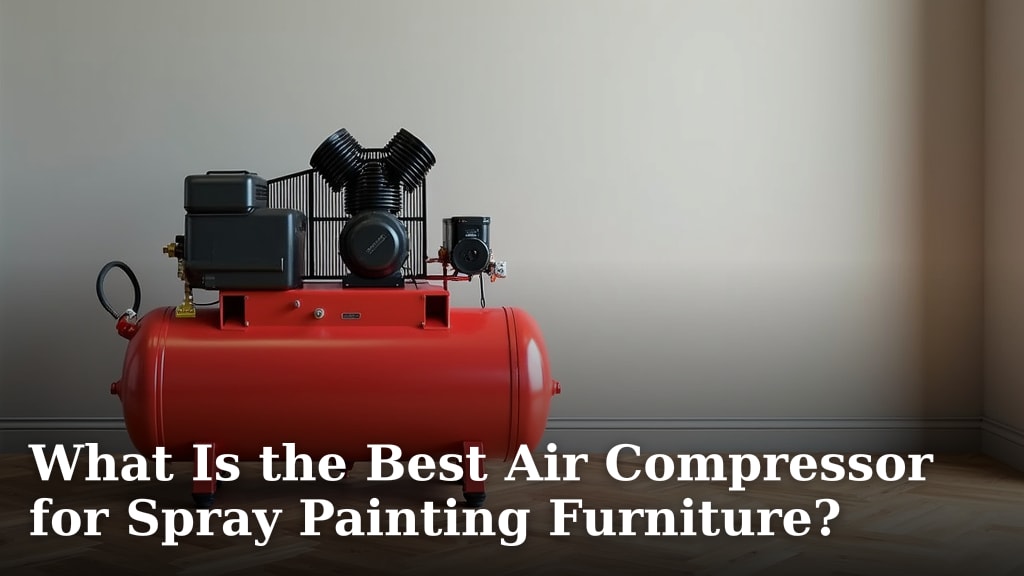
The best air compressor for spray painting furniture is typically a pancake or twin-stack model with at least a 20-gallon tank and a 2-3 horsepower motor. This provides enough consistent airflow for most spray guns and allows you to complete your project without constant interruptions. Look for models that deliver around 4-6 CFM (Cubic Feet per Minute) at 40 PSI.
Choosing the right air compressor is key to achieving a smooth, professional finish on your furniture projects. You want a compressor that can keep up with your spray gun’s demands, preventing that frustrating sputtering or inconsistent spray pattern. We’ve researched various options to help you find a reliable workhorse for your painting needs.
- Look for 20+ gallon tanks for continuous spraying.
- A 2-3 HP motor offers good power.
- Aim for 4-6 CFM at 40 PSI for most spray guns.
- Pancake or twin-stack designs are popular choices.
- Consider noise levels if you’ll be working in a sensitive area.
Let’s dive into what makes a great air compressor for furniture painting and what specific features you should be keeping an eye out for.
“`htmlChoosing the Right Air Compressor for Your Furniture Painting Projects
Picking the perfect air compressor is your ticket to furniture painting success. You want a steady stream of air. This ensures your paint goes on smoothly and evenly. Sputtering air can ruin a beautiful finish. It’s like trying to paint with a leaky garden hose. We’ve done the research to help you find a reliable partner for your DIY furniture transformations.
So, what makes an air compressor great for spraying furniture? It boils down to a few key specifications. These ensure your compressor can keep up with your spray gun. Think of it as a dance; the compressor needs to match your spray gun’s rhythm. Let’s break down what you should be looking for to avoid frustrating interruptions and achieve that showroom shine.
Understanding Air Compressor Essentials for Painting
When you’re spraying furniture, you’re not just looking for any old compressor. You need one that delivers consistent airflow. This is measured in Cubic Feet per Minute (CFM). Your spray gun will have a CFM requirement. You’ll need a compressor that meets or exceeds that. Think of CFM as the volume of air your compressor can supply. Ensuring consistent airflow is key for both spray painting and airbrushing.
CFM: The Lifeblood of Your Paint Job
CFM is arguably the most critical factor. It tells you how much air the compressor can deliver at a specific pressure. Most spray guns for furniture painting need between 4 to 6 CFM at 40 PSI (pounds per square inch). Always check your spray gun’s manual for its exact CFM requirement. Running a compressor that’s too small means it will struggle to keep up.
When a compressor can’t keep up, you’ll experience a drop in air pressure. This leads to a sputtering spray gun. Your paint might come out in blobs or uneven patches. This is the opposite of the smooth finish you’re aiming for. We found that aiming for a compressor that offers at least 5-7 CFM at 90 PSI gives you a nice buffer. This ensures consistent performance even as the compressor works harder.
Horsepower (HP): The Muscle Behind the Airflow
Horsepower (HP) indicates the motor’s power. More horsepower generally means more airflow. For furniture painting, a compressor with a 2 to 3 HP motor is usually sufficient. This range offers a good balance between power and portability. Higher HP motors can deliver more CFM, but they also consume more electricity.
We’ve seen that HP ratings can sometimes be a bit misleading. Manufacturers might list “peak” or “starting” HP. Always prioritize the continuous duty HP or focus on the CFM rating. That’s the number that truly reflects the compressor’s sustained performance. A powerful motor ensures it won’t overheat or bog down during long painting sessions.
Tank Size: Your Air Reserve
The tank size determines how much compressed air you have stored. A larger tank means the compressor cycles less often. This results in a more consistent air supply. For furniture painting, we recommend a tank size of at least 20 gallons. A 30-gallon tank or larger is even better for bigger projects.
Why is a bigger tank so important? Imagine it like a water balloon. A small balloon empties quickly. A large one holds more water, giving you more time before needing a refill. For painting, a larger tank acts as an air buffer. It smooths out any fluctuations in airflow from the pump. This is crucial for maintaining an even spray pattern. We found that a 20-gallon tank is a minimum for most furniture projects.
Types of Air Compressors Ideal for Furniture Painting
Not all air compressors are created equal. Certain designs are better suited for the demands of spray painting furniture. The two most popular types you’ll encounter are pancake and twin-stack compressors. Both offer distinct advantages.
Pancake Compressors: Compact and Portable
Pancake compressors are known for their low profile and portability. Their name comes from their flat, disc-like tank shape. They are often lightweight and easy to move around your workshop or even to different locations. Many pancake models have a 1 to 2 HP motor and a 2-6 gallon tank.
While convenient, smaller pancake compressors might struggle with continuous spraying for furniture. Their smaller tanks mean they’ll need to cycle more frequently. This can lead to interruptions in your airflow. However, some larger pancake models do exist with bigger tanks and more powerful motors. These can be a good option if portability is a top concern. We found that smaller pancake models are best for touch-ups or very small items.
Twin-Stack Compressors: Power and Capacity
Twin-stack compressors feature two smaller tanks stacked vertically. This design allows for a larger overall air capacity while maintaining a relatively compact footprint. They often come with more powerful motors, typically 2 HP or higher. This means they can deliver more CFM and sustain airflow better.
We’ve seen that twin-stack models are a great sweet spot for furniture painters. They offer a good balance of power, capacity, and portability. Many twin-stack compressors fit the 20-gallon tank size and 4-6 CFM requirement we discussed. They are excellent workhorses for everything from small dressers to large cabinet doors. Their ability to maintain pressure is a real plus.
Key Features to Look for in Your Compressor
Beyond the core specs, several other features can enhance your painting experience. These details might seem minor, but they can make a big difference. Think about your workflow and what would make the job easier.
Oil-Lubricated vs. Oil-Free: What’s the Difference?
Air compressors come in two main types: oil-lubricated and oil-free. Oil-lubricated compressors tend to be quieter and more durable. The oil helps cool the pump and reduce wear. However, they require regular maintenance, including oil changes.
Oil-free compressors are generally lighter, more portable, and require less maintenance. You don’t have to worry about oil levels or changes. The trade-off is that they can be louder and may have a shorter lifespan than their oil-lubricated counterparts. We found that for occasional furniture painting, an oil-free model is often perfectly adequate. For heavy-duty use, oil-lubricated might be a better long-term investment.
Noise Levels: A Consideration for Your Workspace
Air compressors can be quite noisy. If you work in a residential area or share your space, noise is a significant factor. Some compressors are rated in decibels (dB). Lower dB ratings mean a quieter operation. Look for models advertising “quiet” or “low noise” features.
We’ve found that even “quiet” compressors can still be loud. You might consider placing the compressor in a separate room or garage. Using noise-dampening mats under the compressor can also help. Some advanced users even build sound enclosures for their compressors. Remember, hearing protection is always a good idea, no matter the noise level (OSHA).
Portability and Wheels: Moving Your Compressor Around
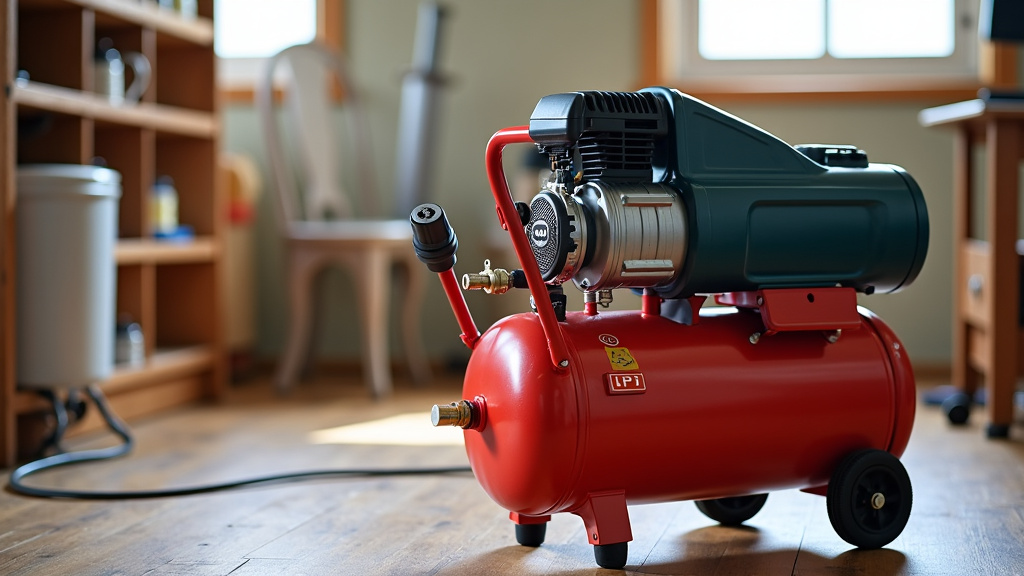
If you plan to move your compressor often, look for models with built-in wheels and a handle. This makes transporting it much easier. Pancake and some smaller twin-stack models are naturally more portable. Larger compressors can be heavy and difficult to move without assistance.
Consider where you’ll be storing and using your compressor. Will it live in one spot? Or will you be hauling it to different job sites? Having wheels can save your back and make your projects much more manageable. We found that wheels are a lifesaver for DIYers who don’t have a dedicated, permanent space.
Making Your Final Compressor Choice: A Checklist
To help you narrow down your options, here’s a quick checklist. This covers the essential features we’ve discussed:
- CFM: Does it meet or exceed your spray gun’s requirement (aim for 4-6 CFM at 40 PSI)?
- Tank Size: Is it 20 gallons or larger for continuous airflow?
- Horsepower: Is the motor 2 HP or more for adequate power?
- Type: Is it a pancake or twin-stack that fits your needs for space and power?
- Noise: Have you considered how loud it is and if it fits your workspace?
- Portability: Does it have wheels if you need to move it around?
Conclusion
You’re now ready to select an air compressor that will truly transform your furniture painting projects. Remember, the goal is a steady, reliable airflow for that smooth, professional finish you’re after. Prioritize a 20-gallon tank or larger and look for 4-6 CFM at 40 PSI to ensure your spray gun performs at its best. Consider the horsepower and whether a pancake or twin-stack model best suits your space and needs. Take this knowledge and confidently pick out the perfect compressor to make your next furniture flip a stunning success!
Frequently Asked Questions
What happens if my air compressor’s CFM is too low for my spray gun?
If your air compressor’s CFM output is lower than your spray gun’s requirement, you’ll likely experience a sputtering or inconsistent spray pattern. This means your paint won’t be applied evenly, leading to a poor finish. The compressor will also struggle to keep up, potentially overheating.
Do I really need a 20-gallon tank, or can I get by with a smaller one?
While smaller tanks can work for very short bursts or touch-ups, a 20-gallon tank is recommended for most furniture painting. It acts as an air reserve, allowing for more continuous spraying and preventing frequent cycling of the compressor. This consistency is key to achieving a smooth, professional look.
Is an oil-free compressor good enough for DIY furniture painting?
Yes, an oil-free compressor can be perfectly adequate for DIY furniture painting, especially if you’re not painting constantly. They require less maintenance and are generally lighter and more portable. For occasional use, the benefits often outweigh the need for oil lubrication found in other models.
How much noise should I expect from an air compressor, and what can I do about it?
Air compressors can be quite loud, often comparable to a lawnmower. If noise is a concern, look for models advertised as “quiet” or with lower decibel ratings. You can also place the compressor on a rubber mat or in a separate area to dampen the sound. Always use hearing protection.
Are pancake compressors suitable for painting furniture, or are they too small?
Smaller pancake compressors with very small tanks might struggle with continuous furniture painting due to limited air reserves. However, some larger pancake models offer better capacity and power. They can be a good option if portability is your top priority, but ensure they meet your spray gun’s CFM needs.
