
What Fittings Do I Need For Air Compressor?
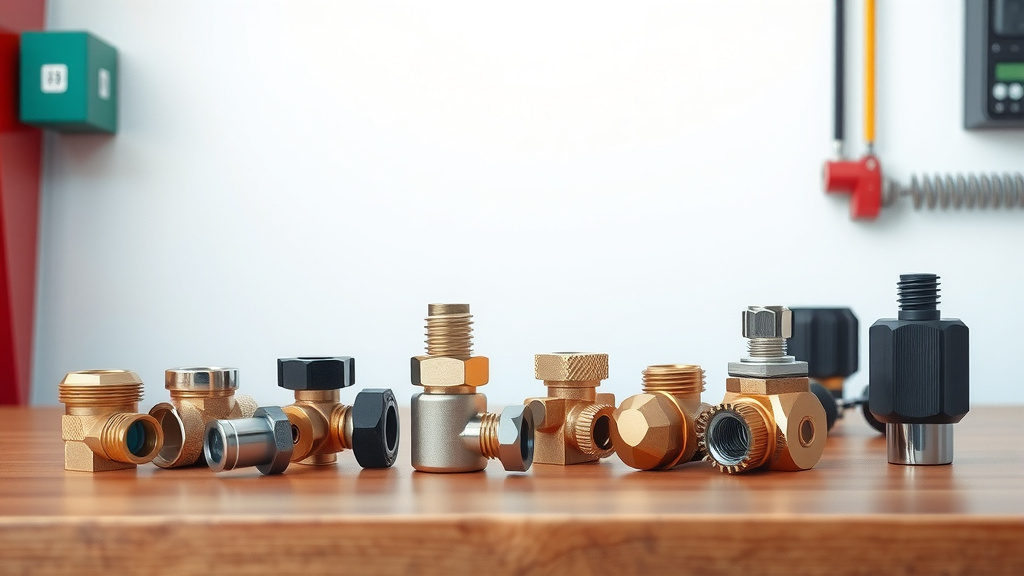
For your air compressor, you primarily need fittings that match your specific tools and the compressor’s outlet port, most commonly NPT (National Pipe Taper) or quick-connect couplers.
Selecting the correct air compressor fittings is essential for a leak-free system, optimal airflow, and safe, efficient operation of all your pneumatic equipment.
Here’s a quick rundown of what you’ll find in this guide:
- Discover the main types of air compressor fittings like NPT and quick-connect, and how to choose between them.
- Understand why fitting size is crucial for compatibility and airflow, covering common measurements.
- Learn about different materials such as brass and steel, and which is best for your specific use.
- Explore essential accessories like hoses, regulators, and filters to complete your air system.
- Get practical advice on installation and key safety considerations to keep everything running smoothly.
What Fittings Do I Need For Air Compressor?
You need fittings that create a secure, airtight connection between your air compressor, the air hose, and your pneumatic tools.
This ensures efficient power delivery and prevents costly air leaks, making your projects much easier.
Understanding the Basics of Air Compressor Fittings
Think of air compressor fittings as the connectors that allow everything to talk to each other.
Just like different plugs fit different outlets, various fittings connect your compressor to hoses and tools.
Matching them correctly is the first step to a functional air system.
The Most Common Fitting Types You’ll Encounter
When you start looking, you’ll mainly see a couple of fitting families.
Knowing their differences helps you pick the right one for your setup.
NPT (National Pipe Taper) Fittings: The Standard Thread
NPT fittings are incredibly common, especially in North America.
They have tapered threads that create a tight, mechanical seal when screwed together.
You’ll often see these for direct connections to your compressor’s tank or air lines.
Many experts advise using thread sealant tape (often called Teflon tape) for a truly leak-free connection (ASME).
Quick-Connect Couplers: Speed and Convenience
Quick-connect fittings are like snapping LEGOs together for your air tools.
They allow you to rapidly switch tools without unscrewing anything.
These consist of two parts: a coupler (often on the hose end) and a plug (on the tool end).
We found that there are several common styles like Industrial (or M-style), Automotive (or T-style), and Aro (or A-style).
It’s important that your coupler and plug are of the same style to connect properly.
Push-to-Connect Fittings: Simplicity for Smaller Lines
For smaller diameter tubing, especially in more permanent or lower-pressure setups, push-to-connect fittings are very handy.
You simply push the tubing into the fitting, and it creates a seal.
They are great for intricate air lines or automation systems where quick assembly is needed.
Choosing the Right Size: Why It Matters
Size absolutely matters in the world of air fittings.
An incorrectly sized fitting won’t just leak; it might not connect at all.
Or worse, it could restrict airflow and reduce your tool’s performance.
Matching Your Compressor’s Outlet Size
Your air compressor will have a specific outlet port size, typically 1/4-inch, 3/8-inch, or 1/2-inch NPT.
This is your starting point; all your main air lines and initial fittings should match this.
Trying to force mismatched sizes can damage threads and create persistent leaks.
Tool-Specific Fitting Requirements
Each pneumatic tool you own will also have an inlet port size.
While many hand tools use 1/4-inch NPT plugs, some larger tools might require 3/8-inch.
Always check your tool’s manual or specifications to ensure you grab the right size plugs.
Material Matters: Brass, Steel, or Aluminum?
The material of your fittings impacts their durability, resistance to corrosion, and even pressure rating.
It’s like choosing between a sturdy work boot and a light running shoe – both have their purpose.
When to Choose Brass Fittings
Brass fittings are popular for a good reason: they offer excellent corrosion resistance and are easy to work with.
They are generally suitable for a wide range of applications, especially in environments where moisture might be present.
Many homeowners find brass a reliable and cost-effective choice for general shop use.
The Strength of Steel Fittings
For heavy-duty applications or situations requiring maximum strength, steel fittings (often carbon steel or stainless steel) are the way to go.
They can withstand higher pressures and more physical abuse.
However, carbon steel can rust if not properly treated, while stainless steel offers superior corrosion resistance but comes at a higher cost.
Essential Air Compressor Accessories
Beyond the basic connectors, a few other items are crucial for a complete and efficient air system.
These are like the supporting cast that makes the main act shine.
Air Hoses: The Lifeline of Your System
Your air hose is the flexible conduit that carries compressed air from the tank to your tools.
Consider the length you need, the material (rubber, PVC, polyurethane), and its pressure rating.
A longer hose offers more reach, but may also cause a slight pressure drop.
Regulators and Filters: Protecting Your Tools
An air pressure regulator lets you adjust the output pressure to suit your tools.
Many tools need a specific pressure to work correctly and safely.
An air filter (or FRL unit, which includes a lubricator) removes moisture and debris from the air, extending the life of your tools.
Many tool manufacturers specify using a filtered and regulated air supply (Milwaukee Tool).
Here’s a quick overview of common fitting types:
| Fitting Type | Primary Use | Key Benefit |
|---|---|---|
| NPT (Threaded) | Permanent connections to tanks, pipes | Strong, leak-proof mechanical seal |
| Quick-Connect Coupler | Hose end, connects to plugs | Fast tool changes |
| Quick-Connect Plug | Tool end, connects to couplers | Enables quick tool swaps |
| Push-to-Connect | Smaller diameter tubing | Easy, tool-free assembly |
Installation Tips for a Leak-Free System
Getting your fittings installed correctly can save you a lot of headaches (and wasted air).
A small leak can make your compressor run constantly, shortening its life.
- Use Thread Sealant: For all NPT fittings, apply PTFE thread sealant tape or pipe dope. Wrap the tape clockwise, covering all threads.
- Hand-Tighten First: Start by hand-tightening fittings to prevent cross-threading.
- Wrench Only When Needed: Use a wrench for the final snugging, but don’t overtighten, especially with brass fittings.
- Check for Leaks: After assembly, spray soapy water on connections. Bubbles mean a leak you need to fix.
Safety First: What You Need to Know
Working with compressed air means working with stored energy.
Safety should always be your top priority, like wearing a seatbelt in a car.
Always ensure your fittings and hoses are rated for the maximum pressure of your air compressor.
Damaged or mismatched fittings can fail under pressure, causing injury or property damage.
Many guidelines emphasize wearing eye protection when using air tools (OSHA).
Troubleshooting Common Fitting Problems
Even with careful installation, problems can pop up.
Don’t worry; most common fitting issues have straightforward solutions.
If you notice a leak, first try tightening the fitting a quarter turn.
If that doesn’t work, disassemble, reapply thread sealant, and reassemble.
Sometimes, a faulty quick-connect coupler or plug needs replacement.
Inspect them for wear or damage if your tools aren’t staying connected.
Before you dive into your next project, take a moment to review this quick checklist:
- Are your fittings NPT or quick-connect, and do they match your needs?
- Have you confirmed the correct sizes for your compressor, hose, and tools?
- Is the fitting material (brass, steel) appropriate for your application and environment?
- Do you have essential accessories like a suitable air hose, regulator, and filter?
- Are you prepared to use thread sealant and check for leaks after installation?
- Are you wearing proper eye protection and following all safety guidelines?
Conclusion
Choosing the right air compressor fittings doesn’t have to be a guessing game. By understanding the common types, sizes, and materials, you can build a reliable and efficient air system.
Prioritize compatibility, ensure proper installation, and always keep safety in mind.
With the right connections, your air compressor will be a versatile powerhouse, ready for any task you throw its way.
What is the difference between NPT and quick-connect fittings?
NPT fittings use tapered threads that screw together to create a permanent, sealed connection, often requiring thread sealant. Quick-connect fittings, on the other hand, allow for fast, tool-free attachment and detachment of air hoses and tools, similar to a snap mechanism.
Can I mix different brands of quick-connect fittings?
You can mix brands of quick-connect fittings, but only if they are the same style (e.g., all Industrial/M-style, or all Automotive/T-style). Mixing different styles (e.g., an Industrial coupler with an Automotive plug) will not create a secure or functional connection.
How do I know what size fitting my air tool needs?
The best way to determine your air tool’s fitting size is to check its user manual or the specifications printed on the tool itself. Most common hand-held air tools use 1/4-inch NPT plugs, but larger tools might require 3/8-inch.
Is thread sealant tape always necessary for air compressor fittings?
Yes, thread sealant tape (PTFE tape) or pipe dope is almost always necessary for NPT threaded fittings to ensure an airtight, leak-free seal. The tapered threads alone may not be sufficient to prevent air leakage under pressure.
What kind of air hose should I get for my compressor?
When selecting an air hose, consider its length for reach, its material (rubber for flexibility and cold weather, PVC for lighter weight, polyurethane for hybrid durability), and most importantly, its pressure rating to ensure it can safely handle your compressor’s output.
