
Is An Air Compressor The Same As An Air Pump?
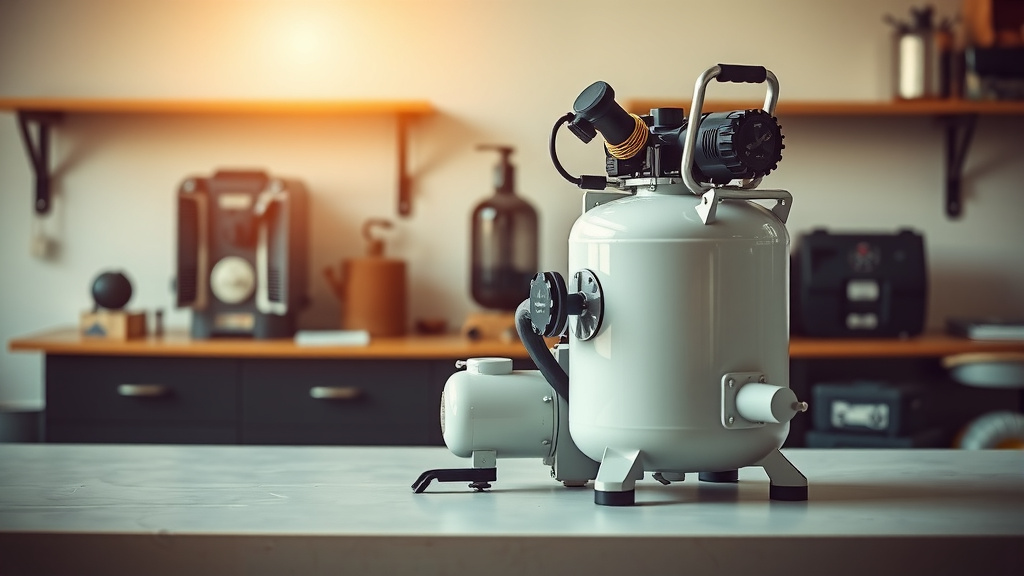
No, an air compressor is not the same as an air pump.
An air compressor builds high-pressure air for power tools and demanding tasks, while an air pump moves air at lower pressure for simple inflation or aeration.
Here’s a quick overview of what you’ll find in this article:
- Air compressors generate intense, stored pressure for heavy-duty jobs.
- Air pumps create a flow of air, usually at much lower pressures, for lighter tasks.
- The main difference lies in the amount of pressure they can produce and sustain.
- Choosing the right one depends entirely on the specific task you need to complete.
Is An Air Compressor The Same As An Air Pump?
You might look at both an air compressor and an air pump and think they do the same thing: push air. While they both move air, their purpose, design, and capabilities are quite distinct. It is like comparing a garden hose to a pressure washer; both use water, but for very different results.
Understanding these differences helps you pick the right tool for your specific needs. You wouldn’t use a pressure washer to water delicate flowers, would you? Similarly, you wouldn’t use an air pump to power impact wrenches.
What Defines an Air Compressor?
An air compressor is a machine designed to take ambient air and compress it into a smaller volume. This process significantly increases the air’s pressure. The highly pressurized air is then stored in a tank, ready to be released to power various tools or equipment.
Think of it as squeezing a giant sponge. The air gets denser and holds more force. Many experts explain that compressors are built for tasks requiring consistent, high-pressure output (National Institute of Standards and Technology).
The Science Behind Compression
At its core, a compressor uses a motor to drive a pump. This pump pulls in air and forces it into a storage tank. As more air is pushed into the limited space, the pressure inside the tank builds up.
When you attach an air tool, this stored, high-pressure air rushes out. This burst of energy then powers the tool. It’s an efficient way to transfer stored potential energy into kinetic energy for work.
Where Do Compressors Shine?
Compressors are the workhorses of workshops, garages, and construction sites. You’ll find them powering impact wrenches, nail guns, sandblasters, paint sprayers, and even air-powered grinders. They are essential for any task that demands a strong, sustained burst of pneumatic power.
We found that many industries, from automotive to manufacturing, rely heavily on air compressors daily. They handle tough jobs where a simple push of air just isn’t enough.
Introducing the Air Pump
Now, let’s talk about the air pump. What does it do? An air pump, in contrast, simply moves air from one place to another. It creates a flow of air, usually at a much lower pressure, without the goal of storing highly compressed air.
Consider a bicycle pump or a simple aquarium pump. Their job is not to build intense pressure, but to inflate an object or aerate water. They are about movement and volume, not brute force.
Air Pumps: Simple Air Movement
Air pumps typically have a simpler mechanism than compressors. They use a piston or diaphragm to draw in air and then push it out. There’s usually no storage tank for high-pressure air involved.
The primary goal is to displace air. This means moving a certain volume of air efficiently. The resulting pressure is often just enough to overcome the resistance of what you are inflating or aerating.
Typical Air Pump Applications
Where do you typically use an air pump? Think about inflating car tires, bike tires, sports balls, or air mattresses. They are also common in aquariums to provide oxygen for fish. Their applications are generally lighter and focus on simply filling something with air or creating a gentle flow.
You will often see portable air pumps that plug into your car’s cigarette lighter. These are fantastic for roadside emergencies or for camping gear.
The Core Distinction: High Pressure vs. High Volume
The biggest difference between these two tools boils down to pressure versus volume. An air compressor prioritizes high pressure, storing it for powerful applications. An air pump prioritizes moving a volume of air, often at low to moderate pressures.
Imagine trying to push a heavy box. An air compressor is like a strong person pushing with great force. An air pump is like a gentle breeze, moving lightweight objects or simply circulating air.
Understanding PSI and CFM
When you look at specifications, this difference becomes clear. Air compressors are rated by PSI (pounds per square inch), indicating their pressure output. They also have CFM (cubic feet per minute) which describes how much air they can deliver at a certain pressure.
Air pumps, particularly for inflation, are usually just rated by PSI, and often a much lower maximum. For aeration, they might simply list their airflow in liters per minute. It shows their different purposes quite clearly.
Key Differences at a Glance
To help you visualize the distinction, here is a quick comparison:
| Feature | Air Compressor | Air Pump |
|---|---|---|
| Primary Goal | Generate and store high-pressure air | Move air at low to moderate pressure |
| Pressure Output | Very High (100-175+ PSI) | Low to Moderate (10-60 PSI) |
| Air Storage | Typically includes a storage tank | No storage tank |
| Typical Uses | Powering air tools, painting, sandblasting | Inflating tires, balls, mattresses, aeration |
| Complexity | More complex pump and motor system | Simpler pump mechanism |
Power and Storage Considerations
Air compressors usually require a more substantial power source, often 120V or even 240V for larger models. They are also heavier due to the motor, pump, and steel tank. The tank allows you to store air and use it intermittently without the motor constantly running, which saves energy.
Air pumps, however, are often lighter and more portable. Many run on 12V DC power from a car or even batteries. They don’t have a tank, so the air is pushed directly as the pump operates. This makes them ideal for on-the-go inflation.
Picking the Right Tool for Your Project
So, how do you decide which one you need? It all comes down to the task at hand. Ask yourself what kind of force and consistency your job requires. We often find that people overestimate the power they need, leading to unnecessary purchases.
Here’s a quick checklist to help you choose:
- Do you need to operate a pneumatic power tool? Go with an air compressor.
- Are you just inflating bicycle tires or a pool float? An air pump is perfect.
- Is consistent, high-pressure output essential? An air compressor is your choice.
- Are you looking for portability and simple inflation? An air pump makes sense.
- Do you need to hold down a button and have air flow out continuously? An air pump might be enough.
- Are you looking for something to sit in your garage for various projects? A compressor is more versatile.
Do You Need Brute Force or Gentle Flow?
If your project involves driving nails, tightening bolts, or spray painting, you absolutely need the brute force and consistent pressure of an air compressor. These tools demand a powerful and steady supply of compressed air to function correctly.
For simpler tasks like topping off a car tire, blowing up balloons for a party, or keeping an aquarium healthy, an air pump will handle the job beautifully. It provides enough airflow without the extra cost, weight, or complexity of a compressor.
Conclusion
In the world of air-moving equipment, an air compressor and an air pump are distinct tools, each designed for specific purposes. While they both push air, remember that the compressor focuses on creating and storing high pressure for demanding tasks, whereas the pump simply moves a volume of air for lighter inflation or aeration jobs. Understanding this fundamental difference will help you choose the correct tool, saving you time, effort, and money. So, before you grab a tool, consider whether you need a gentle breeze or a powerful gust!
Can an air pump be used to power air tools?
No, an air pump generally cannot power air tools. Air tools require a consistent supply of high-pressure air, typically exceeding 90 PSI, which only an air compressor can provide and maintain. Air pumps produce much lower pressures, insufficient for operating power tools.
What is the main advantage of an air compressor over an air pump?
The main advantage of an air compressor is its ability to generate and store high-pressure air. This capability allows it to power a wide range of pneumatic tools and handle heavy-duty tasks that require significant force and consistent output, which an air pump cannot deliver.
Are portable tire inflators considered air compressors or air pumps?
Most portable tire inflators are essentially small, specialized air pumps. While they can achieve moderate pressures to inflate tires, they lack the large storage tank and continuous high-pressure output capacity of a true air compressor. They are designed for inflation, not for powering tools.
Can I use an air compressor to inflate a bicycle tire?
Yes, you can use an air compressor to inflate a bicycle tire, but you need to be very careful. Air compressors deliver air at much higher pressures than a bike tire can handle. You must use an appropriate adapter and regulate the pressure carefully to avoid over-inflating and bursting the tire.
Is one tool more energy-efficient than the other?
Generally, an air pump is more energy-efficient for its intended low-pressure tasks. It uses less power to move air without the need to compress it to high levels or store it in a tank. An air compressor, while powerful, requires more energy due to the physics of compressing air to high pressures and maintaining that force.
