
How To Link 2 Air Compressors Together?
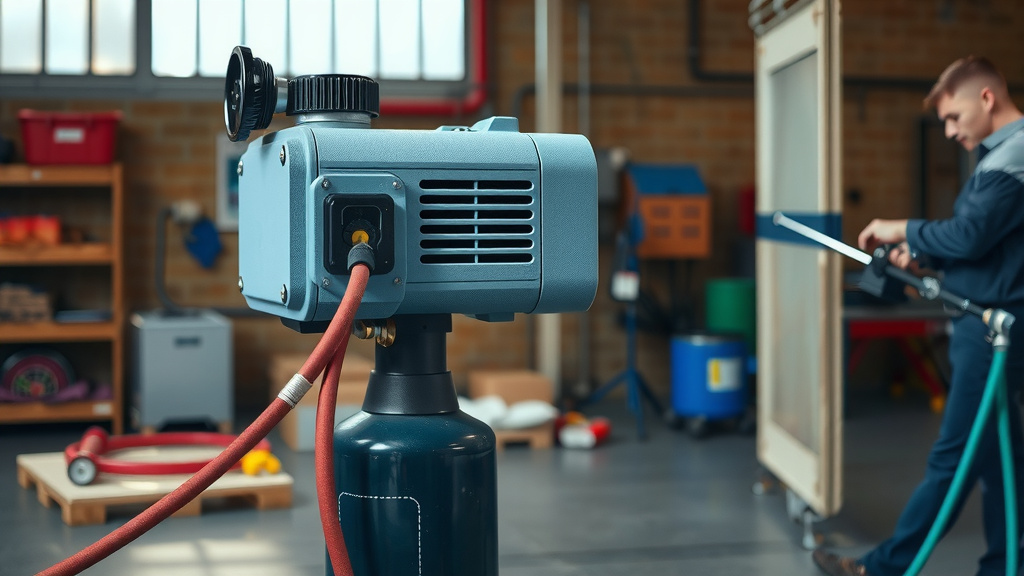
To link two air compressors together, you typically connect their air outlets to a common manifold or T-fitting using appropriate high-pressure hoses and fittings, ensuring proper check valves are in place. This setup allows both compressors to feed into a shared air supply, increasing your available air volume or providing redundancy.
You will need to consider matching their pressure settings and output flow (CFM) for optimal performance and to avoid one compressor doing all the work. Always prioritize safety with pressure relief valves and secure connections.
Here’s a quick overview of what you’ll learn about linking air compressors:
- Discover why linking compressors can be a smart move for your workshop.
- Understand the critical factors before you start connecting.
- Get a simple, step-by-step guide to linking them correctly.
- Learn about the vital safety steps you must never skip.
- Find out when it might be better to upgrade to a single, larger unit.
How To Link 2 Air Compressors Together?
Linking two air compressors together involves connecting their individual air outputs into a single, shared system. This typically requires a manifold or a series of fittings to combine the air streams. The goal is often to increase air capacity or create a backup system for continuous operation.
Why Connect Air Compressors?
Many people consider linking air compressors for practical reasons. Think of it like adding extra fuel tanks to a vehicle; you get more range. It’s about boosting your air power or ensuring you always have air when you need it.
More Air Volume
Perhaps you’re running several air tools at once, or your current compressor just isn’t keeping up. Linking two smaller units can significantly increase your total CFM (cubic feet per minute) output. This means less waiting for your tank to refill and more productive work time.
Redundancy and Backup
Imagine your primary compressor fails mid-project. If you have two linked units, one can still operate while the other is down. This provides excellent operational security, especially for businesses where downtime means lost money. Many experts say a backup system is a wise investment (OSHA guidelines).
Key Considerations Before Linking
Before you grab your wrenches, pause and think. Connecting compressors isn’t just about plumbing; it’s about system compatibility and safety. Skipping these steps could lead to inefficiencies or even hazards.
Matching Compressor Types
Can you link any two compressors? Not always optimally. While you can often mix and match, it’s best if both are similar in design, like two piston compressors. Research often connects matching types with better system balance (Compressed Air & Gas Institute).
Pressure and Flow (PSI & CFM)
Your compressors should have similar pressure ratings (PSI). If one delivers much higher pressure, it will work harder or constantly cycle. Pay attention to CFM output; this determines how much air you’ll actually gain. Different CFM numbers might mean one unit handles more of the load.
Power Requirements
Running two compressors means doubling your electrical demand. Do your circuits and wiring support this? We found that overloading circuits is a common issue when people forget to check their power infrastructure. Safety first, right?
Air Dryer and Filtration
If you’re using an air dryer or filters, where do they go? Ideally, a single, larger dryer and filter setup should be placed after the compressors combine. This ensures all air is treated before it reaches your tools, protecting them from moisture and contaminants.
The Basic Method: Manifold System
The most straightforward way to link two air compressors is by creating a common manifold. Think of a manifold as a central hub where the air from both units meets before going out to your tools. This setup ensures balanced air distribution.
Gathering Your Materials
You’ll need a few key pieces to get started:
- Manifold or T-fitting: The central piece to combine air.
- High-pressure hoses: Rated for your compressor’s maximum PSI.
- Appropriate fittings: To connect hoses to compressors and the manifold.
- Check valves: Absolutely vital to prevent air from flowing back into a compressor.
- Pressure gauge: To monitor the combined system pressure.
- Thread sealant tape: For airtight connections.
Step-by-Step Connection Guide
Ready to connect? Here’s a simple process:
- Depressurize and unplug: Ensure both compressors are off and fully depressurized.
- Install check valves: Attach a check valve to the outlet of each compressor. Make sure the arrow points away from the compressor.
- Connect hoses: Use high-pressure hoses to connect the outlet of each compressor (after the check valve) to your manifold or T-fitting.
- Add a pressure gauge: Install a pressure gauge on the manifold to monitor system pressure.
- Install a master shut-off valve: Place this after the manifold, before the air line leading to your tools.
- Test for leaks: Turn on one compressor, then the other, and listen for hissing. Use soapy water on connections to spot tiny bubbles.
Important Safety Precautions
Working with compressed air can be dangerous if proper safety isn’t observed. Your well-being is the most important factor here. Always double-check your work and follow manufacturer guidelines.
Pressure Relief Valves
Every air compressor comes with a pressure relief valve, and your combined system needs one too. If you are adding a secondary air receiver tank to the system, ensure it also has its own dedicated relief valve. This prevents over-pressurization, which can be extremely dangerous.
Secure Connections
Loose fittings are not just annoying; they are hazardous. Ensure all your hoses and fittings are tightly secured and sealed. Using quality thread sealant tape on all threaded connections is a must to prevent leaks and maintain pressure.
Regular Checks
Once your system is running, don’t just forget about it. Regularly inspect all connections, hoses, and valves for wear, damage, or leaks. A small leak can waste a lot of energy and cause your compressors to cycle more frequently, reducing their lifespan.
Common Challenges and Solutions
You might encounter a few bumps in the road when linking compressors. But don’t worry, most common issues have straightforward fixes. We found that anticipating these challenges saves a lot of headaches.
Uneven Wear
If compressors aren’t perfectly matched, one might run more than the other, leading to uneven wear. Some people say a timer can help balance runtime. Others prefer simply letting the system operate. Here’s a quick look at the trade-off:
| Scenario | Pros | Cons |
|---|---|---|
| Unmatched Compressors | Uses existing equipment. | Uneven workload; potential for one compressor to fail sooner. |
| Matched Compressors | Balanced workload; longer overall lifespan. | Might require purchasing new equipment. |
Pressure Drops
If you experience significant pressure drops even with two compressors, check your piping and hose diameters. Too-narrow lines can restrict airflow. Make sure your combined air output lines are appropriately sized for the increased volume. Many guidelines point to larger diameter piping as a good first step (Compressed Air & Gas Institute).
When to Consider a Single, Larger Compressor?
While linking compressors works, sometimes a single, larger unit is just better. Are you constantly maxing out your linked system? Are repairs on two units becoming a burden? Perhaps it’s time to think bigger. A single, robust compressor often offers simpler maintenance and better efficiency for heavy-duty, continuous use.
Long-Term Cost Analysis
Consider the total cost over time. Two compressors might have higher maintenance costs, consume more energy (especially if poorly matched), and take up more space. We found that for demanding industrial applications, a single, correctly sized compressor often wins out in the long run. Here’s a quick checklist to help you decide:
- Do I need more than 20 CFM continuously?
- Are my current two compressors often cycling on and off?
- Are maintenance costs for two units becoming a burden?
- Do I have space for a larger, single unit?
- Is energy efficiency a major concern?
Conclusion
Linking two air compressors can be a smart and cost-effective way to boost your air supply or add redundancy to your system. By carefully considering factors like compressor compatibility, power needs, and safety protocols, you can create a reliable and efficient air source for your projects. Always prioritize safety, use proper components, and perform regular checks to keep your setup running smoothly. Whether you’re adding more muscle to your workshop or ensuring uninterrupted operation, a well-planned linked compressor system can be a game-changer.
What kind of check valve should I use for linking compressors?
You should use a high-quality, full-port check valve rated for the maximum pressure of your air compressors. Ball check valves or spring-loaded piston check valves are common choices. Ensure it’s made from durable material like brass or stainless steel and suitable for compressed air applications.
Can I link a 120V compressor with a 240V compressor?
Yes, you can physically link their air outputs to a common manifold. However, their electrical systems must remain entirely separate. Each compressor will need its own dedicated power supply according to its voltage requirements. You cannot mix their electrical connections.
How do I prevent one compressor from doing all the work?
To ensure both compressors share the load, they should ideally be matched in terms of PSI and CFM. If one starts and fills the tank, the other might not engage. You can sometimes adjust the pressure switch settings on each compressor slightly differently, so they kick in at slightly varied pressures, ensuring both get used, or use a compressor sequencer if available.
Is it better to link two small tanks or use one larger tank?
For increasing air storage, using one larger tank is generally more efficient and simpler to plumb, with fewer potential leak points and simpler maintenance. However, if you already have two smaller tanks attached to separate compressors, linking them into a combined system can be a cost-effective solution without buying a new, larger tank.
What is the ideal distance between two linked air compressors?
The ideal distance is usually as close as practical to minimize pressure drop and the amount of piping needed. However, ensure there is sufficient space for proper ventilation, maintenance access, and to reduce noise transmission between the units. A few feet apart is often a good compromise.
