
How To Check Air Compressor Capacitor?
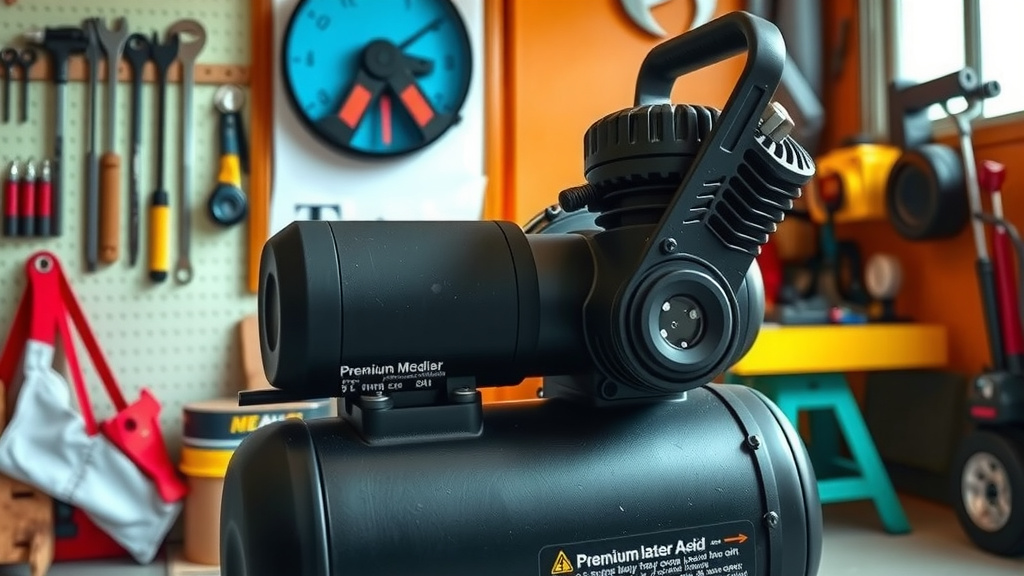
You can check an air compressor capacitor by first disconnecting all power and safely discharging it, then using a multimeter set to the capacitance (µF) setting.
A functional air compressor capacitor will display a reading very close to its labeled microfarad value, indicating it can store and release the necessary electrical charge.
Here’s a quick overview of what you’ll find in this guide about checking your air compressor capacitor:
- Always prioritize your safety first: unplug your compressor and safely discharge the capacitor before touching it.
- A multimeter is the essential tool for accurately testing a capacitor’s health.
- You should look for a microfarad (µF) reading on your multimeter that matches the capacitor’s label.
- A common sign of a bad capacitor is when your compressor motor hums but refuses to start.
- Learning to check and replace a faulty capacitor can help you avoid more costly air compressor repairs.
How To Check Air Compressor Capacitor?
Checking your air compressor capacitor correctly is a smart move for any DIY enthusiast or professional. This task ensures your compressor starts reliably and runs efficiently. You can usually do this test yourself with a few basic tools.
Why Does My Air Compressor Need a Capacitor?
Think of your air compressor’s capacitor as a small, temporary battery for starting the motor. It provides a quick burst of electricity, a powerful jolt, to get the motor spinning from a complete stop. Without this initial push, the motor simply can’t overcome its inertia.
This burst of power is especially important for single-phase motors. They need help getting the rotor moving. The capacitor gives that extra kick, then often disengages once the motor is running smoothly. It’s like a quick jump-start for your compressor.
Signs Your Capacitor Might Be Failing
How do you know if your capacitor is actually the problem? Your air compressor often sends out clear distress signals. Paying attention to these can save you a lot of troubleshooting time.
Compressor Won’t Start
This is probably the most common and frustrating sign. You flip the switch, but nothing happens. The compressor motor remains stubbornly still. It feels like hitting a wall.
Humming Noise, No Movement
Does your air compressor motor hum loudly but not actually turn? This is a classic symptom of a failed capacitor. The motor is receiving power, but it lacks that crucial starting jolt. Many motor repair manuals highlight this as a key indicator of a bad capacitor.
Motor Overheats
A failing capacitor can cause your motor to struggle excessively to start or run. This extra strain generates heat. If you notice your motor getting unusually hot, even for short periods, your capacitor could be part of the problem. Overheating can damage other components.
Safety First: Preparing for the Check
Before you even think about touching your air compressor’s internal components, safety is paramount. We found that skipping these steps can lead to severe electrical shock. Always be cautious when working with electricity.
Unplug Your Compressor
Always, always, always unplug the air compressor from its power source. This might seem obvious, but it’s easy to forget in the heat of the moment. Double-check that the plug is completely removed from the wall outlet.
Discharge the Capacitor Safely
Capacitors can store an electrical charge even after the compressor is unplugged. This stored charge can be quite strong and deliver a nasty shock. You must discharge it safely. Use a screwdriver with an insulated handle, shorting the two terminals. Many electrical safety guidelines recommend this practice for stored energy components. You might see a small spark, which is normal.
Tools You’ll Need
Checking your capacitor doesn’t require a workshop full of expensive gear. You probably have most of these items already.
- Multimeter: This is your star player. Make sure it has a capacitance (µF) setting.
- Insulated Screwdriver: Essential for safely discharging the capacitor.
- Wrenches/Socket Set: To open the motor housing, if necessary.
- Needle-Nose Pliers: Handy for disconnecting wires.
- Safety Glasses: Protect your eyes from unexpected sparks or debris.
Step-by-Step Guide to Testing Your Capacitor
Now that you’re prepped and safe, let’s get down to the actual testing. This process is straightforward if you follow each step carefully.
Here’s how to test your air compressor capacitor:
- Locate the Capacitor: It’s usually a cylindrical component attached to the motor housing. It often has two terminals on top or side.
- Disconnect Wires: Carefully remove the wires connected to the capacitor terminals. Pay attention to how they were connected for easier reassembly. Take a photo if you need to!
- Set Your Multimeter: Turn the dial on your multimeter to the capacitance (µF) setting. If it has different ranges, start with a higher one and adjust as needed.
- Connect Multimeter Probes: Touch one multimeter probe to each terminal of the capacitor. It generally doesn’t matter which probe goes to which terminal for non-polarized capacitors.
- Read the Display: The multimeter will show a reading in microfarads (µF). Watch for the number to stabilize.
Interpreting the Multimeter Readings
Once you have a reading, what does it mean? Understanding the numbers is key to diagnosing your capacitor’s health. We found that most capacitors have their microfarad rating printed right on their casing. This is your reference point.
| Capacitor Condition | Multimeter Reading | What It Means |
|---|---|---|
| Good | Within 5-10% of labeled µF | Operating as expected, likely not the problem. |
| Weak/Failing | Significantly lower than labeled µF | Losing its charge capacity; likely needs replacement soon. |
| Bad/Failed | Zero or erratic reading | Completely dead; cannot store charge; immediate replacement needed. |
| Shorted | Overload (OL) or infinite reading | Internal short circuit; dangerous; replace immediately. |
For example, if your capacitor is rated for 50 µF, a reading between 45 µF and 55 µF would indicate it’s in good shape. Anything outside this range, especially a zero or vastly different number, means trouble.
What If Your Capacitor is Bad?
If your multimeter confirms the capacitor is bad, don’t worry too much. Replacing it is a relatively common and straightforward repair. It’s often much cheaper than buying a whole new compressor.
Finding the Right Replacement
When replacing, always match the microfarad (µF) rating exactly. The voltage rating should be equal to or higher than the original. Getting the right one is very important for your compressor’s performance and safety. Many reputable manufacturers offer a wide range of replacement parts (Industry best practices).
Installing a New Capacitor
Installation is generally the reverse of removal. Make sure the new capacitor is securely mounted. Connect the wires exactly as they were on the old capacitor. Double-check all connections to ensure they are tight and correct. Then, carefully reassemble the housing.
Common Capacitor Problems to Watch For
Beyond simply failing, capacitors can exhibit other issues. Sometimes, a capacitor might look fine but still not perform optimally. Visible signs of damage, like swelling or leaking fluid, are clear indicators of failure. However, a capacitor can fail internally without any outward signs.
Always remember that capacitors have a lifespan. They aren’t meant to last forever. If your compressor is quite old, a failing capacitor might just be due to normal wear and tear. Regular maintenance and occasional checks can prolong the life of your entire unit.
When to Call a Professional
While checking and replacing a capacitor is often a DIY task, there are times when calling a professional is the smartest choice. If you’re uncomfortable with electrical work, or if your compressor issues persist even after replacing the capacitor, it’s best to get expert help. Complex electrical problems can be dangerous and require specialized knowledge. An expert can quickly diagnose deeper motor or wiring issues.
Conclusion
Checking your air compressor capacitor is a vital part of maintaining your equipment. By following these steps carefully, prioritizing safety, and using the right tools, you can easily diagnose and often fix common compressor starting problems. A healthy capacitor means a reliable air compressor, ready for all your projects. Remember, a little preventative checking can save you a lot of hassle and expense down the road!
What is the typical lifespan of an air compressor capacitor?
The lifespan of an air compressor capacitor can vary quite a bit, but on average, you can expect it to last anywhere from 5 to 10 years. Factors like how often your compressor is used, the quality of the capacitor, and environmental conditions can all affect its longevity. Heavy use or extreme temperatures tend to shorten its life.
Can I test a capacitor without removing it from the compressor?
Yes, you can often test a capacitor without fully removing it from the compressor, but you MUST disconnect its wires first. You’ll still need to access its terminals to place your multimeter probes. Always ensure the compressor is unplugged and the capacitor is safely discharged before disconnecting any wires or touching its terminals.
What does it mean if my multimeter shows ‘OL’ or ‘Overload’ when testing a capacitor?
An ‘OL’ or ‘Overload’ reading on your multimeter during a capacitor test typically means the capacitor has an internal short circuit or is completely open (failed). It’s unable to hold a charge or complete the circuit. In either case, an ‘OL’ reading signals that the capacitor is faulty and needs to be replaced.
Are all air compressor capacitors the same?
No, air compressor capacitors are not all the same. They vary mainly by their microfarad (µF) rating and voltage rating. It’s extremely important to replace a faulty capacitor with one that has the exact same µF rating and an equal or higher voltage rating. Using the wrong capacitor can damage your motor or cause it to perform poorly.
Besides the capacitor, what else could cause my air compressor not to start?
If your air compressor isn’t starting and the capacitor checks out, several other issues could be at play. Common culprits include a faulty pressure switch, a damaged motor, a tripped thermal overload protector, wiring problems, or even a seized pump. Sometimes, simply having too much pressure already in the tank can prevent it from starting if the unloader valve is stuck.
