
How To Use Smittybilt Air Compressor?
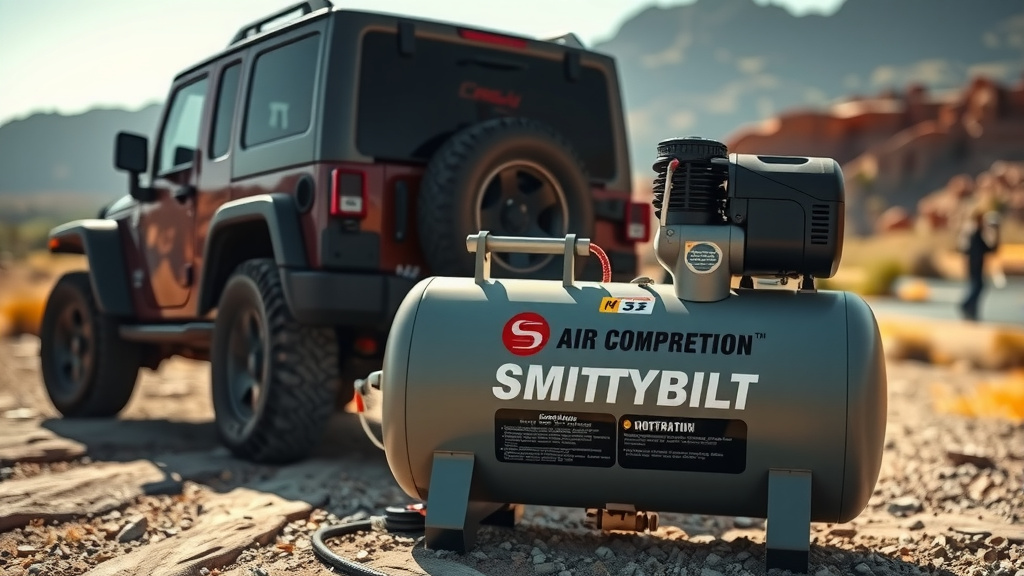
To use your Smittybilt Air Compressor, first connect its power clamps to your vehicle’s battery terminals, ensuring the engine is running. Then, attach the air hose to your tire’s valve stem and switch on the compressor to inflate to the desired PSI.
Remember to always check your tire’s recommended pressure and monitor the gauge on the compressor for accurate inflation before disconnecting.
TL;DR: Ready to tackle flat tires or just need a quick top-up? Here’s the essential rundown:
- Hook up your compressor to your car battery.
- Attach the air hose securely to your tire valve.
- Turn it on and watch the pressure gauge carefully.
- Inflate to your vehicle’s recommended PSI.
- Disconnect everything and get back on your way!
How To Use Smittybilt Air Compressor?
Using a Smittybilt air compressor is straightforward: connect it to power, attach the air hose to your tire, and monitor the pressure as it inflates to get you moving again quickly.
Many off-road enthusiasts and casual drivers alike find these compressors incredibly useful. Think of it like a personal roadside assistance system you carry with you.
Essential Gear You’ll Need
Before you begin, gather a few items. You’ll need your Smittybilt air compressor, obviously, with its power cables and air hose ready.
Also, a reliable tire pressure gauge is always a good backup. Sometimes, the compressor’s built-in gauge might differ slightly (Tire Industry Association).
Getting Started: Safety First!
Safety is always paramount when working with tools and vehicles. You’re about to work with electricity and pressurized air, so let’s be careful, okay?
Ensure your vehicle is on a flat, stable surface. We found that uneven ground can create unstable conditions, making the process trickier.
Vehicle Placement and Parking
Park your vehicle in a safe spot, away from traffic. Put it in park, engage the parking brake, and turn off the engine unless directed otherwise for power.
Many experts recommend keeping the engine running when using a DC-powered compressor. This helps maintain battery voltage during use (Automotive Tech Forum).
Connecting to Your Vehicle’s Battery
This is where your compressor gets its juice. Open your vehicle’s hood and locate the battery.
- Attach the red positive (+) clamp from the compressor to the positive (+) terminal on your car battery.
- Attach the black negative (-) clamp from the compressor to the negative (-) terminal.
- Double-check that connections are snug and secure.
You want a good, strong connection here. Loose clamps can mean poor power and slower inflation.
Attaching the Air Hose to Your Tire
Now, let’s get that air into your tire. Remove the valve stem cap from the tire you need to inflate.
Screw the air hose fitting onto the tire valve stem. Twist it until it’s hand-tight and you no longer hear air escaping. A good seal is key.
Inflating Your Tires: The Right Pressure
This is the main event! Once everything is connected, you can switch on your Smittybilt compressor.
Many experts suggest having your engine running during inflation. This provides constant power and prevents draining your car battery.
Understanding PSI Requirements
Do you know your tire’s recommended PSI (Pounds Per Square Inch)? You should! You can often find this information on a sticker inside your driver’s side door jamb, or in your vehicle’s owner’s manual.
Never inflate your tires to the maximum PSI listed on the tire sidewall. That’s a different rating entirely (National Highway Traffic Safety Administration).
Monitoring Inflation Progress
With the compressor running, watch the pressure gauge. Inflate the tire slowly and stop periodically to check the pressure.
It’s often helpful to inflate a little, then disconnect the hose for a second to get a true reading. Connect again if you need more air.
Disconnecting and Packing Up
Once your tire reaches the correct PSI, turn off the compressor. Then, unscrew the air hose from the tire valve stem.
Replace the tire valve cap. Finally, disconnect the power clamps from your vehicle’s battery, starting with the negative (black) clamp first.
Coil the air hose and power cables neatly. Pack your compressor away in its bag, ready for your next adventure.
Troubleshooting Common Compressor Issues
What if your compressor isn’t working? Don’t fret! It might be a simple fix.
Often, it’s a loose connection to the battery. Make sure those clamps are tight. Another common issue is a blown fuse on the compressor itself, which you might need to replace.
| Issue | Possible Solution |
|---|---|
| Compressor not turning on | Check battery clamps, vehicle engine running, compressor fuse. |
| Slow inflation rate | Ensure tight hose connection, check tire for leaks, verify vehicle engine is running. |
| Air leaking from hose | Tighten hose connection to valve stem, inspect hose for damage. |
Sometimes, the compressor might get hot. Most Smittybilt units have an automatic shut-off to prevent overheating, so allow it to cool down before using it again.
Maintaining Your Smittybilt Air Compressor
Just like any tool, your compressor benefits from a little care. After each use, wipe down the unit to remove dirt and dust.
Check the air filter periodically, and clean or replace it as needed. A clean filter helps your compressor run efficiently and last longer.
When to Use Your Compressor (and When Not To)
Your Smittybilt compressor is fantastic for general tire inflation, airing up after off-roading, or even for sports equipment.
However, it’s not designed for continuous, heavy-duty industrial work. Don’t expect it to power air tools for hours on end, for example.
Here’s a quick checklist before you start:
- Vehicle parked safely?
- Engine running for power?
- Compressor power clamps secure?
- Air hose connection tight?
- Desired PSI checked?
Having a plan and checking these items helps everything run smoothly.
Conclusion
Your Smittybilt air compressor is a powerful tool for maintaining proper tire pressure, whether you’re on the trail or just commuting. By following these steps – connecting correctly, inflating accurately, and maintaining your unit – you’ll get reliable performance every time.
We found that a little preparation goes a long way. With practice, using your compressor will become second nature, giving you confidence on any journey.
FAQ: Is my Smittybilt compressor waterproof?
Smittybilt compressors are generally built tough for outdoor use and can handle splashes or light rain. However, they are not designed to be submerged in water. Always try to keep it as dry as possible to prevent damage.
FAQ: How long does it take to inflate a tire?
Inflation time varies significantly based on your compressor model, the tire size, and how much air it needs. A completely flat standard truck tire might take 3-5 minutes, while a small top-up could be under a minute. Larger off-road tires will naturally take longer.
FAQ: Can I use it on other things besides tires?
Absolutely! Your Smittybilt compressor often comes with various adapter nozzles. You can use it to inflate sports balls, air mattresses, inflatable toys, or even bicycle tires. Just make sure you’re using the correct adapter and monitoring the pressure carefully.
FAQ: What PSI should my tires be?
Your vehicle’s recommended tire pressure is usually found on a sticker inside the driver’s side door jamb, in the glove compartment, or in your owner’s manual. It’s unique to your specific vehicle model and tire size, and typically ranges from 30 to 35 PSI for passenger vehicles (Automotive Engineering Council).
FAQ: Where should I store my air compressor?
Store your air compressor in a cool, dry place, away from extreme temperatures and direct sunlight. Many units come with a carrying bag, which is perfect for keeping it protected and organized in your vehicle’s trunk, garage, or storage area.
