Why Will My Air Compressor Not Restart After Draining?
An air compressor may not restart after draining because of a power, pressure switch, overload, or check valve problem. Unplug it before inspecting parts, and use the manual to identify safe checks for your model.
On this page (8 sections)
- What should you check first when a compressor will not restart?
- Could tank pressure or the pressure switch prevent restart?
- What if the compressor clicks, hums, or trips?
- Why might the compressor run without filling the tank?
- How do you drain a compressor safely before restarting?
- Which replacement equipment may help with compressor work?
- When should you stop troubleshooting?
- What is the safest next step if your air compressor will not restart?
An air compressor may not restart after draining because of a power, pressure switch, overload, or check valve problem. Unplug it before inspecting anything, and use the manual to identify safe checks for your model.
Draining the tank should not usually prevent a properly working compressor from starting again. First note what happens when you switch it on: no sound, a click, a hum, or a motor that runs without filling the tank.
What should you check first when a compressor will not restart?
Check the power supply and the compressor's reset instructions first. A loose plug, tripped breaker, switched-off outlet, or thermal overload can leave the motor without usable power.
Turn the compressor off and unplug it before examining the cord, plug, and visible controls. If the plug or cord is damaged, keep the unit unplugged and have it repaired.
If the outlet is controlled by a breaker or GFCI, check whether it has tripped. Reset it only as its instructions allow, and stop if it trips again; repeated trips can point to an electrical or motor fault.
For a related electrical symptom, see variable-speed compressor fuse problems.
Some compressors have a reset button or need a cooling period after overheating. For an MZB model, see its compressor reset steps.
Follow the manual's exact steps and don't repeatedly press reset or cycle power.
For broader startup checks, see what to do if an air compressor motor won't start.
Could tank pressure or the pressure switch prevent restart?
A pressure switch may keep the motor off if it reads tank pressure above its cut-in point. Draining the tank should lower pressure, but a faulty switch, blocked sensing path, or incorrect gauge reading can confuse the control.
Check the tank gauge against any second gauge you have, and confirm the drain valve is closed after draining. Do not open or adjust the pressure switch while the compressor is powered.
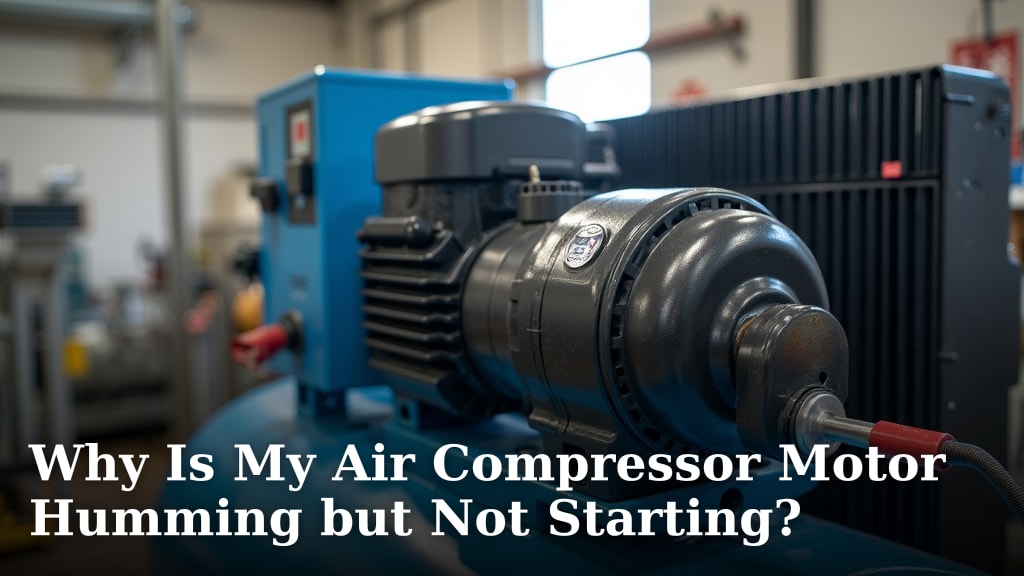
If the motor only hums or clicks, avoid repeated attempts. Read why an air compressor motor hums but does not start for clues that call for inspection rather than more restart attempts.
A pressure switch is a safety-related control. Don't bypass it, bridge wires, or change its cut-in and cut-out settings to force a restart.
Does draining affect the unloader valve?
The unloader releases pressure from the pump head so the motor can start more easily. A stuck or damaged unloader can leave pressure where the motor needs a low-load start, even when the tank gauge reads low.
The unloader may make a short hiss after the compressor stops. If you hear continuous air loss, or no release where the manual says there should be one, switch off and unplug the compressor and arrange service.
Do not remove fittings to test for trapped pressure. The manual can show whether the unloader is serviceable by the owner.
What if the compressor clicks, hums, or trips?
A click, hum, or repeated breaker trip means you should stop trying to start the compressor. These sounds can come from the motor, overload protection, wiring, or pressure controls, and guessing at the cause can make damage worse.
If the unit is silent, check only the external power and controls. A hum without the motor turning needs a qualified diagnosis; don't tap the motor, open electrical covers, or hold the switch on.
If you notice a burning smell, see airbrush compressor burning symptoms.
If the unit has no power after a trip, compare the situation with why an ALUP compressor has no power after tripping. Industrial compressors may also have an emergency stop or control reset that needs the model-specific procedure, as covered in why an Atlas Copco compressor emergency stop won't reset.
Let an overload cool only for the period stated in the manual. If it trips again after that, leave the compressor off and contact a repair professional.
Why might the compressor run without filling the tank?
If the motor runs but tank pressure does not rise, suspect an open drain, air leak, or pump and valve fault. Switch off the compressor before checking that the tank drain is closed and any outlet connection is secure.
Listen for escaping air only from a safe distance, without touching hot parts or moving components. If the drain valve is closed and the compressor still fails to build pressure, shut it down instead of letting it run continuously.
For a truck-specific case, see Navistar tank filling problems.
Our guide to why a compressor is not filling up with air covers common causes of low or absent tank pressure. If the compressor keeps running and does not stop at its normal pressure, see why an air compressor is not shutting off.
How do you drain a compressor safely before restarting?
Switch the compressor off and follow the manual's tank-draining instructions. If the condensate looks oily, see why oily water drains from an air compressor.
Drain condensate through the designated valve, open it slowly, and direct the outlet away from people and surfaces that could be harmed by water or air.
Wear eye protection and keep your hands clear of the air stream. Do not remove a drain valve, loosen a fitting, or leave the drain open when restarting.
Close the drain securely after water stops flowing. Check the tank gauge and the manual's restart steps before plugging the compressor back in.
Which replacement equipment may help with compressor work?
A replacement compressor can make sense if the current unit has a confirmed major fault or no longer suits your air needs. A product won't repair a faulty switch, unloader, motor, or tank, so diagnose the failure before choosing equipment.
The DEWALT D55154 is an electric wheeled compressor with a 4-gallon tank, 1.1 HP motor, and 4 CFM airflow capacity.
Consider it if you need a portable shop compressor with dual universal quick couplers. It won't solve a fault in your existing compressor's start circuit.
The VIAIR 400P is a 12V portable compressor designed for tire inflation, with a 25 ft hose and an inline gauge.
Choose it for vehicle tires and portable inflation needs, not as a direct replacement for a stationary shop compressor. Follow its connection and operating instructions.
The Dorman 34152 is an A/C compressor bypass pulley for select vehicle applications.
This is an automotive engine accessory, not an air compressor repair part. Confirm vehicle fit before considering it.
When should you stop troubleshooting?
Stop and get qualified service if the compressor hums, trips power repeatedly, leaks from a control, or runs without building pressure. These signs can involve electrical or pressure components that should not be adjusted by guesswork.
Keep the unit unplugged until it is inspected if you see damaged wiring, smell burning, or hear an unusual mechanical noise. Never work on a pressurized tank or open electrical enclosure.
What is the safest next step if your air compressor will not restart?
If your air compressor will not restart after draining, check the outlet, breaker, visible controls, and closed drain valve, then follow the manual's reset procedure once. Stop if it hums, trips again, or still will not build pressure.
Choose a repair service when the signs point to the motor, pressure switch, unloader, or check valve. If you are comparing replacement equipment, match the compressor to the job rather than expecting a new unit to fix an unresolved electrical fault.
Frequently asked questions
Why won't my air compressor start after draining the tank?
A compressor that won't restart after draining may have lost power, tripped an overload, or have a pressure switch or check valve problem. Unplug it before checking the cord, outlet, breaker, and visible controls.
If it hums, trips again, or won't build pressure, stop and use the manual or a qualified repair service.
Should I drain an air compressor while it is running?
Follow the compressor manual's drain procedure. Many tanks are drained with the unit switched off, while pressure remains, and the drain valve opened slowly with the outlet directed away from people.
Do not remove a drain fitting under pressure or run the compressor with a valve open unless the manual specifically allows it.
Can a compressor restart with an empty tank?
Many compressors can restart at low tank pressure, but the correct behavior depends on the model and its controls. Some use a pressure switch and unloader arrangement to ease motor startup.
Check the manual for the normal restart procedure and do not bypass a pressure switch or safety control.
Why does my compressor hum but not start after draining?
A hum with no startup can point to a motor starting, supply, or pressure-related problem. Switch the unit off and unplug it; don't keep cycling power or touch internal wiring.
If the hum continues after confirming the outlet and manual's reset steps, have the compressor inspected.