
How To Measure Air Compressor Fittings?
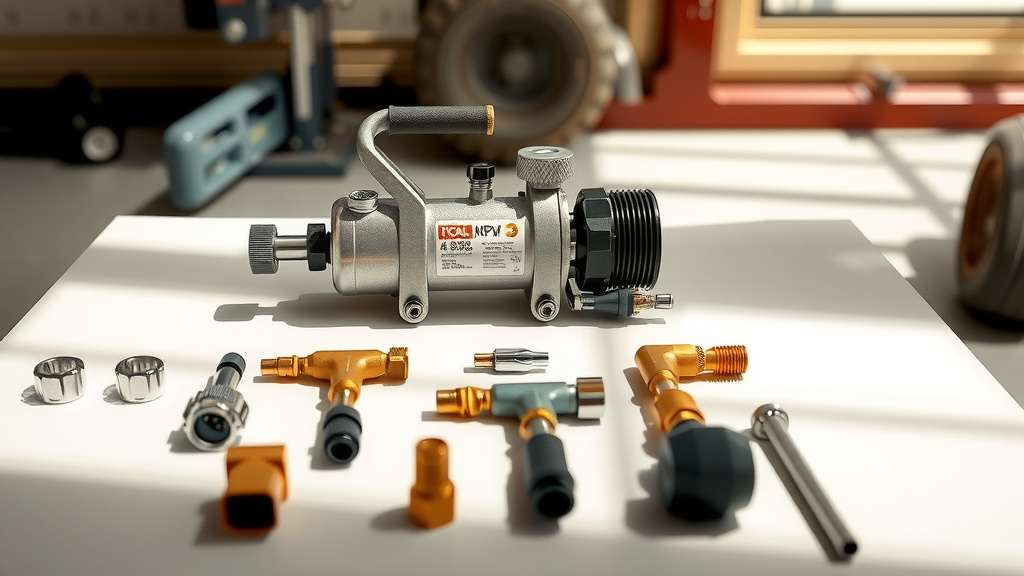
To measure air compressor fittings, you typically measure the outside diameter (OD) of male threads or the inside diameter (ID) of female threads.
However, it is vital to remember that air compressor fittings are often sized by “nominal pipe size” (NPS), which rarely matches the actual measured diameter directly.
Before diving deep, here’s a quick overview of what you’ll learn:
- You will need a precision tool like a digital caliper for accuracy.
- Understanding “nominal pipe size” is key, as it differs from true measurements.
- Knowing common thread types, like NPT and BSP, prevents fitting mistakes.
- Matching the thread pitch is just as important as the diameter for a secure seal.
- We will guide you through simple steps to measure male and female fittings correctly.
How To Measure Air Compressor Fittings?
Measuring air compressor fittings involves using a caliper to find the outside or inside diameter, but you must factor in the nominal pipe size. This ensures you select the correct fitting for a leak-free connection. It is not as complex as it might seem.
Why Does Measuring Air Compressor Fittings Seem So Tricky?
Many people find measuring air compressor fittings confusing at first. It is not like measuring a common household item with a simple ruler. The sizes used are often trade names, not direct physical measurements.
Imagine buying shoes where a “size 10” does not mean they are exactly ten inches long. Fittings work similarly. This can certainly feel like a puzzle when you are trying to find the right part.
The Big Difference: Nominal vs. Actual Size
Here’s the core challenge: fittings are almost always referred to by their nominal pipe size (NPS). This nominal size is a standard name, not a precise measurement. For example, a “1/4-inch” fitting will not actually measure 0.25 inches with a caliper.
We found that this difference is a primary source of confusion for many users. Understanding this concept is your first step to success. It saves a lot of head-scratching moments, really.
Tools You’ll Need for Accurate Measurements
To accurately measure your air compressor fittings, you will need the right tools. Guesswork can lead to leaks and wasted time. A good precision tool is your best friend here.
Many experts advise against using a standard tape measure or ruler. These simply are not accurate enough. We need something that can read small increments consistently.
The Caliper: Your Precision Partner
A digital caliper is the best tool for this job. It offers precise readings down to hundredths of an inch or millimeters. This accuracy is absolutely vital for measuring threads.
Using a caliper is straightforward once you get the hang of it. You can measure both outside and inside dimensions with ease. It helps you avoid frustrating mismatches.
Measuring Male Air Compressor Fittings Threads
When measuring a male fitting, you need to find the outside diameter (OD) of its threads. This is where your caliper comes in handy. You are measuring across the threaded part.
Gently close the caliper jaws around the threads. Do not squeeze too hard, just enough for a firm contact. Aim to measure across the widest part of the threads. Many guidelines point to getting a consistent read (Mitutoyo).
Measuring Female Air Compressor Fittings Threads
For a female fitting, you will measure the inside diameter (ID) of the threads. This means inserting the caliper’s smaller jaws into the opening. Expand them until they touch the inside walls.
Again, apply gentle pressure to get an accurate reading. Be sure you are measuring the actual threaded section. This helps identify the correct nominal size.
Understanding Thread Types: NPT, BSP, and More
Beyond diameter, thread type is a big deal. The two most common types for air compressors are NPT and BSP. These are not interchangeable, which is a common misunderstanding.
Mixing thread types is a guaranteed path to leaks or damaged fittings. Imagine trying to screw a light bulb into the wrong type of socket. It just does not work, does it?
National Pipe Taper (NPT)
NPT threads are the standard in North America. They have a tapered design, meaning the threads narrow slightly. This taper helps create a seal when tightened.
Research often connects NPT fittings with their reliance on thread sealant for a good seal (Parker Hannifin). This is a key characteristic to remember.
British Standard Pipe (BSP)
BSP threads are common globally, especially in Europe and Asia. They come in two forms: BSPP (parallel) and BSPT (tapered). You need to know which one you have.
BSPP threads require a gasket or O-ring for sealing. BSPT threads, like NPT, rely on the taper and sealant. We found that identifying these can prevent a lot of headaches.
Don’t Forget the Thread Pitch!
Thread pitch refers to the distance between individual threads. It is another critical measurement. Even if the diameter is close, the wrong pitch means the fitting will not connect securely.
Think of it like gears on a bicycle. If the teeth do not mesh perfectly, nothing moves smoothly. A thread gauge is a small tool that helps you match this precisely.
A Quick Guide to Identifying Common Sizes
Here’s a helpful table comparing common nominal sizes to their approximate actual measurements. Remember, these actual measurements are just a guide, as they can vary slightly.
Use your caliper readings to find the closest match in this chart. This makes the nominal size identification much simpler for you. We often refer to tables like this.
| Nominal Pipe Size | Approx. Male OD (Inches) | Approx. Female ID (Inches) | Common Thread Type |
|---|---|---|---|
| 1/8 inch | 0.405 | 0.370 | NPT, BSP |
| 1/4 inch | 0.540 | 0.480 | NPT, BSP |
| 3/8 inch | 0.675 | 0.620 | NPT, BSP |
| 1/2 inch | 0.840 | 0.760 | NPT, BSP |
| 3/4 inch | 1.050 | 0.990 | NPT, BSP |
| 1 inch | 1.315 | 1.250 | NPT, BSP |
Troubleshooting Common Fitting Measurement Mistakes
It’s easy to make a few common errors when measuring fittings. One mistake is not measuring across the full diameter of the threads. This can give you an incorrect reading.
Another issue is ignoring the thread type or pitch entirely. Many people assume all threads are the same. We found that checking for NPT versus BSP is critical. Forcing a fitting is never the answer, as it can strip threads.
Your Checklist for a Perfect Fit
Before you buy or connect any fitting, run through this quick checklist. It will help ensure you get it right the first time. This saves you trips back to the store, and who doesn’t like that?
- Measure the OD for male threads with a caliper.
- Measure the ID for female threads with a caliper.
- Compare your readings to a nominal pipe size chart.
- Identify the thread type (NPT, BSPP, BSPT).
- Check the thread pitch using a thread gauge if unsure.
- Ensure both fittings match in size, type, and pitch.
Conclusion
Measuring air compressor fittings does not have to be a daunting task. By understanding the difference between nominal and actual sizes, using a caliper correctly, and identifying thread types, you can confidently select the right parts. Take your time, measure twice, and ensure a leak-free connection. You now have the knowledge to tackle any fitting challenge!
What if my fitting size doesn’t match standard charts?
If your measurements do not perfectly align with standard charts, consider a few things. First, double-check your caliper reading for accuracy. Second, sometimes older or specialized fittings can have slight variations. It is always wise to consult with a plumbing or air tool expert if you are unsure.
Can I mix NPT and BSP fittings?
No, you generally should not mix NPT and BSP fittings. Although they might seem similar, their thread angles and pitches are different. Attempting to force them together will likely damage the threads, leading to leaks or complete failure. Always ensure you are using compatible thread types.
How do I know if a fitting is tapered or parallel?
You can usually tell by looking closely at the threads. Tapered threads will gradually narrow towards the end of the fitting. Parallel threads, on the other hand, maintain a consistent diameter from one end to the other. You can also use your caliper to measure the diameter at both ends of the threaded section.
What’s the best way to get a leak-free seal?
For tapered threads like NPT and BSPT, always use a high-quality thread sealant or PTFE (Teflon) tape. Apply it properly, wrapping in the direction of the threads. For parallel threads like BSPP, ensure you use an appropriate O-ring or gasket as part of the connection. Proper tightening without over-tightening is also important.
Do all air tools use the same fitting size?
Not necessarily. While many common air tools use 1/4-inch NPT fittings, larger tools or those requiring higher airflow might use 3/8-inch or 1/2-inch fittings. It depends on the tool’s air consumption and the system’s design. Always check the manufacturer’s specifications for each individual tool you plan to use.
