Why Considering a Pre-Owned Air Compressor Makes Sense
So, you’re thinking about skipping the brand-new compressor and going for a used one? That’s a really smart financial strategy for many people. We’ve found that by looking at pre-owned options, you can often get a much more capable machine for the same price, or even less, than a basic new model. It’s like finding a hidden gem that can power up your projects without draining your wallet.
The Allure of Affordability
Let’s talk money. The most obvious perk of buying used is the significant cost savings. New air compressors, especially those with higher CFM (cubic feet per minute) ratings or larger tanks, can get pricey fast. A used unit, however, might let you afford that bigger, better compressor you really need for your garage or workshop. We’ve seen people save hundreds, even thousands, of dollars.
Imagine needing a compressor for sandblasting or running multiple air tools simultaneously. A new, high-powered model might be out of reach. But a used one? Suddenly, it’s a realistic possibility. This budget-friendly approach opens doors to more ambitious projects.
Getting More Bang for Your Buck
Beyond just saving cash, buying used often means you can get more power or capacity for your budget. Think about it: a slightly older, but still robust, professional-grade compressor might have been originally priced at $1,000+. You might find a similar unit on the used market for half that. This means you can potentially afford a compressor with a higher CFM output, a larger tank, or a more durable motor.
Higher CFM is essential for tools that use a lot of air, like impact wrenches, sanders, or spray guns. A larger tank means the compressor cycles less often, providing a more consistent air supply and reducing wear and tear. You’re essentially getting access to higher-spec equipment that you might not otherwise be able to afford.
Environmental Friendliness: A Green Choice?
There’s also an environmental aspect to consider. Buying used is a form of recycling. Instead of a perfectly good machine sitting in a landfill, you’re giving it a second life. This reduces manufacturing demand and waste. Many people feel good about making a purchase that’s a bit kinder to the planet.
It’s a responsible choice that aligns with a growing awareness of sustainability. When you buy used, you’re part of a cycle that minimizes resource consumption. Plus, it feels pretty satisfying to score a great deal while also being environmentally conscious.
Navigating the Used Market: What to Look For
While the savings are tempting, buying used does come with potential drawbacks. You need to be a savvy shopper. It’s not just about finding a compressor; it’s about finding a well-maintained and functional one. Here’s how to approach it.
Assessing the Compressor’s Condition
This is where your detective skills come in. Before handing over any cash, you need to thoroughly inspect the unit. Look for obvious signs of damage, like dents, cracks, or rust, especially on the tank and motor housing. Check the condition of the power cord and any electrical connections.
Pay close attention to the oil. If it’s a splash-lubricated or oil-bath compressor, the oil should be clean and clear. If it looks milky, it could indicate water contamination, which is bad news. If it’s an oil-free compressor, you won’t have this concern, but check for any signs of oil leaks anyway.
The All-Important Test Run
Never, ever buy an air compressor without seeing it run. Ask the seller to plug it in and let it build pressure. Listen for any unusual noises like knocking, grinding, or excessive rattling. These sounds can indicate serious internal problems, like worn bearings or damaged pistons.
Watch how it builds pressure. Does it seem to take an unusually long time? Does it leak air from anywhere? The motor should sound smooth and consistent. A test run is your best chance to catch potential issues before they become your problems. Watch how it builds pressure; our guide explains how to fix an air compressor that won’t build pressure.
Checking for Leaks
Once it has built pressure, listen carefully. Can you hear any hissing sounds? Air leaks can occur at fittings, hoses, the drain valve, or even from a faulty check valve. Small leaks can be fixed, but significant leaks might mean the tank is compromised or there are more serious internal issues. A soap and water test can help pinpoint small leaks on fittings.
Understanding the Compressor’s History
Do you know how the compressor was used? Was it for light DIY home repairs, or was it used daily in a professional auto shop? A compressor that was heavily used, especially in a demanding environment, might have more wear and tear, even if it looks good. We found that asking the seller about its previous use and maintenance can be very revealing.
Did they change the oil regularly? Were any repairs done? While sellers might not always be forthcoming with the full story, asking questions shows you’re a serious buyer and can sometimes elicit useful information. If it’s from a business closure, that might mean it was used more intensely than a hobbyist’s unit.
What Type of Compressor Are You Looking At?
Different types of compressors have different wear patterns and common issues. For more on this topic, see our compressors for occasional use. Understanding this can help you assess a used unit.
Piston Compressors: These are the most common for home and shop use. They have a motor and a pump with cylinders and pistons. Wear can occur on piston rings, cylinders, valves, and seals. The overall motor and pump assembly is key here. Oil-lubricated ones need careful oil inspection.
Rotary Screw Compressors: These are typically found in industrial settings and are much larger and more expensive. They use rotating screws to compress air. While very durable, their internal components are complex and expensive to repair. We generally advise caution for DIYers looking at used rotary screw units unless they have specific expertise.
Diaphragm Compressors: Less common for heavy-duty use, these use a flexible diaphragm. They are often quieter and oil-free but might have less output. Check the diaphragm for tears or degradation.
Key Features to Inspect on Any Used Unit
Regardless of the type, several components are critical to inspect. Getting these right ensures you’re buying a working unit.
The Air Tank: Your Air Reservoir
The tank is where compressed air is stored. For more on this topic, see our moisture separators. You need to ensure it’s structurally sound. Look for signs of rust, especially on the inside if you can see it, and around welds or seams. Check the drain valve at the bottom – it should be able to open and close smoothly. Water left in the tank can cause corrosion over time. Many guidelines point to checking tank integrity as a top priority (Occupational Safety and Health Administration).
The Motor and Pump: The Heart of the Machine
As mentioned, listen for odd noises during the test run. The motor should run without overheating too quickly. For oil-lubricated pumps, check the oil level and condition. Ensure the pump itself isn’t making excessive noise or vibrating wildly. A worn pump will be less efficient and won’t build pressure as it should.
Pressure Regulator and Gauges: Control and Monitoring
These are usually straightforward but important. Ensure the pressure gauges are working and showing readings. The regulator should allow you to adjust the output pressure smoothly. If these parts are damaged or malfunctioning, they will need replacement, which is usually a relatively simple fix, but still an added cost.
Belts and Pulleys (If Applicable)
Many portable compressors use a belt to connect the motor to the pump. Check the condition of the belt. Is it cracked, frayed, or excessively worn? Are the pulleys aligned properly? A damaged belt will slip, reducing efficiency, and could snap, causing further damage. Replacement is typically easy, but it’s another item to add to your inspection list.
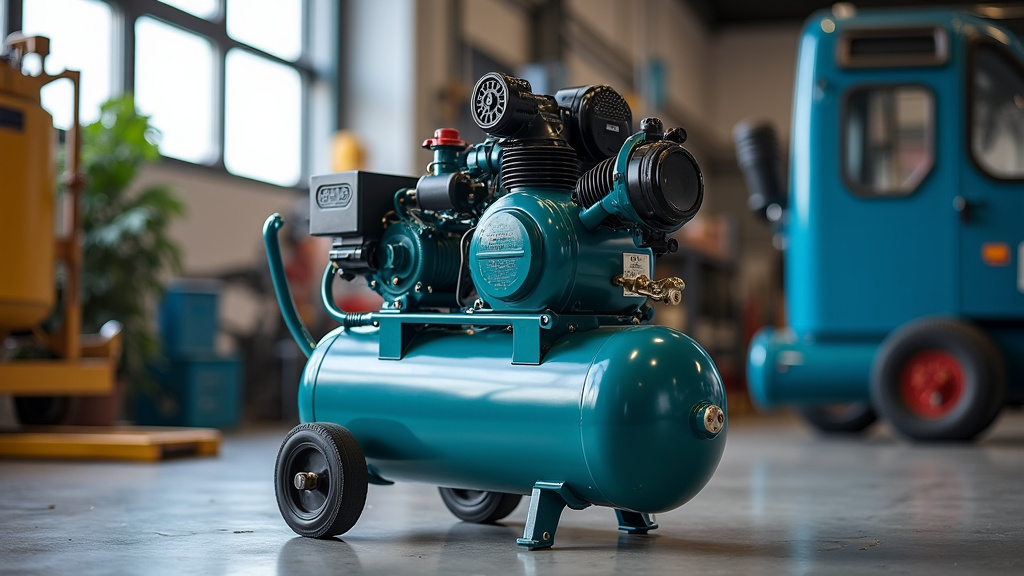
A Checklist for Buying a Used Air Compressor
Before you head out to look at a used air compressor, keep this quick checklist handy. For more on this topic, see our compressor combo kits. It will help you stay organized and remember the key inspection points.
- Visual Inspection: Check for dents, cracks, rust, and loose wires.
- Oil Check: Inspect oil for cleanliness (if applicable). Milky or dark oil is a red flag.
- Test Run: Listen for strange noises and observe pressure build-up.
- Leak Test: Listen for hissing sounds after pressure is built.
- History Inquiry: Ask about previous use and maintenance.
- Component Check: Verify gauges, regulator, belt, and drain valve function.