Roofing Nailer vs Siding Nailer: Which Should You Use? (November 2026)
Use a siding nailer for siding and a roofing nailer for shingles. In a roofing nailer vs siding nailer choice, nail range, nose depth and material protection matter more than power alone.
On this page (17 sections)
- Roofing nailer vs siding nailer: the quick verdict
- The two types side by side
- Nail length: the first thing to check
- Can I use a roofing nailer for siding?
- Nose, foot and guide: why shape matters
- Weight and handling on the roof and wall
- Magazine size and reload speed
- Trigger type and firing control
- Air power, exhaust and compressor match
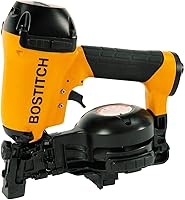
- BOSTITCH Coil Roofing Nailer: best for fast roofing work
- 3PLUS HCN45SP: best for high-capacity roofing
- BOSTITCH Coil Siding Nailer: best for lighter siding work
- Metabo HPT Coil Siding Nailer: best for siding nail choices
- Who should buy which tool?
- Set-up, care and safe use
- More guides on this topic
- The verdict: roofing nailer vs siding nailer
Use a siding nailer for siding and a roofing nailer for shingles. The two roofing models drive 3/4-inch to 1-3/4-inch nails, while the two siding models drive 1-1/4-inch to 2-1/2-inch nails.
Overlap in the middle range does not make the tools the same. Roofing nailers have a shingle guide for spacing, and siding nailers have a foot or cap to avoid marking boards.
We compared specs and features for these 4 models.

Roofing nailer vs siding nailer: the quick verdict
Pick a roofing nailer for shingles and a siding nailer for siding, even when one nail length overlaps. For tight spots where a full-size nailer will not fit, see palm nailers for roofing nails.
The nose, guide and foot decide whether the tool fits the material.
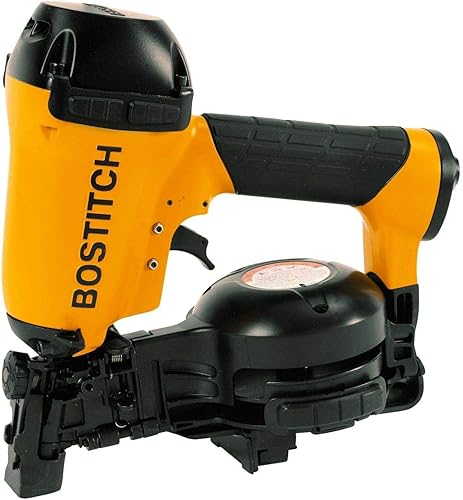
The BOSTITCH Coil Roofing Nailer scores 9.7 at 5.8 pounds. The 3PLUS HCN45SP scores 9.6 with up to 120 coil nails.
The BOSTITCH Coil Siding Nailer scores 9.5 at 4.1 pounds. The Metabo HPT Coil Siding Nailer scores 9.2 for wire or plastic collated nails.
Start with the job in front of you. Our nail gun guide helps you match tool type to material.
The two types side by side
Roofing nailers drive short full head nails; siding nailers drive longer nails and protect thin boards. That split shows up in nail diameter, weight and contact parts.
Roofing models here use 11 gauge full head nails on the 3PLUS model and a full round driver on the BOSTITCH model. Siding models use thinner diameters, from .080 inch to .092 inch on the BOSTITCH siding model.
| Feature | Roofing nailers here | Siding nailers here |
|---|---|---|
| Nail length | 3/4 inch to 1-3/4 inch | 1-1/4 inch to 2-1/2 inch |
| Guide or foot | Adjustable shingle guide | Soft rubber foot or no mar cap |
| Main job | Shingles, insulation board, fiber cement | Siding, fencing, clapboard and light gauge steel |
| Depth control | Tool-free or quick-set depth guide | Tool-less depth adjustment |
| Weight range | 5.8 pounds for the BOSTITCH model | 4.1 to 4.8 pounds |
A nail driven too deep can cut a shingle or crack siding. Both types let you set depth, but the nose tells you what the maker expects you to drive.
Nail length: the first thing to check
Check nail length first. Roofing nails stop at 1-3/4 inches here, while siding nails reach 2-1/2 inches.
Siding often needs a longer nail to pass through the board into sheathing. A long siding nail can poke through and damage a shingle.
The BOSTITCH roofing nailer and the 3PLUS use 3/4-inch to 1-3/4-inch nails. The BOSTITCH siding nailer uses 1-1/4-inch to 2-1/2-inch nails at .080 inch to .092 inch diameter.
The Metabo HPT accepts 16 degree wire collated nails from 1-1/2 to 2-1/2 inches and 15 degree plastic collated nails from 1-1/2 to 2-1/4 inches.
If your siding maker calls for a 2 inch nail, neither roofing model can drive it. See our guide to best siding nailer nails for collation and length choices.
Can I use a roofing nailer for siding?
Sometimes, but only when nail, head and depth all match the siding maker rules. Cross use is the exception, not the plan.
A roofing nailer can work for some fiber cement or exterior work, since the BOSTITCH roofing model lists fiber cement. That does not replace your board maker instructions.
Use it only if three checks pass: the nail reaches depth, the head holds as specified, and depth does not crack or overdrive the board.
The roofing nose can mark thin siding and set nails unevenly. Siding nailers offer a soft rubber foot on the BOSTITCH and a no mar cap on the Metabo HPT.
If in doubt, use the tool made for the material, as warranties care about fastener choice.
Nose, foot and guide: why shape matters
The nose decides how the nail lands and whether it marks the board. Roofing nailers use an adjustable shingle guide for quick spacing from the edge, as on both the BOSTITCH and 3PLUS models here.
Siding nailers use a foot or cap instead. The BOSTITCH siding model has a soft rubber foot for softer woods, while the Metabo HPT model has a no mar nose cap.
Those parts spread pressure and keep metal off soft siding. Depth guides then control head position, including quick-set on the BOSTITCH roofing model and tool-free or tool-less adjustment elsewhere.
Test depth on the same material first. Drive a few nails, check the heads, and adjust before you start on the wall or roof.
Weight and handling on the roof and wall
Roofing work rewards a tool you can move fast; siding work rewards a tool you can hold steady for hours. Weight alone does not settle it.
The BOSTITCH roofing nailer weighs 5.8 pounds and stays with you across a pitched roof. The BOSTITCH siding nailer weighs 4.1 pounds, and the Metabo HPT siding nailer weighs 4.8 pounds.
The BOSTITCH roofing model uses lightweight aluminum housing and an over molded grip for comfort. The 3PLUS model adds integrated side skid pads, so the tool is less likely to slide off the roof.
Roofing nailers also need to handle abrasive surfaces, so the BOSTITCH roofing model has aggressive wear guards and skid pads. A lighter body and a soft foot matter more for siding nailers pressing against flat boards.
Magazine size and reload speed
Fewer reloads help on a large roof; fast reloads help anywhere. The 3PLUS leads on capacity, the BOSTITCH roofing model on loading speed.
The 3PLUS HCN45SP holds up to 120 coil nails, cutting trips back for more nails on a big roof. The BOSTITCH roofing model uses a patented single-action side load canister for fast, one-step loading.
Its zero nail lockout helps prevent dry firing and signals when to reload. The BOSTITCH siding model lists a 350 nail magazine for long siding runs.
The Metabo HPT uses a side load, tilt bottom magazine and a plastic shield that deflects wire collation. The BOSTITCH roofing model can drive up to 100 nails per minute, so use care with recoil.
Our best coil roofing nailer guide covers that style in more depth.
Trigger type and firing control
Sequential firing gives one nail per pull; contact firing lets you drive as you bounce the tool. Both need respect.
The 3PLUS includes a black trigger for single shot sequential actuation and a red trigger for bumper fire. The maker warns bumper fire can double fire if recoil lets the safety tip re-contact the work.
Do not push the nailer in with strong force in bump mode. Let recoil take the tool fully away instead, and less skilled operators should use the black trigger.
The Metabo HPT uses selective actuation to switch between sequential and contact nailing. The BOSTITCH roofing model offers both, while the BOSTITCH siding model includes sequential trip.
New users should start in sequential mode and learn contact firing later.
Air power, exhaust and compressor match
Match compressor to tool range, then set pressure for depth. Power numbers describe force at set pressure, not a promise for every job.
The BOSTITCH siding model operates from 70 to 120 PSI and delivers 515 in/lbs. The BOSTITCH roofing model delivers 410 in/lbs at 100 psi, with less force needed for shorter nails.
Exhaust direction matters for comfort. The BOSTITCH siding model has tool-free adjustable exhaust, the Metabo HPT has an adjustable air deflector, and the 3PLUS has 360 degree tool-free air exhaust.
Our guide to the Best Air Compressor For Roofing Shingles and the siding guide help you pair tank and tool. Check hose, fittings and pressure, and set depth with test nails.
BOSTITCH Coil Roofing Nailer: best for fast roofing work
The BOSTITCH Coil Roofing Nailer fits roofers who want fast reloading and controlled depth on shingles. It drives 3/4-inch to 1-3/4-inch nails and weighs 5.8 pounds.
Its zero nail lockout helps prevent dry firing when the magazine runs low. The patented single-action side load canister supports fast, one-step loading, which adds up across hundreds of nails.
The adjustable shingle guide supports quick spacing, and the quick-set adjustable depth guide sets nails to desired depths quickly. The tool has lightweight aluminum housing, an over molded grip and a full round driver.
Carbide inserts in the nosepiece support long-life performance. This model suits professional roofers and builders who run coil nails all day, and exterior drywall, insulation board and fiber cement in its stated range.
3PLUS HCN45SP: best for high-capacity roofing
The 3PLUS HCN45SP fits roofers who want fewer reloads and a choice of firing modes. It drives 3/4-inch to 1-3/4-inch, 11 gauge, 15 degree full head coil nails.
Its magazine holds up to 120 coil nails. That capacity helps on large roofs where reload trips cost time and energy.
The tool-free adjustable depth of drive supports consistent nail fit. The 360 degree tool-free air exhaust lets you direct exhaust where you want it.
The interchangeable trigger is the headline feature. Use the black trigger for single shot sequential actuation, or the red trigger for bumper fire, following the maker steps to avoid double fire.
Integrated side skid pads help prevent sliding off the roof. The adjustable shingle guide supports quick spacing for asphalt and fiberglass shingles.
It also suits lath wire on plywood in its stated range.
BOSTITCH Coil Siding Nailer: best for lighter siding work
The BOSTITCH Coil Siding Nailer suits crews who want a light tool with long nails and a soft foot. It weighs 4.1 pounds and drives 1-1/4-inch to 2-1/2-inch nails.
It drives wire weld and plastic inserted coil nails at .080 inch to .092 inch diameter. That choice suits siding, fencing and clapboard in its stated range.
The soft rubber foot helps prevent damage to softer woods. The adjustable depth guide sets nails quickly and conveniently.
The lightweight aluminum design supports durability, and tool-free adjustable exhaust directs air away from you. It lists a 350 nail magazine for long walls.
It also fits cement and light gauge steel, with a 70 to 120 PSI range. See our best pneumatic siding nailer guide to compare more models.
Metabo HPT Coil Siding Nailer: best for siding nail choices
The Metabo HPT Coil Siding Nailer fits crews who swap between wire and plastic collated nails. It accepts 16 degree wire collated nails from 1-1/2 to 2-1/2 inches and 15 degree plastic collated nails from 1-1/2 to 2-1/4 inches.
The selective actuation switch moves between sequential and contact nailing. The side load, tilt bottom magazine supports fast reloads.
The no mar nose cap protects material from marks, tool-less depth adjustment sets depth for varied jobs, and the adjustable air deflector directs exhaust in any direction. A plastic shield deflects wire collation.
The tool weighs 4.8 pounds and carries a professional 5-year tool warranty. Included items are the NV65AH2, safety glasses and a no mar nose cap.
Who should buy which tool?
Buy by material first, then by nail range and weight. Shingle roofers should buy a roofing nailer, such as the BOSTITCH for fast all-day work or the 3PLUS for large roofs with its 120 nail magazine.
Siding crews should buy a siding nailer. The BOSTITCH siding model suits lighter work at 4.1 pounds, while the Metabo HPT suits crews using wire and plastic collated nails.
Fiber cement crews should check board maker rules first. The BOSTITCH roofing model lists fiber cement, but a siding nailer often gives longer nails and softer contact.
DIY users doing one roof should rent the right tool if they will not own it. See our best pneumatic roofing nailer guide for more roofing models.
Set-up, care and safe use
Set depth on test material, check pressure, and keep the nose clean. Start with safety glasses and hearing protection, keep hands clear of the nose and nail path, and disconnect air before clearing a jam or changing a trigger.
Load correct nails for tool and material. Use 3/4-inch to 1-3/4-inch full head coil nails in the roofing models, and siding lengths your maker calls for in siding models.
Set pressure in range, such as 70 to 120 PSI for the BOSTITCH siding model. Test on scrap and adjust until the head sits right.
Keep the magazine clean and check for bent collation, as a dirty nose can cause misfires. If a BOSTITCH tool misfires, our bostitch roofing nailer troubleshooting guide walks through checks.
Store dry and oil as the manual directs.
More guides on this topic
- Best Coil Siding Nailers
The verdict: roofing nailer vs siding nailer
Choose the tool made for your material, and use a roofing nailer for siding only when every spec matches. For shingles, pick the BOSTITCH Coil Roofing Nailer for fast reloading or the 3PLUS HCN45SP for a 120 nail magazine.
Both drive 3/4-inch to 1-3/4-inch nails.
For siding, pick the BOSTITCH Coil Siding Nailer for light weight or the Metabo HPT Coil Siding Nailer for wire and plastic collated nail choice. Both drive longer nails and protect the board.
If you do both jobs, plan for both tools over time. Cross use can work in a pinch, but it is not the same as a tool built for each task.
Check the siding maker and shingle maker rules for your exact material. Then match nail length, head size and depth to those rules.
Frequently asked questions
Can I use a roofing nailer for siding?
You can sometimes use a roofing nailer for siding, if the nail length, head size and depth fit the siding maker rules. Check the siding instructions first.
A siding nailer usually gives longer nails and a nose made to avoid marking thin siding.
Is a siding nailer vs roofing nailer difference just nail size?
Nail size is a major difference, but nose shape and depth control also matter. Roofing nailers use short nails and a shingle guide.
Siding nailers use longer nails and often add a soft foot or no mar cap to protect siding.
Which nailer is better for fiber cement siding?
A siding nailer is usually the safer choice for fiber cement, because it accepts longer siding nails and lets you set depth in small steps. The BOSTITCH coil siding nailer handles cement work in its stated range.
Follow the siding maker nail and depth rules for your exact board.
Can a siding nailer be used for roofing shingles?
A siding nailer is not a good substitute for a roofing nailer on shingles. Shingles need short, full head nails and spacing from a shingle guide.
A siding nailer drives longer nails and lacks that guide, so it can damage shingles or miss the required placement.