
What Gauge Wire For 220 Air Compressor?
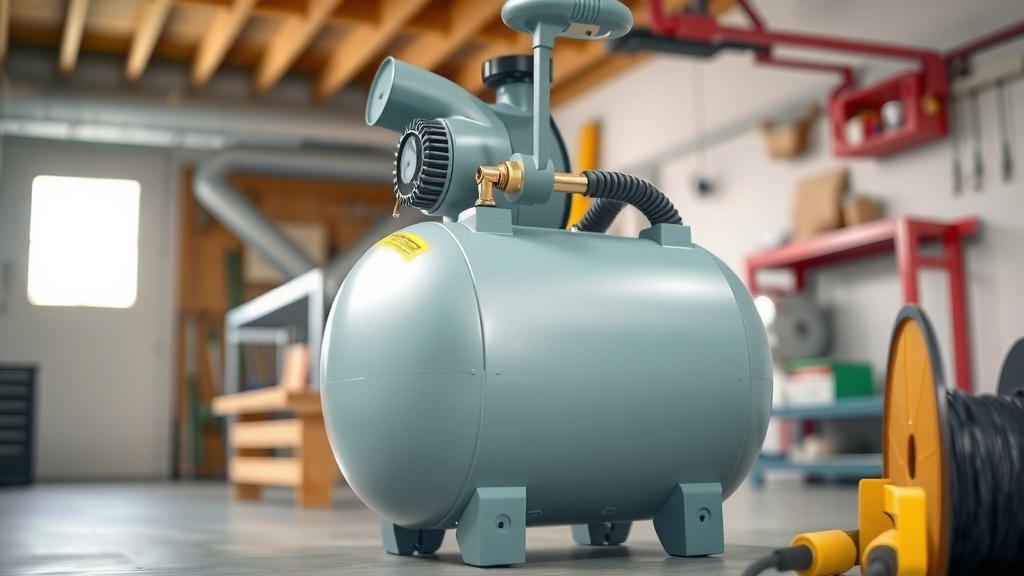
For a 220 air compressor, you will generally need 10-gauge wire for distances up to 50 feet if your compressor draws between 20 and 30 amps.
Always verify your specific air compressor’s amperage rating on its nameplate and strictly follow the National Electrical Code (NEC) guidelines to choose the correct wire gauge for safety and optimal performance.
- To power your 220V air compressor, the right wire gauge is essential for safety and proper function.
- The key factors are your compressor’s amperage draw and the distance from the breaker panel.
- Using too small a wire can cause overheating, damage, or even a fire hazard.
- Most 220V air compressors commonly use 10-gauge or 8-gauge wire, but always confirm your needs.
- When in doubt, it is always wise to consult a licensed electrician for peace of mind.
What Gauge Wire For 220 Air Compressor?
Choosing the correct wire gauge for your 220 air compressor is critical for both safety and performance. Most commonly, a 10-gauge wire is suitable for 20-30 amp compressors over typical distances up to 50 feet.
However, specific needs can vary. We found that matching your compressor’s demands to the wiring is not just a recommendation; it’s a safety imperative.
Why Does Wire Gauge Matter So Much?
Think of electricity flowing through a wire like water moving through a pipe. If the pipe is too narrow for the amount of water, pressure builds, and the pipe can burst.
Similarly, a wire that is too thin for the electrical current (amperage) will overheat. This overheating can quickly lead to insulation damage, tripped breakers, poor compressor performance, and even a serious electrical fire (National Electrical Code).
Understanding Your Compressor’s Amperage
Your air compressor’s amperage (amps) is the most critical piece of information. You will find this number clearly printed on the compressor’s nameplate or in its owner’s manual.
Never guess this figure. This amp rating tells you exactly how much electrical current the unit will draw when running. It helps you choose the correct wire and circuit breaker size.
Common Amperage Ranges for 220V Compressors
Many experts say typical 220V air compressors fall into distinct amperage categories. Knowing your compressor’s horsepower can often give you a good starting point for its electrical needs.
Remember, these are general ranges. Always check your specific unit’s rating for the exact amperage draw.
| Compressor HP (approx.) | Approx. Amps (220V) | Typical Wire Gauge |
|---|---|---|
| 2-3 HP | 15-20 Amps | 12-Gauge |
| 3-5 HP | 20-30 Amps | 10-Gauge |
| 5-7 HP | 30-40 Amps | 8-Gauge |
| 7.5-10 HP | 40-50 Amps | 6-Gauge |
Distance and Voltage Drop: The Hidden Factor
Did you know the distance between your electrical panel and your compressor also affects wire choice? A longer wire run means more resistance and a greater potential for voltage drop.
Imagine pushing water through a very long hose. The further it travels, the less pressure it has at the end. For electrical wiring, voltage drop reduces power, making your compressor work harder and potentially shortening its lifespan (IEEE).
Wire Gauge and Distance Guidelines
To counteract voltage drop over longer distances, you often need to use a thicker wire gauge. This allows more consistent power delivery to your equipment.
For instance, if a 10-gauge wire is fine for 30 feet, you might need an 8-gauge for a 75-foot run with the same compressor. Always aim for a maximum of 3% voltage drop.
The Role of Your Circuit Breaker
The circuit breaker is your electrical system’s bodyguard. It protects the wire from overheating by tripping and cutting power if the current draw exceeds a safe level.
Your breaker size must match the wire gauge you are using. A 30-amp breaker needs at least a 10-gauge wire, for example, to prevent serious issues.
Breaker Size and Wire Gauge Harmony
A mismatch between your wire gauge and circuit breaker is a recipe for trouble. If the wire is too thin for the breaker, the wire can overheat before the breaker trips.
This situation presents a severe fire risk. Always ensure your breaker is appropriately sized for the wire it protects, never oversized (NEC guidelines).
Types of Wire for Air Compressors
Most residential and light commercial applications use copper wire due to its excellent conductivity and resistance to corrosion. While aluminum is sometimes used, it requires larger gauges for the same current carrying capacity.
For stationary compressors, Romex (NM-B cable) is common for inside walls, but conduit with individual wires is needed in certain environments like garages or workshops.
Inside the Walls or Outside?
If running wire through walls, a non-metallic (NM) sheathed cable, often called Romex, is typical. However, if your wiring will be exposed or in a damp location, you may need wires inside protective conduit.
We found that for outdoor runs or specific industrial settings, different wire types and protective measures are necessary. Always match your wire to the installation environment.
Safety First: Always Consult an Electrician
Wiring a 220V air compressor is not a task for the faint of heart or the inexperienced. Working with high voltage electricity carries significant risks.
A licensed electrician ensures that all local codes are met. They confirm proper wire sizing, correct breaker installation, and a safe, reliable setup for your compressor. Don’t take chances with electrical work.
Checklist Before You Wire Up Your Compressor
- Double-check your compressor’s amperage rating on the nameplate.
- Measure the exact distance from your electrical panel to the compressor.
- Consult a wire gauge chart that accounts for amperage and distance.
- Ensure your circuit breaker matches the chosen wire gauge.
- Verify that the outlet and plug are rated for 220V and the correct amperage.
- Consider the environment (dry, damp, exposed) for proper wire type.
What If I Use the Wrong Wire Gauge?
Using a wire gauge that is too small for your 220 air compressor can lead to several dangerous and costly problems. The wire will overheat, posing a fire hazard.
Your compressor may also not get enough power. This can cause it to run inefficiently, wear out faster, or even fail prematurely. Poor performance and safety risks are just not worth it.
Conclusion
Selecting the right wire gauge for your 220 air compressor is a critical step for both safety and optimal operation. Remember, the compressor’s amperage and the length of the wire run are your two main guides.
We’ve found that neglecting these factors can lead to hazardous situations, damaged equipment, or simply frustrating performance. When in doubt, always lean on the expertise of a qualified electrician. They can provide professional guidance and ensure your setup meets all safety standards and local electrical codes. Taking the time to do it right means you can power up your compressor with confidence and peace of mind.
Can I use an extension cord with my 220V air compressor?
Generally, using an extension cord with a 220V air compressor is not recommended. If absolutely necessary for temporary use, you must select a heavy-duty, properly rated extension cord with the correct gauge and plug configuration to handle the compressor’s amperage and prevent voltage drop. Most experts recommend a dedicated circuit.
What is the difference between 220V, 230V, and 240V for air compressors?
For practical purposes, 220V, 230V, and 240V are often used interchangeably in residential and light commercial settings. These terms refer to the same nominal voltage range in North America. Modern electrical grids typically supply power around 240V, but equipment labels may still use the older 220V or 230V terminology without a significant functional difference.
How do I calculate voltage drop for my air compressor wire?
Calculating voltage drop involves Ohm’s Law and wire resistance tables. A common formula is: Voltage Drop = (2 x K x I x L) / CM, where K is the resistance constant for copper (12.9) or aluminum (21.2), I is current in amps, L is one-way length in feet, and CM is circular mils of the wire. Online calculators are also available, or a licensed electrician can quickly determine this for you.
Is it okay to use a wire gauge thicker than what is recommended?
Yes, using a wire gauge thicker (smaller number) than what is strictly recommended for your air compressor is generally safe and often beneficial. A thicker wire has less resistance, which reduces voltage drop and heat buildup. This can improve compressor performance and lifespan. The only downside is the increased cost of the thicker wire itself.
Does the type of outlet matter for a 220 air compressor?
Absolutely, the type of outlet and plug is crucial for a 220V air compressor. You need a dedicated 220V (or 240V) outlet that matches the compressor’s specific plug configuration, which varies based on amperage. For instance, a 30-amp, 240V compressor might use a NEMA 6-30R outlet, while a 50-amp compressor would use a NEMA 6-50R. Ensure the outlet, plug, and circuit breaker are all compatible.
