
What PSI Should I Inflate My RV Tires To?
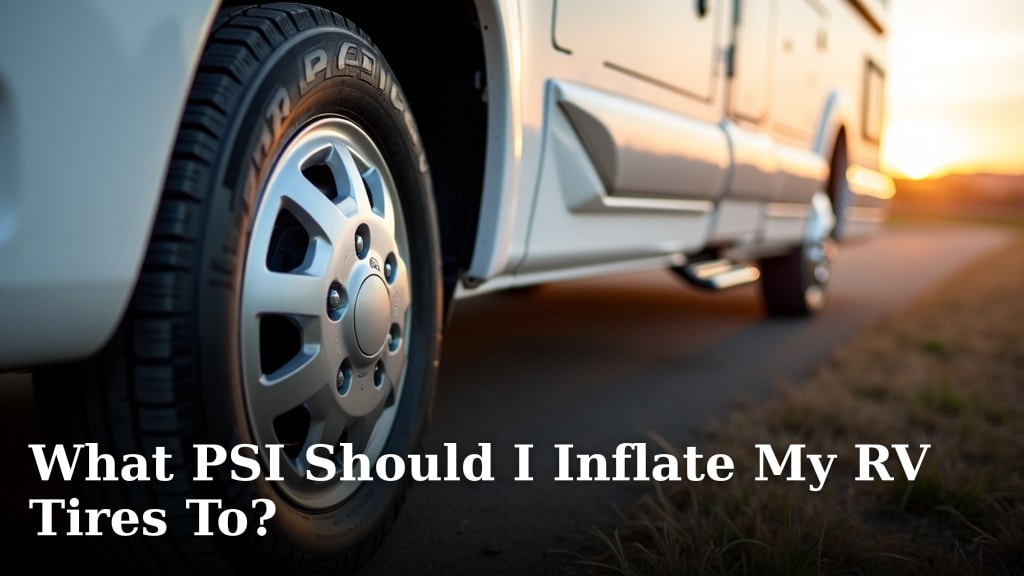
The PSI your RV tires should be inflated to isn’t a single number. It’s usually found on your RV’s tire sidewall or in your owner’s manual. Always start by checking these sources for the recommended PSI based on your specific RV model and load.
Inflating your RV tires correctly is essential for safety and performance. Over or under-inflated tires can lead to uneven wear and affect your RV’s handling. Many RVers don’t realize how much their tire pressure impacts the overall ride and safety.
- Check your RV’s tire sidewall for the max PSI.
- Your owner’s manual has specific load recommendations.
- Always use a reliable tire gauge.
- Adjust pressure based on your RV’s weight.
Let’s walk through how to find that perfect PSI for your RV tires and why it matters so much.
Finding the Right PSI for Your RV Tires
You’ve got your RV ready for an adventure, but before you hit the road, let’s talk tire pressure. Getting the PSI right is more than just a number; it’s about safety and a smooth ride. Think of it like the right amount of air in your bike tires – too little and it’s wobbly, too much and it’s bouncy and hard.
The question of “what PSI should I inflate my RV tires to?” doesn’t have a single, universal answer. It really depends on your specific RV. You’re not looking for a generic recommendation. You need the pressure tailored to your rig and your load. We’re going to break down exactly where to find this information and why it’s so important.
Why Tire Pressure Matters So Much
Your RV’s tires are its only connection to the road. The air inside them does a lot more than just keep the tire round. It supports the weight of your entire RV, including all your gear and passengers. It also helps with handling and braking.
Safety First: The Risks of Incorrect Pressure
Under-inflated tires are a major safety hazard. They generate more heat because they flex too much. This excessive heat can lead to tire failure or even a blowout. Imagine being miles from anywhere with a blown tire – not the start to a vacation you want!
On the flip side, over-inflated tires can be just as bad. They don’t flex as much, so they can’t absorb road imperfections as well. This leads to a harsher ride and can put extra stress on your RV’s suspension and even the tires themselves. Plus, over-inflated tires have a smaller contact patch with the road, which can reduce traction and affect braking.
Wear and Tear: Getting the Most Out of Your Tires
Proper inflation also plays a huge role in how your tires wear. Tires that are consistently under-inflated tend to wear out faster on the edges of the tread. Over-inflated tires often wear out more quickly in the center of the tread.
Uniform wear means you get the full lifespan out of your tires. This saves you money in the long run. It also ensures your RV handles predictably. Uneven wear can indicate a problem with your tire pressure or alignment. We want to avoid both!
Where to Find Your RV’s Recommended Tire Pressure
So, you know it’s important, but where do you find that magic number? The most reliable places are right there on your RV or in its documentation. Don’t guess; look for the official recommendations.
The Tire Sidewall: Max PSI vs. Recommended PSI
You’ll see a number on the sidewall of your RV tires. This is usually the maximum cold inflation pressure. It’s the highest pressure the tire can safely handle. This is NOT necessarily the pressure you should use for your RV.
Think of it like the weight limit on an elevator. The sign tells you the maximum it can hold, but you don’t fill it to that limit every time. Using the max PSI can lead to a harsh ride and improper wear if your RV isn’t loaded to its absolute maximum capacity.
Your RV’s Manufacturer’s Sticker or Plate
This is often the best place to start. Most RV manufacturers place a sticker or plate inside the driver’s side door jamb, on the vehicle’s chassis, or in the owner’s manual. This sticker provides the recommended tire pressure based on the specific axle weights your RV is designed to carry.
This recommendation takes into account the weight distribution of your RV. It’s designed to give you the best balance of safety, handling, and tire life. Always check this first!
Your RV Owner’s Manual: The Ultimate Guide
Your RV owner’s manual is a treasure trove of information. It usually has a dedicated section on tires. This section will often detail the manufacturer’s recommended tire pressures for the front and rear axles. It might also explain how to adjust pressure if you’re carrying a significantly different load.
If you can’t find a sticker on the RV, the owner’s manual is your next best bet. It’s designed to be your guide for all things related to your RV’s operation and maintenance.
Adjusting PSI Based on Your RV’s Weight
Here’s where things get a little more personalized. While the manufacturer’s sticker gives you a baseline, your actual weight can vary. This is especially true for RVs, as you might load them differently for different trips. You can’t just set it and forget it.
Weighing Your RV: The Key to Accuracy
The most accurate way to determine your ideal tire pressure is to know the actual weight of your RV. You can get your RV weighed at a public scale, often found at truck stops or agricultural weigh stations. It’s a good idea to weigh it in different configurations: empty, with typical travel gear, and perhaps even fully loaded.
Weighing each axle separately is even better. This gives you the precise load on your front and rear tires. Tire manufacturers often provide charts that link specific tire loads to recommended inflation pressures. These charts are available on their websites.
For example, we found that many guidelines point to using charts provided by the tire manufacturer, like Goodyear or Michelin. These charts are based on load inflation tables. You look up the weight on your axle and find the corresponding PSI. This is a more precise method than just using the sticker number if your weight differs significantly.
Understanding Load Inflation Tables
Load inflation tables, often called LI tables, are your best friend here. They are published by tire manufacturers and are based on rigorous testing. You find the weight on your axle and then match it to the required tire pressure in the table.
Remember, these tables generally give you the pressure needed to support that specific load. You’re usually looking for the pressure that meets or slightly exceeds the weight on your axle, but never exceeding the maximum pressure listed on your tire’s sidewall.
| Axle Weight (lbs) | Recommended Tire Pressure (PSI) |
|---|---|
| 4,000 | 65 PSI |
| 4,500 | 70 PSI |
| 5,000 | 75 PSI |
| 5,500 | 80 PSI |
| 6,000 | 85 PSI |
This table is a simplified example. Always refer to the official tables from your specific tire brand. The weights and pressures will vary. The key is understanding how weight directly impacts the needed pressure.
Tips for Maintaining Proper RV Tire Pressure
Maintaining the correct tire pressure isn’t a one-time task. It requires ongoing attention. Your tires will naturally lose a small amount of air over time.
Regular Checks Are Non-Negotiable
We recommend checking your tire pressure at least once a month. It’s also a good idea to check them before any long trips. Cold tire pressure readings are the most accurate. This means checking them before the RV has been driven for several hours or for more than a mile.
Using a Reliable Tire Gauge
Don’t rely on the gauges built into air compressors or the ones at gas stations, as they can be inaccurate. Invest in a good quality digital or pencil-style tire gauge. They are inexpensive and provide much more reliable readings.
Don’t Forget Your Spare!
Your spare RV tire needs the correct pressure too! It’s useless if it’s flat when you need it most. Make sure it’s always inflated to the recommended pressure for your RV’s axle weight, or at least the maximum pressure listed on its sidewall if you don’t know the exact weight it might support.
Seasonal Adjustments? Usually Not Needed.
For most RVers, extreme seasonal temperature changes don’t require significant pressure adjustments. The general rule is that tire pressure increases by about 1 PSI for every 10-degree Fahrenheit rise in temperature and decreases by the same amount for a 10-degree drop. However, the manufacturer’s recommendations and load inflation tables are designed to account for typical temperature fluctuations.
Unless you are experiencing extreme temperature swings or have specific guidance from your tire manufacturer, sticking to the recommended cold inflation pressure is usually sufficient. The “cold” reading is key here, as it provides a baseline that’s less affected by ambient temperature changes during your drive.
Your RV Tire Pressure Checklist:
- Locate your RV’s manufacturer sticker or owner’s manual.
- Note the maximum PSI on your tire sidewalls.
- Weigh your RV, especially each axle, for accurate load data.
- Consult your tire manufacturer’s load inflation tables.
- Check cold tire pressure at least monthly and before long trips.
- Use a reliable tire pressure gauge.
Conclusion
You’ve learned that your RV’s tire pressure is a critical safety and performance factor. Remember, the number on your tire’s sidewall is its maximum, not your target. Always prioritize the recommendations found on your RV’s manufacturer sticker or in your owner’s manual. For the most precise settings, weigh your RV and consult your tire manufacturer’s load inflation tables. Taking these steps ensures a safer, smoother, and more economical journey. Your next step should be to grab a reliable gauge and check your tires’ cold pressure before your next outing!
Frequently Asked Questions
Can I just use the PSI listed on my RV tires?
No, the pressure listed on your RV tires is typically the maximum cold inflation pressure. This is the highest pressure the tire can safely handle, not necessarily the recommended pressure for your specific RV and load. Using the maximum can result in a harsh ride and improper tire wear.
How often should I check my RV tire pressure?
You should check your RV’s tire pressure at least once a month. It’s also a smart practice to re-check them before any long trips or extended periods of storage. Always check the pressure when your tires are cold, meaning they haven’t been driven for several hours.
What happens if my RV tires are under-inflated?
Under-inflated tires can lead to excessive heat buildup, increasing the risk of a blowout. They also cause the edges of your tire tread to wear down faster and can negatively impact your RV’s handling and braking capabilities.
Is it okay to use a gas station air pump for my RV tires?
It’s generally best to use a reliable, high-quality tire gauge that you own. Many gas station air pumps and built-in compressor gauges can be inaccurate. Investing in your own gauge ensures you’re getting the most precise reading for your RV tires.
Do I need to adjust my RV tire pressure for different loads?
Yes, your RV’s tire pressure should ideally be adjusted based on its actual weight. If you frequently load your RV differently, weighing each axle and consulting load inflation tables from your tire manufacturer will give you the most accurate PSI for varying loads.
