
When Was The First Air Compressor Made?
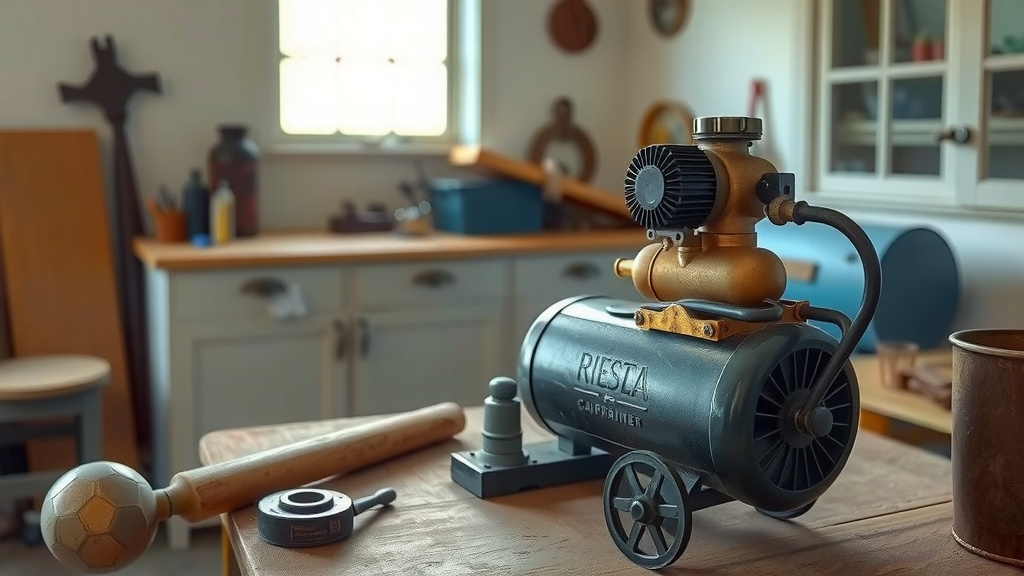
The concept of using compressed air has roots in ancient times with simple bellows.
However, the first practical mechanical device recognizable as an air compressor was patented by William Mann in 1829 in Britain.
- The journey of the air compressor began with simple bellows in ancient civilizations.
- The first patent for a mechanical air compressor was granted to William Mann in 1829.
- This invention paved the way for industrial applications during the Industrial Revolution.
- Today’s compressors build upon centuries of innovation, making many industries possible.
- Understanding its history helps us appreciate modern compressor technology and its impact.
When Was The First Air Compressor Made?
While people have manipulated air for millennia, the first recognizable mechanical air compressor was patented by William Mann in 1829. This British invention truly marked a turning point.
Ancient Roots of Air Compression
Before Mann’s innovation, you might wonder how ancient civilizations handled air compression. They used simple bellows, a foundational technology. These devices, known for millennia, compressed air by physical force.
Ancient Egyptians, for instance, employed bellows to stoke fires for smelting metals. This early use showed an understanding of concentrating air for power. It was a manual, often arduous task.
The Dawn of Mechanical Compression
Fast forward many centuries, and you see scientific exploration beginning to tackle air more systematically. In the 17th century, Otto von Guericke famously demonstrated the power of a vacuum with his Magdeburg hemispheres. This wasn’t compression, but it showed the potential of air dynamics.
By the 18th century, engineers started developing pumps for more specialized needs. For example, early diving bells required systems to provide fresh air underwater. These were rudimentary, yet they laid groundwork for future mechanical advancements.
William Mann: The 1829 Breakthrough
The year 1829 stands out because of William Mann’s British patent. He introduced a multi-stage air compressor design. This was a significant leap from simple bellows or single-stage pumps, offering greater efficiency and pressure.
Mann’s design allowed for cooling between compression stages. This feature dramatically improved performance by reducing heat buildup, a common challenge in early designs. It was truly an engineering marvel for its time.
Why Was Mann’s Compressor So Important?
Imagine the difference between cranking a car by hand and starting it with a button. Mann’s invention represented a similar leap. It moved air compression from a laborious, low-pressure task to a potentially powerful industrial tool. It laid the foundation for modern industrial applications.
Early 19th Century Industrial Needs
The Industrial Revolution was in full swing during Mann’s time. Industries like mining and tunneling desperately needed better tools. They sought ways to power machinery deeper underground, where steam engines were impractical or dangerous.
Compressed air offered a safer and more versatile power source for these environments. We found that the need for robust drilling and ventilation systems was a major driver for innovation in compressor technology during this era.
The Need for Power and Efficiency
As factories grew, so did the demand for automation. Compressed air could power hammers, drills, and lifts. It was a clean energy source compared to steam, offering more localized control. Many experts say this period truly solidified the role of air power in industry.
Expanding Applications and Innovations
From mining, the use of compressed air quickly spread. It found its way into railway braking systems and eventually into pneumatic tools. These innovations made many tasks faster, safer, and more efficient. Think of it as a quiet revolution, powering countless developments behind the scenes.
Here’s a quick look at some key moments:
- 1829: William Mann patents the multi-stage air compressor, reducing heat.
- Mid-1800s: Compressed air rock drills revolutionize tunnel construction (e.g., Mont Cenis Tunnel).
- Late 1800s: George Westinghouse invents compressed air brakes for trains, vastly improving safety.
- Early 1900s: Electric motors begin to power compressors, increasing their accessibility and efficiency.
- Mid-1900s: Rotary screw compressors gain popularity for continuous, pulsation-free air delivery.
Key Milestones in Air Compressor Evolution
The development of air compressors wasn’t a single event but a continuous process. Here’s how different innovations built upon each other, making today’s machines possible.
| Era | Key Development | Impact |
|---|---|---|
| Ancient Times | Bellows for fire | Early manual air concentration |
| 1829 | Mann’s multi-stage patent | Foundation of mechanical compression |
| Mid-1800s | Compressed air rock drills | Revolutionized heavy construction |
| Late 1800s | Air brakes (Westinghouse) | Enhanced railway safety |
| Early 1900s | Electric motor integration | Increased efficiency and reach |
Reciprocating Compressors Take Shape
You probably recognize the piston-driven, reciprocating compressor. These became incredibly popular in the early 20th century. They work much like an internal combustion engine, using pistons to draw in and compress air. Many experts say they are still a workhorse in many workshops today.
The Rise of Rotary Compressors
Later developments introduced rotary compressors, like the popular screw compressor. Instead of pistons, these use rotating elements to compress air. They offer continuous, pulsation-free airflow, ideal for applications needing a steady supply. This design provided new levels of reliability for industrial settings.
Modern Air Compressors: A Legacy of Innovation
Today, you’ll find an incredible variety of air compressors. They range from tiny, portable units for hobbies to massive industrial systems powering entire factories. Each type owes its existence to the foundational work done by Mann and others. They are truly the invisible muscle behind much of our modern world.
What Drives Compressor Innovation Today?
Modern innovation focuses on making compressors more energy-efficient, quieter, and smarter. There’s a strong push for greener technologies to reduce environmental impact. We found that manufacturers are constantly refining designs to meet stringent new standards (ISO standards often guide this).
Choosing the Right Compressor for Your Needs
If you’re considering an air compressor, the historical journey reminds us how far they’ve come. Today, you have many choices. Selecting the right one depends on your specific tasks. Here’s a quick checklist to help you choose:
- Consider your power source (electric, gas, battery).
- Determine the required pressure (PSI) for your tools.
- Estimate the air volume (CFM) needed for continuous use.
- Think about portability if you need to move it often.
- Evaluate noise levels, especially for indoor use.
- Check the maintenance needs and available parts.
Conclusion
The story of the air compressor is a fascinating journey from ancient bellows to sophisticated industrial machines. While the idea of compressing air is ancient, William Mann’s 1829 patent marked the birth of the mechanical air compressor as we know it. This invention wasn’t just a curiosity; it was a foundational technology that fueled the Industrial Revolution and continues to power countless aspects of our lives today. Understanding this history helps you appreciate the innovation that continues to make air compressors more efficient, versatile, and essential.
What are the main types of air compressors used today?
Today, the most common types you’ll encounter are reciprocating (piston) compressors and rotary screw compressors. Reciprocating units are great for intermittent use, while rotary screw compressors are often chosen for continuous, heavy-duty industrial applications due to their efficiency and steady airflow.
How does a modern air compressor actually work?
At its core, an air compressor works by drawing in ambient air, reducing its volume, and thus increasing its pressure. Reciprocating compressors use pistons moving within cylinders, while rotary screw compressors use two interlocking helical rotors that trap and compress air as they rotate. The compressed air is then stored in a tank for later use.
What are some common uses for air compressors?
Air compressors are incredibly versatile! You’ll find them powering pneumatic tools like nail guns and impact wrenches, inflating tires, spray painting, sandblasting, and even running complex machinery in manufacturing plants. They are essential in automotive, construction, dental, and many other industries.
How often should I service my air compressor?
The service interval for your air compressor largely depends on its type, usage frequency, and the manufacturer’s recommendations. Generally, routine checks like draining moisture from the tank should be done daily or weekly. Oil changes and filter replacements might be every few hundred operating hours or annually. Always consult your owner’s manual for specific guidelines to ensure longevity and safety.
Can I use any air compressor for any task?
No, not all air compressors are suitable for every task. Different tasks require varying amounts of pressure (PSI) and airflow (CFM). For instance, a small pancake compressor might be fine for inflating tires or light nailing, but you would need a much larger, higher-capacity industrial compressor to power a sandblaster or multiple heavy-duty pneumatic tools simultaneously. Matching the compressor’s capabilities to your tools’ requirements is key for optimal performance and to avoid damage.
