
How Air Compressor Works Animation?
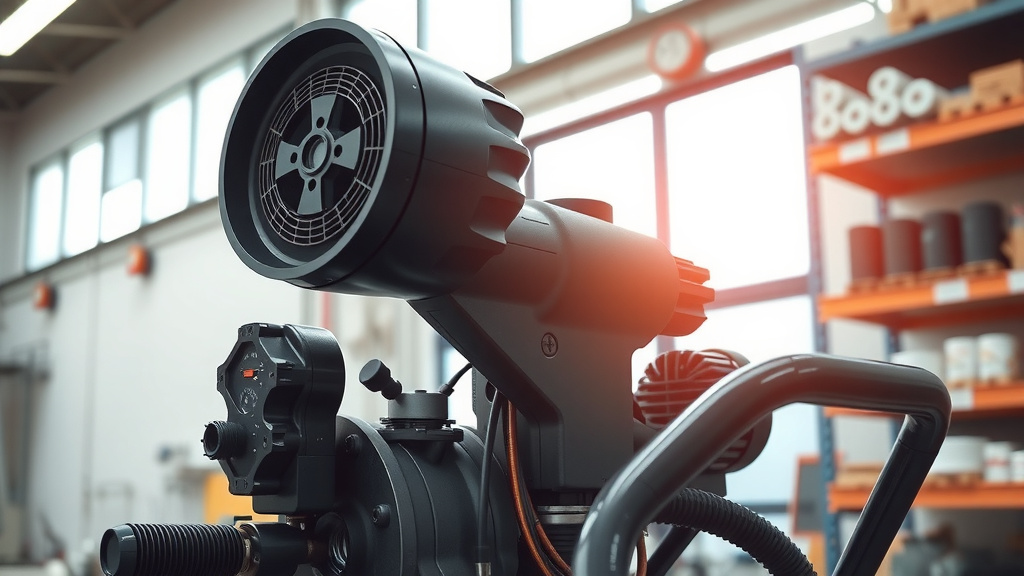
An air compressor works by taking in ambient air and compressing it into a smaller volume, thereby increasing its pressure and storing this energy for later use.
Watching an “How Air Compressor Works Animation” visually breaks down this complex mechanical process, showing pistons moving, screws rotating, or impellers spinning to build up pressure efficiently.
- Air compressors convert electrical or fuel power into potential energy stored in pressurized air.
- They function by drawing in environmental air and then forcibly reducing its volume, which increases its pressure.
- The two primary categories are positive displacement (like piston and rotary screw) and dynamic (such as centrifugal).
- Animations provide clear, step-by-step visuals of the internal components, simplifying complex operational principles.
- Understanding these internal workings helps you select the correct compressor type for your specific needs.
How Air Compressor Works Animation?
An air compressor animation vividly illustrates how these machines operate by drawing in ambient air and then significantly reducing its volume. This process dramatically increases the air’s pressure, storing it as potential energy ready for various tasks. It’s a fascinating dance of mechanics!
The Core Idea Behind Compression
Imagine you have a balloon, and you try to squeeze all the air into a smaller space. What happens? The air inside gets really pushy, right? That’s the basic concept of compression. An air compressor does this mechanically, but on a much larger and more powerful scale. It’s like a mechanical lung, breathing in and squeezing out.
Why Do We Need Compressed Air?
You might wonder, why bother with all this squeezing? Well, compressed air is an incredibly versatile power source. We found it powers everything from simple hand tools in your garage to heavy machinery in large factories (industry reports). It’s also used for inflating tires, painting, and even in medical equipment. It truly is the unsung hero of many industries.
The Two Main Types: Positive Displacement vs. Dynamic
When you look at air compressors, you generally encounter two big families: positive displacement and dynamic. Each family has its own unique way of making air pushy. Think of it like different ways to get water from a well: one might pull it up, another might push it out.
Understanding Positive Displacement Compressors
Positive displacement compressors work by trapping a fixed amount of air and then forcibly reducing its volume. It’s a bit like giving air a tight hug until it has nowhere else to go. This type is generally more common for everyday uses and many industrial tasks.
Reciprocating (Piston) Compressors: A Closer Look
These are likely what you picture first. A reciprocating compressor uses a piston that moves up and down within a cylinder, much like an engine piston. As the piston pulls back, it creates a vacuum, drawing in air. Then, as it pushes forward, it squeezes that air into a smaller space, increasing its pressure (mechanical engineering principles). An animation would clearly show the valve opening and closing, and the piston’s rhythmic motion.
When watching a piston compressor animation, look for these key actions:
- Inlet valve opening: Air rushes in.
- Piston descending: Creating space for air.
- Piston ascending: Compressing the trapped air.
- Outlet valve opening: Pressurized air exits.
- Continuous cycling: Repeating this process tirelessly.
Rotary Screw Compressors: Smooth and Steady
Rotary screw compressors are another popular positive displacement type. Instead of pistons, they use two large, interlocking helical (screw-shaped) rotors. As these rotors turn, they trap air between them and progressively reduce the volume as the screws mesh together. Many experts say they offer a smooth, continuous flow of compressed air (industrial best practices). An animation here is fantastic for showing the synchronized rotation and the gradual compression.
Exploring Dynamic Compressors
Dynamic compressors, on the other hand, don’t trap a fixed volume of air. Instead, they speed up the air using rapidly rotating impellers and then slow it down, converting that speed into pressure. It’s like a slingshot effect for air molecules!
Centrifugal Compressors: High Volume Power
Centrifugal compressors are often seen in very large industrial applications needing massive amounts of compressed air. They use a rapidly spinning impeller to accelerate air outwards, much like a centrifuge. This high-velocity air then enters a diffuser where it slows down, and its kinetic energy is converted into pressure. Research often connects these units with high-volume, consistent air supply (fluid dynamics research). An animation would highlight the incredible speed of the impeller and how air changes direction and pressure.
Key Components in Action
No matter the type, an air compressor has several core parts working together. Understanding them helps you appreciate the machine’s overall intelligence. Here’s a quick overview of some essential components you’d see in an animation:
| Component | What It Does | Why It’s Important |
|---|---|---|
| Motor/Engine | Provides the power source. | Drives the compressor mechanism. |
| Air Filter | Cleans incoming air. | Protects internal parts from debris. |
| Compressor Pump | The actual air compression part. | Creates the high-pressure air. |
| Air Tank | Stores compressed air. | Provides a reservoir of energy. |
| Pressure Switch | Turns the compressor on/off. | Maintains desired pressure levels. |
| Safety Valve | Releases excess pressure. | Prevents dangerous over-pressurization. |
The Cycle of Compression: Step-by-Step
Even though different compressor types work in distinct ways, the overall goal and stages are quite similar. It’s a continuous loop of work to provide you with that steady stream of power.
Here’s a simplified cycle you might observe in an animation:
- Intake: Ambient air is drawn into the compressor, often through a filter.
- Compression: The air volume is reduced by mechanical means (pistons, screws, impellers).
- Storage: The high-pressure air is then pushed into a storage tank.
- Regulation: A pressure switch monitors the tank level, turning the compressor off when full and on when pressure drops.
- Distribution: Compressed air is released from the tank, flowing through hoses to power tools or equipment.
The Magic of Animation: Visualizing the Process
An animation isn’t just a fancy video; it’s a powerful educational tool. It takes something complex, like the internal mechanics of a rotary screw, and makes it accessible. We found that visual learning significantly improves understanding of intricate systems (educational psychology studies). So, don’t just read about it; watch it!
What an Animation Shows You
A good air compressor animation reveals the inner workings you can’t see from the outside. You get to witness the synchronized movement of components, the flow of air, and how energy is transformed. It’s like having X-ray vision for machinery. You’ll see the air intake, the compression chamber, and the air being forced into the storage tank. This helps solidify your understanding of how everything works together.
Choosing the Right Compressor for Your Needs
Understanding how air compressors work, perhaps through a helpful animation, can guide your buying decisions. If you need steady, high-volume air for continuous use, a rotary screw might be perfect. For intermittent tasks or smaller shops, a piston compressor could be the more practical choice. Your application dictates the best type, and seeing them in action can truly clarify the differences.
Conclusion
Air compressors are truly remarkable machines, quietly powering countless tasks around us. Whether it’s the rhythmic thrum of a piston, the smooth rotation of screws, or the high-speed whirl of an impeller, the core principle remains the same: taking ambient air and turning it into stored energy. Watching an air compressor works animation can demystify these powerful tools, helping you appreciate their design and functionality. It’s a fantastic way to grasp the mechanics, making you a more informed user or buyer. So, next time you hear that familiar hum, you’ll know exactly what’s going on inside!
What is the main function of an air compressor?
The main function of an air compressor is to convert power (from an electric motor or gasoline engine) into kinetic energy by compressing and pressurizing ambient air, which is then stored in a tank for later use as pneumatic power.
Are all air compressors the same in how they work?
No, not all air compressors work the same way. While the goal is always to compress air, they differ significantly in their mechanical methods. For instance, piston compressors use reciprocating motion, while rotary screw compressors use rotating helical rotors, and centrifugal compressors rely on high-speed impellers.
Why is it helpful to watch an air compressor animation?
Watching an air compressor animation is incredibly helpful because it provides a clear, visual breakdown of complex internal mechanisms that are otherwise hidden. It allows you to see the movement of parts and the flow of air, significantly improving your understanding of how the machine actually operates.
What kind of energy does compressed air store?
Compressed air stores potential energy. When air is squeezed into a smaller volume, its molecules are forced closer together, creating higher pressure. This stored pressure can then be released to perform work, like powering tools or inflating objects.
Can I use any type of air compressor for any job?
While some compressors are versatile, it’s generally not ideal to use any type for any job. Different applications have varying demands for air volume, pressure, and continuity. Choosing the right compressor type, like a piston for intermittent use or a rotary screw for continuous industrial work, ensures efficiency and longevity of both the compressor and the tools it powers.
