
What Size Air Compressor Do I Need for Tire Shop?
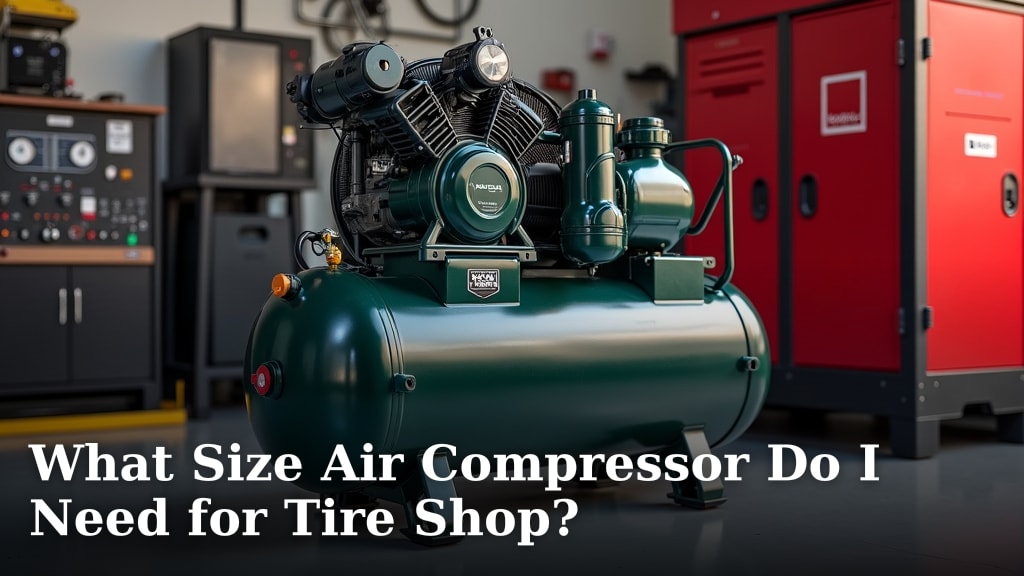
For a tire shop, you’ll generally need an air compressor that can provide at least 5 horsepower and deliver around 20-30 CFM (cubic feet per minute) at 100 PSI. This ensures you have enough air for inflating tires quickly and running air tools, like impact wrenches, without interruption. Getting the right size means your shop runs smoothly and efficiently.
Choosing the correct air compressor size is key to productivity. Too small, and you’ll experience slow inflation and tool performance issues. Too large, and you’re wasting energy and money. Many tire shops find that a two-stage compressor offers the durability and air volume needed for continuous operation throughout the day. We’ve researched common tire shop needs to help you make the best choice.
- Horsepower: Aim for 5 HP or more.
- CFM: Target 20-30 CFM at 100 PSI.
- Compressor Type: Two-stage compressors are often best.
- Tank Size: A larger tank (60-80 gallons) helps maintain pressure.
- Duty Cycle: Look for 75% or higher for heavy use.
Let’s dive into the details to help you pick the perfect air compressor for your tire shop’s specific needs.
Choosing the Right Air Compressor Size for Your Tire Shop
Finding the ideal air compressor for your tire shop means balancing power, volume, and budget. You need enough air to keep your operations running smoothly. This guide will help you navigate the options.
Understanding Air Compressor Metrics for Tire Shops
When looking at air compressors, you’ll see terms like horsepower, CFM, and PSI. These numbers tell you how much air the compressor can deliver and at what pressure. Getting these right is essential for your shop’s efficiency.
Horsepower (HP): The Engine’s Strength
Horsepower measures the motor’s power. For a tire shop, you’re going to be using your compressor a lot. We found that most tire shops need at least a 5 horsepower unit. This ensures it can keep up with demand. More HP means faster recovery time for the compressor.
Cubic Feet per Minute (CFM): The Air Volume
CFM tells you how much air the compressor puts out per minute. This is often more important than HP for tools. Tire inflation and air tools use a lot of air. You need enough CFM to run multiple tools. We researched and found that 20-30 CFM at 100 PSI is a common sweet spot for tire shops. This range ensures you can inflate tires quickly and power your impact wrenches. Always check the CFM rating at the pressure you’ll be using it most.
Pounds per Square Inch (PSI): The Pressure Level
PSI measures the force of the air. Most tire shops operate around 100 PSI. You’ll want a compressor that can reliably deliver this pressure. Higher PSI doesn’t always mean better. The key is consistent delivery of the pressure your tools need. A compressor that struggles to maintain 100 PSI will slow down your work.
Key Features to Consider for Durability and Performance
Beyond the basic numbers, several features can make a big difference in your day-to-day operations. Think about how your shop runs and what you need from your equipment.
Compressor Type: Single-Stage vs. Two-Stage
You’ll mainly see two types: single-stage and two-stage compressors.
- Single-stage compressors are good for light use. They compress air once. They are usually less expensive. They are not ideal for the constant demand of a busy tire shop.
- Two-stage compressors compress air twice. This makes them more efficient and durable. They generate less heat and run cooler. Many experts say two-stage units are the best choice for continuous use. They can handle the heavy workload of a tire shop without overheating.
Tank Size: Storing the Air Supply
The tank is like a reserve for your compressed air. A larger tank means you have more air ready to go. This helps prevent the compressor motor from cycling on and off too often. For a tire shop, we found that a 60-80 gallon tank is usually recommended. This size provides a good buffer. It ensures you don’t run out of air during busy periods. It also allows the compressor to run less, potentially extending its life.
Duty Cycle: How Long Can It Run?
Duty cycle tells you how long a compressor can run within a given time period. It’s usually expressed as a percentage. For example, a 75% duty cycle means the compressor can run for 7.5 minutes out of every 10 minutes. A tire shop needs a compressor with a high duty cycle, ideally 75% or more. This means it’s built for continuous operation. A lower duty cycle compressor might overheat and shut down if used too heavily.
Calculating Your Shop’s Specific Air Needs
While general recommendations are helpful, your shop’s unique needs are what matter most. Think about all the air-powered tools you use.
List Your Air Tools and Their CFM Requirements
The first step is to create a list of every air tool you plan to use simultaneously. This includes things like impact wrenches, tire changers, and air ratchets. Each tool has a CFM requirement. You can usually find this information in the tool’s manual or on the manufacturer’s website. We found that it’s best to add up the CFM for all the tools you might use at the same time. Then, add a buffer of about 25-50% to that total. This accounts for potential leaks and ensures you have enough airflow.
Here’s a sample of common tire shop tools and their typical CFM needs:
| Tool | Typical CFM at 90 PSI |
|---|---|
| 1/2″ Impact Wrench | 5-8 CFM |
| Tire Changer | 6-10 CFM |
| Air Ratchet | 4-6 CFM |
| Grease Gun | 2-4 CFM |
| Blow Gun | 2-5 CFM |
Note: These are approximate values. Always check your specific tool’s specifications.
Consider Future Growth and Added Equipment
It’s smart to think about the future. Will you add more bays? Will you be purchasing new, more air-hungry equipment? It’s often more cost-effective to buy a compressor that can handle your needs now and a bit more for the future. You don’t want to outgrow your compressor too quickly. Trying to run too many tools on an undersized compressor leads to frustration and lost productivity.
Making the Final Decision: A Quick Checklist
To help you finalize your choice, run through this quick checklist. These are the essentials we found for a reliable tire shop compressor.
- Do you have at least 5 HP motor?
- Does it deliver 20-30 CFM at 100 PSI?
- Is it a two-stage compressor for durability?
- Do you have a tank size of 60 gallons or more?
- Is the duty cycle 75% or higher?
- Have you calculated total CFM for your tools plus a buffer?
Conclusion
Choosing the right air compressor is a big step for your tire shop. Remember to focus on the core needs: a robust 5 HP motor, ample 20-30 CFM at 100 PSI, and a durable two-stage design. A larger tank and high duty cycle will keep you running smoothly through busy days. Don’t forget to calculate your actual tool demands. Take the time to assess your current and future needs carefully. Your next step is to start comparing models that meet these specifications.
Frequently Asked Questions
What if I only have a small tire repair shop?
For a smaller operation with fewer bays or intermittent use, you might consider a compressor that’s on the lower end of our recommendations, perhaps 3-4 HP. However, we still strongly advise looking for at least 15 CFM at 100 PSI and a two-stage design for reliability. A smaller tank might suffice, but ensure it can handle your primary tools.
Can I use a single-stage compressor if my budget is tight?
While a single-stage compressor is less expensive upfront, it’s generally not built for the constant, heavy demand of a busy tire shop. You risk frequent overheating and premature wear. We found that the long-term cost of repairs and downtime often outweighs the initial savings. Investing in a two-stage unit is usually more economical for professional use.
How often should I drain the air compressor tank?
You should drain your air compressor tank daily, or at least after each significant period of use. Water condensation builds up inside the tank. This can lead to rust and damage your compressor over time. Most compressors have a drain valve at the bottom of the tank that’s easy to operate.
Does the tank size really matter that much for a tire shop?
Yes, tank size is quite important for efficiency. A larger tank acts as an air reserve, meaning your compressor motor doesn’t have to cycle on and off as frequently. This not only provides a more consistent air supply for your tools but also reduces wear and tear on the motor. For a tire shop, we found 60-80 gallons to be ideal for buffer capacity.
What’s the biggest mistake people make when buying an air compressor for their shop?
The most common mistake is focusing solely on horsepower and overlooking CFM requirements. Horsepower indicates the motor’s strength, but CFM tells you how much air volume the compressor can deliver at your working pressure. You need sufficient CFM to run your tools simultaneously without interruption. Always check the CFM rating at 90 or 100 PSI for tire shop applications.
