
Can You Put 2 Air Compressors Together?
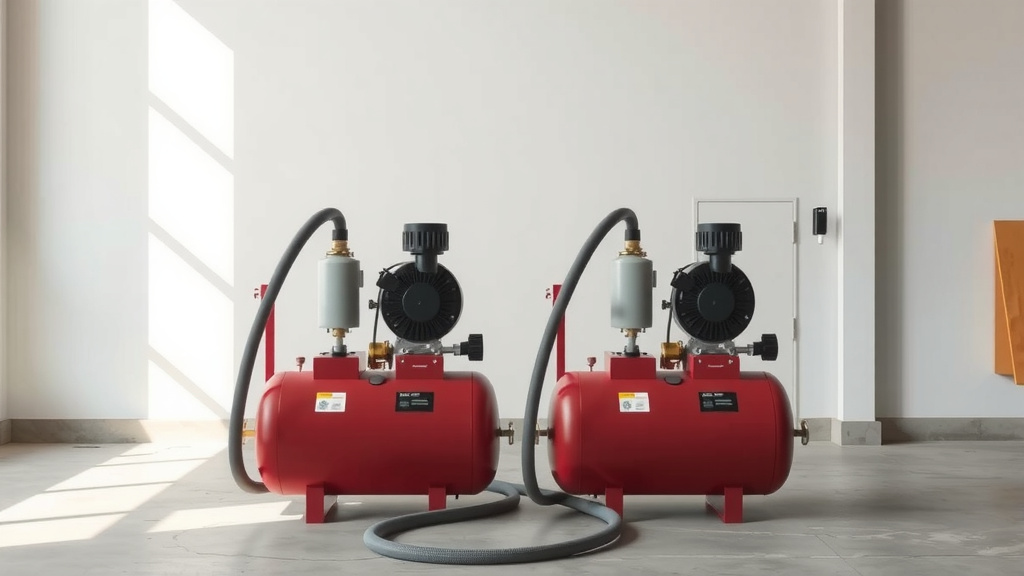
Yes, you can put two air compressors together to increase your air capacity or pressure for demanding tasks.
Connecting air compressors requires careful consideration of tank size, pressure settings, and safety protocols for optimal performance.
Here’s a quick summary of what you’ll find in this article:
- You can combine two air compressors for more air volume or higher working pressure.
- Matching your compressor sizes and pressure settings is crucial for the best outcomes.
- Using proper plumbing with check valves and safety releases is essential for safety.
- A thoughtful setup prevents equipment damage and ensures a reliable air supply.
- It’s often a smart and practical way to boost your workshop’s pneumatic power.
Can You Put 2 Air Compressors Together?
Yes, absolutely. You can connect two air compressors to work in tandem, giving you more air volume or pressure when one isn’t enough.
This setup is especially useful for demanding pneumatic tools or larger shop operations.
Why Combine Air Compressors?
Are you running out of air too quickly? Combining two compressors can solve this problem for you.
You essentially double your air power, allowing you to run high-CFM tools for longer periods without interruption.
Think of it like adding another engine to a boat; you get more thrust and endurance for your journey.
More Air Volume (CFM)
When you put two air compressors together, their combined airflow rate (CFM) often increases.
This means your air tools get a steadier and stronger supply of air, preventing them from bogging down.
For sandblasting or large paint jobs, this added volume is a game-changer.
Faster Tank Recovery
Running a single large compressor can take a while to refill its tank once pressure drops.
With two compressors working, they can refill the tank much faster, reducing downtime significantly.
This quick recovery keeps your workflow smooth and efficient, especially during continuous use.
Redundancy and Reliability
What if one compressor fails during a critical project?
Having two connected units means if one goes down, you might still have enough capacity from the other to finish your urgent tasks.
This redundancy provides peace of mind, knowing your work won’t grind to a complete halt (Industry Best Practices).
Key Considerations Before Connecting
Before you jump into connecting your compressors, there are a few important things to think about.
Matching certain specifications will ensure your setup works efficiently and safely.
Matching Tank Sizes
Ideally, try to connect compressors with similarly sized air tanks.
If tanks are vastly different, the smaller one might cycle on and off too frequently, leading to uneven wear.
Equal-sized tanks usually mean both units share the workload more evenly (Equipment Manufacturer Guidelines).
Pressure Settings (PSI)
Both compressors should be set to similar cut-in and cut-out pressure levels.
If one compressor has a much lower cut-out pressure, it will stop before the other, doing less work.
Adjust your pressure switches to synchronize their cycles for optimal performance.
Power Requirements
Can your electrical circuit handle two compressors running simultaneously?
Always check the amperage draw of each unit and ensure your circuit breaker can handle the combined load.
Overloading circuits can lead to tripped breakers or, worse, electrical fires.
How to Connect Your Compressors Safely
Connecting two air compressors is more than just plumbing them together; safety is paramount.
Following a few key steps will protect both you and your equipment.
Use Check Valves
Install a check valve on the output line of each compressor before they merge.
These valves prevent air from flowing back into a compressor that isn’t running or has lower pressure.
This simple device is a critical safety and efficiency component.
Proper Piping and Fittings
Use appropriately sized pipes and fittings that can withstand the maximum pressure of your system.
Air leaks are inefficient, so use high-quality thread sealant on all connections.
Many experts recommend using rigid piping like black iron or copper for main lines (OSHA guidelines on compressed air).
Pressure Relief Valves
Every air tank should have its own functional pressure relief valve.
However, it’s a good idea to also install a master relief valve on the main merged line.
This ensures that if the system over-pressurizes, air can safely escape.
Common Connection Setups
There are a couple of ways people typically connect air compressors.
Understanding these options helps you choose the best one for your needs.
Here’s a look at common setups and their characteristics:
| Setup Type | Description | Best For |
|---|---|---|
| Parallel Connection | Both compressors feed into a common manifold or directly into the same air receiver. | Increasing CFM and faster recovery. |
| Staged/Sequential | One compressor compresses air, then passes it to another for further compression to a higher pressure. Less common. | Achieving very high pressures (rarely done with two standard units). |
Pre-Connection Checklist
Before you fire up your dual compressor system, run through this quick checklist.
It helps you catch potential issues and ensures everything is set up correctly.
- Check valve installed on each compressor’s output line.
- Adequate piping size for combined airflow.
- Properly rated pressure relief valves in place.
- Electrical circuits can safely handle both units.
- Secure, level placement for both compressors.
- All connections are tight and leak-free.
Maintenance for Dual Compressor Systems
Just like with a single compressor, proper maintenance is key for a combined system.
Regular checks ensure longevity and efficient operation for both units.
Always remember to drain condensate from both tanks frequently and change air filters as recommended (Manufacturer’s Guidelines).
Monitor for Uneven Wear
Pay attention to how often each compressor cycles on and off.
If one is working much harder than the other, it could indicate an imbalance in pressure settings or air leaks.
Adjusting pressure switches can help equalize the workload between them.
Conclusion
Connecting two air compressors is a smart and practical way to boost your air power, increase efficiency, and add redundancy to your workshop.
While it might seem complex, focusing on matching specifications, using proper safety components like check valves, and ensuring adequate plumbing makes the process straightforward.
With careful planning and execution, you’ll enjoy a more robust and reliable compressed air system for all your demanding tasks.
Frequently Asked Questions About Combining Air Compressors
Can I connect two different brands of air compressors together?
Yes, you can often connect two air compressors from different brands, provided their pressure ranges and CFM output are compatible. The key is to match their operational characteristics and ensure all safety features like check valves and pressure relief valves are in place for safe operation.
Do both compressors need to have the same horsepower?
No, they don’t necessarily need to have the exact same horsepower. What’s more important is that their pressure switches are set to similar cut-in and cut-out pressures, and that their combined CFM meets your needs. Different horsepower units can work together, but balancing their workload through pressure settings helps with even wear.
What kind of tubing or pipe should I use to connect them?
For connecting air compressors, it’s best to use rigid piping such as black iron, galvanized steel, or copper. These materials can withstand high pressures and offer better durability than flexible hoses for permanent setups. Always ensure the pipe and fittings are rated for the maximum pressure your system will achieve.
Will connecting two compressors save me electricity?
Connecting two compressors generally won’t save electricity directly compared to running one larger, appropriately sized unit. However, it can be more efficient if your air demand fluctuates. Two smaller units might be more efficient during periods of low demand, as only one needs to run, or they can quickly recover for high demand, reducing overall run time of larger motors (Energy Star Guidelines).
What’s the most common mistake when combining air compressors?
One of the most common mistakes is failing to install check valves on the output line of each compressor. Without them, air can flow from the tank back into the compressor that is off or has lower pressure, leading to inefficient operation or potential damage to the compressor’s pump. Ignoring proper pressure relief valve installation is also a critical safety oversight.
