
Why Is My Air Compressor Pressure Gauge Not Reading Right?
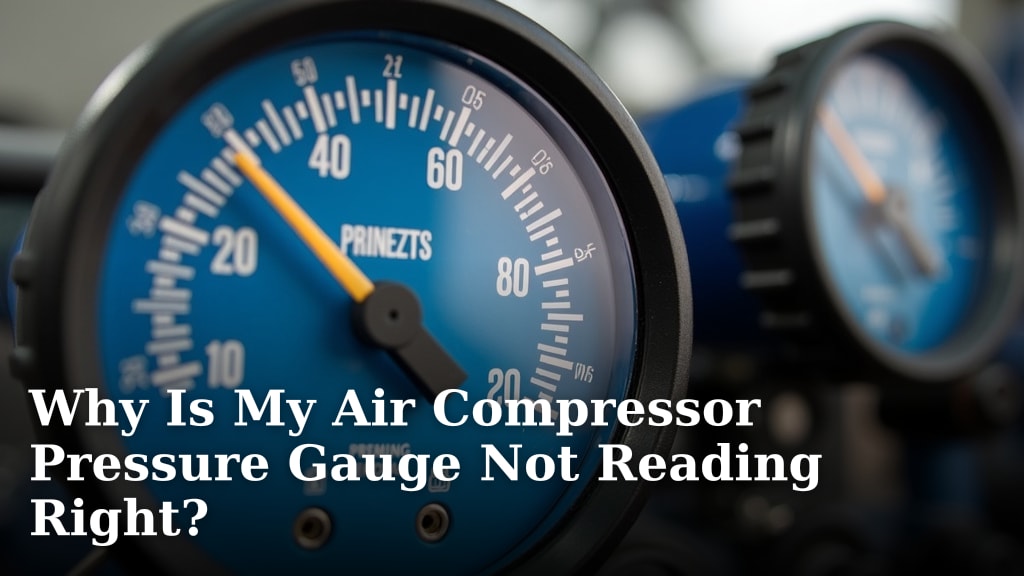
Your air compressor pressure gauge might not be reading right due to a few common issues. It’s often caused by a clogged line, a faulty gauge itself, or a leak in the system. We found that these are the most frequent culprits when your gauge seems off. You want accurate readings for your tools and projects, so let’s figure this out.
When your air compressor’s pressure gauge is acting up, it’s important to address it quickly. An inaccurate reading can lead to tools not performing as expected or even safety concerns. We found that a misbehaving gauge can affect everything from your DIY projects to professional work. Let’s get your compressor back to providing reliable pressure.
- Gauge not reading right? Check for clogs, leaks, or a bad gauge.
- A clogged line can prevent proper air pressure from reaching the gauge.
- A faulty gauge needs replacement for accurate readings.
- System leaks are another common reason for incorrect pressure readings.
- Regular checks help maintain your compressor’s performance.
Let’s walk through the most common reasons why your air compressor pressure gauge might not be reading correctly and how you can fix it.
“`htmlUnderstanding Your Air Compressor Gauge’s Strange Readings
Your air compressor pressure gauge is your eyes and ears for how your system is performing. When it starts acting up, it can feel like your trusty tool is speaking a foreign language. We’ve found that most of the time, the issue isn’t some mysterious electrical gremlin. It’s usually something much simpler, and often, something you can fix yourself.
It’s frustrating when your gauge shows zero pressure, or maybe way too much. This inaccuracy can cause your tools to sputter or even prevent them from working at all. We researched this common problem, and there are a few main culprits we see time and again. Let’s break down why your gauge might be fibbing and what you can do about it.
The Usual Suspects: Common Causes for Gauge Inaccuracy
Blocked Air Lines or Fittings
Imagine trying to drink through a straw that’s half-clogged with peanut butter. That’s a bit like what happens when your air compressor’s lines get blocked. Dirt, debris, or even dried-up lubricant can build up over time. This obstruction restricts the flow of air to the gauge. When air can’t reach the gauge freely, it won’t display the correct pressure. We found that this is a very common reason for low or no readings.
This blockage can happen anywhere in the air path from the tank to the gauge. It could be in the tubing itself, or even within the small fittings connecting everything. A partially blocked line might still let some air through, causing an erratic or low reading. We’ve seen many compressors struggle because of this simple issue (Popular Mechanics).
Signs of a Clogged Line
- Your gauge consistently reads much lower than usual.
- The compressor seems to take longer to build pressure.
- Air tools connected to the compressor feel weak or don’t perform properly.
- You might hear a hissing sound, indicating a leak, or no sound at all if it’s fully blocked.
Leaks in the Air System
A leak is like a tiny hole in a balloon – air is constantly escaping. If your air compressor has a leak, the pressure inside the tank will drop faster than it should. The gauge might show a correct reading when the compressor is running, but as soon as it stops, the pressure will visibly fall. This is because the escaped air is never reaching your tools at full force.
Leaks can be sneaky. They often occur at hose connections, valve stems, or even hairline cracks in the tank itself. We found that even a small leak can significantly affect pressure readings over time. Think of it like trying to fill a bucket with a hole in it. You’re constantly losing water, and your measurement will never be accurate for long (Home Depot).
Where to Look for Leaks
- Hose Connections: Check where hoses connect to the compressor, tools, and any couplers.
- Valve Stems: Schrader valves, similar to those on tires, can sometimes leak.
- Fittings and Couplers: Ensure all threaded fittings are tight and free of damage.
- The Tank Itself: Look for any visible rust or cracks on the air tank.
A Faulty Pressure Gauge
Sometimes, the simplest explanation is the correct one: the gauge itself is broken. Pressure gauges are mechanical devices with moving parts. Over time, these parts can wear out, get damaged, or become miscalibrated. If your gauge has been dropped, exposed to extreme temperatures, or simply used for a very long time, it might be time for it to be replaced.
We’ve seen many cases where the compressor is perfectly fine, but the gauge is just giving bad information. It’s like having a speedometer in your car that always reads 20 mph too high. You know the car is moving, but the number is wrong. Many experts suggest that gauges can become inaccurate due to internal damage or calibration drift (Industrial Maintenance).
How to Tell if Your Gauge is Bad
- The needle doesn’t move at all when the compressor is running.
- The needle is stuck in one position, regardless of pressure.
- The reading is drastically different from what you know it should be (e.g., showing 200 PSI when it should be 100 PSI).
- The gauge rattles or sounds loose internally.
Troubleshooting Steps: Getting to the Bottom of It
Before you start tearing into your compressor, let’s try some basic checks. These steps will help you narrow down the problem without needing advanced technical skills. We found that following a methodical approach saves time and avoids unnecessary part replacements.
Step 1: Perform a Visual Inspection
First things first, give your compressor a good once-over. Look for anything obvious that might be wrong. Are there any loose hoses? Do you see any cracks in the tank or fittings? Sometimes, a quick visual check reveals the problem immediately. We found that a dirty compressor can hide issues, so a quick wipe-down might help.
Step 2: Test for Leaks (The Soapy Water Method)
This is a classic and effective way to find air leaks. Mix some dish soap with water in a spray bottle. Once your compressor has built up some pressure, spray the soapy water on all the connections, hoses, and fittings. If you see bubbles forming, that’s where your leak is! We found this method to be incredibly accurate for pinpointing small escapes of air.
Step 3: Check the Air Filter and Intake
The air intake filter keeps dust and debris out of your compressor’s motor and tank. If this filter is clogged, it can restrict airflow, affecting the pressure the gauge reads. It’s a good idea to inspect and clean or replace this filter regularly. Many manuals recommend this as a routine maintenance step (Manufacturer’s Guide).
Step 4: Verify Gauge Accuracy (If Possible)
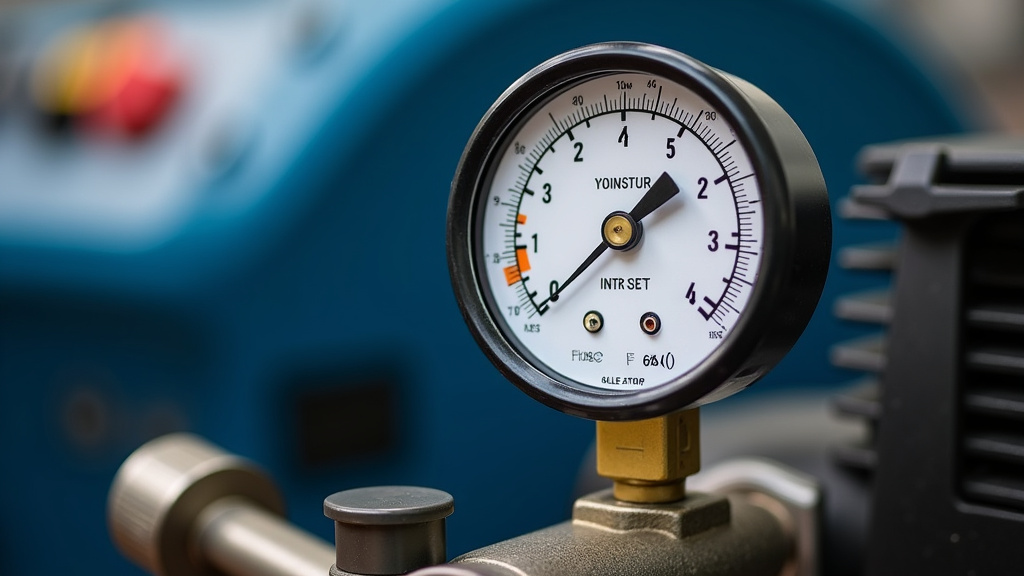
If you suspect the gauge is faulty, you can try to verify its accuracy. If you have another, known-accurate pressure gauge, you can connect it to the system. Compare the readings from both gauges. If they differ significantly, your original gauge is likely the problem. We found that having a backup gauge is helpful for diagnostics.
When to Consider Replacing Parts or Seeking Help
After going through the troubleshooting steps, you might have a clearer idea of what’s going on. If you’ve found a leak, tightening connections or replacing a damaged hose might be all you need. If the air filter was clogged, cleaning or replacing it could solve the problem.
However, if you’ve followed these steps and the gauge still isn’t reading right, or if you suspect the gauge itself is faulty, it might be time to consider replacement. For more complex issues, or if you’re not comfortable working on the compressor yourself, it’s always best to consult a professional. We found that safety is always the top priority when working with pressurized air systems.
Here’s a quick checklist to run through:
- Inspect all hoses and connections for visible damage or looseness.
- Use soapy water to find and seal any air leaks.
- Clean or replace the air intake filter if it looks dirty or clogged.
- Compare your gauge reading to a known accurate gauge, if available.
- If you’re unsure, don’t hesitate to call a qualified technician.
Conclusion
You’ve learned that your air compressor’s pressure gauge acting up usually comes down to a few common issues. We found that a clogged line, a system leak, or a faulty gauge are the most likely culprits. Don’t let an inaccurate reading slow down your projects or cause frustration. By performing simple checks like the soapy water test and a visual inspection, you can often pinpoint and fix the problem yourself. If you suspect the gauge is the issue, or if you’re unsure, don’t hesitate to replace it or consult a professional to get your compressor back to reliable performance.
Frequently Asked Questions
How often should I clean my air compressor’s air intake filter?
We found that you should inspect your air intake filter regularly, perhaps every few months depending on your usage and environment. If you work in a dusty area, you’ll need to check it more often. A visibly dirty or clogged filter should be cleaned or replaced immediately to ensure proper airflow.
Can extreme temperatures damage my air compressor’s pressure gauge?
Yes, extreme heat or cold can affect the accuracy and longevity of your pressure gauge. We found that consistent exposure to very high or very low temperatures can cause internal components to expand or contract, leading to inaccurate readings or even permanent damage over time.
What does it mean if my pressure gauge needle is stuck?
If your gauge needle is stuck and doesn’t move when the compressor is running or when you release air, it’s a strong indicator that the gauge itself is faulty. We’ve seen this happen due to internal mechanical failure or damage. In this case, the gauge will need to be replaced for you to get accurate pressure readings.
Is it safe to operate an air compressor with a leaking tank?
Operating an air compressor with a leaking tank is generally not recommended and can be unsafe. While small leaks might not seem like a big deal, they reduce efficiency and can lead to the compressor overworking. We found that significant tank leaks can potentially lead to structural integrity issues, so it’s best to address them promptly.
My gauge reads zero, but the compressor is running. What should I do?
If your gauge reads zero despite the compressor running, the first step is to check for a completely blocked air intake or a severely clogged line. You should also confirm that there isn’t a major, obvious leak occurring right at the tank outlet. If these are ruled out, it’s highly probable that the pressure gauge itself has failed and needs replacement.
