
Can You Hook 2 Air Compressors Together?
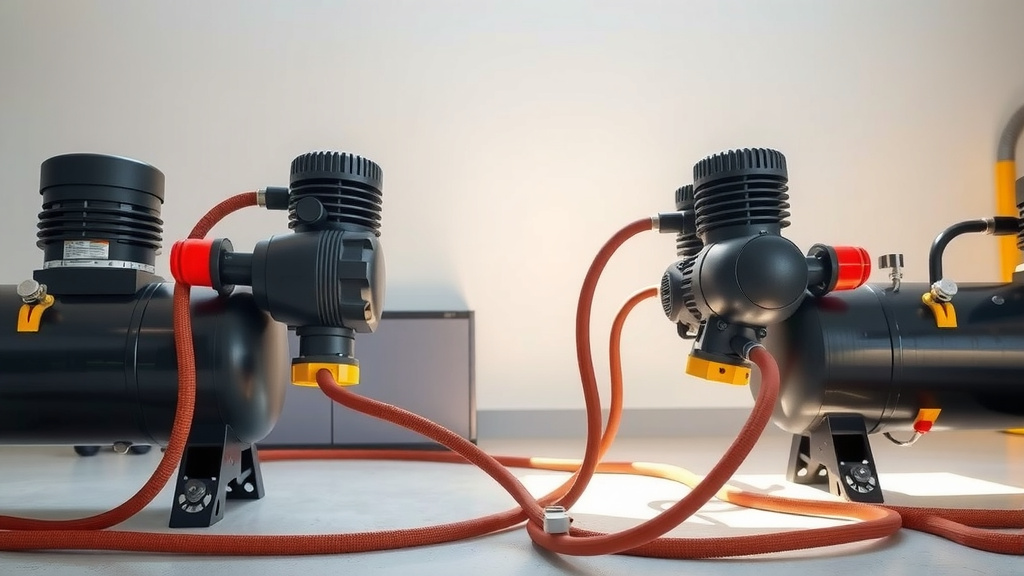
Yes, you can absolutely hook 2 air compressors together to increase your overall air capacity or pressure for demanding tasks.
Combining them requires careful planning and the right connections to ensure safe and efficient operation.
Here’s a quick summary of what you’ll find in this guide:
- Connecting two air compressors is possible and often beneficial.
- You can gain more air volume (CFM) or higher pressure (PSI).
- Proper check valves, pressure relief valves, and hoses are a must.
- Match compressor types and pressure settings for the best results.
- Always prioritize safety and follow installation guidelines.
Can You Hook 2 Air Compressors Together?
Yes, you certainly can hook two air compressors together to achieve more power and volume for your projects. This setup can give you the extra muscle you need for tougher jobs.
Why Even Think About Combining Compressors?
You might wonder, “Why go through the trouble of connecting two compressors?” The answer often comes down to needing more air than a single unit can provide. It’s like having two sets of lungs instead of one when you’re doing heavy lifting.
More Air Volume (CFM)
Many air tools, especially sandblasters or paint sprayers, demand a lot of air volume, measured in Cubic Feet per Minute (CFM). When you link two compressors, you can essentially double your available CFM, allowing these tools to run longer and more efficiently without pausing for the compressor to catch up.
Higher Pressure (PSI)
While less common, some specialized tasks might need sustained high pressure (PSI). By connecting compressors in certain ways, you could potentially achieve slightly higher or more consistent pressure, preventing drops during heavy use. However, for sheer pressure, a single, high-PSI unit is usually better.
Better Redundancy
Imagine one compressor fails during a critical project. If you have two hooked up, you might still finish the job using the remaining unit. This provides a nice safety net, especially for professional workshops.
What You Need to Know Before Connecting
Before you grab your wrenches, a little homework can save you a big headache. Think of it as planning your road trip before hitting the highway.
Matching Your Compressors
Ideally, you want to connect two compressors that are similar in size and power. We found that pairing units with similar CFM, PSI, and tank sizes makes the system much more balanced. Mixing very different sizes can sometimes lead to the larger unit doing most of the work.
Safety First: Pressure Relief Valves
Every air compressor has a pressure relief valve, which is a vital safety device. When connecting two, you must ensure both valves are in good working order. Many experts say you should not rely on one valve for two tanks; each tank needs its own proper relief valve (OSHA guidelines often reinforce this for safe operation).
Check Valves Are Your Friends
A check valve lets air flow in one direction only. This is super important when connecting compressors. It stops air from one tank flowing back into the other compressor when it’s off or has lower pressure. Research shows that installing check valves on each compressor’s output line is a must.
Understanding the Core Components for Connection
Connecting compressors isn’t just about hoses. You’ll need a few key pieces of hardware to make it work safely and effectively.
You’ll likely need a manifold or a “T” connector to join the air outputs, along with high-pressure hoses and quick-connect couplers. Pressure regulators are also important to ensure both units contribute evenly.
Step-by-Step: How to Link Your Compressors
Ready to get started? Here’s a simplified guide to get your dual compressor system up and running.
- Prepare the Compressors: Ensure both units are off and unplugged. Drain any condensation from their tanks.
- Connect the Hoses: Attach a high-pressure hose to the output port of each compressor.
- Install a Manifold: Use a manifold (or a sturdy T-connector) to join the two hoses into one common output line. Make sure it’s rated for the pressure you’ll be using.
- Set Pressure Regulators: Adjust the pressure regulator on each compressor to the desired working PSI. Try to match them closely.
- Test Everything Carefully: Turn on one compressor, let it fill, then the second. Listen for leaks and observe the pressure gauges.
Serial vs. Parallel Connection: Which Is Right?
There are two main ways to think about hooking up compressors, though parallel is far more common for increasing volume.
A parallel connection combines the outputs into a single line, effectively increasing the total air volume. A serial connection, where one compressor feeds into the other, is generally not recommended as it can stress the first compressor and doesn’t offer significant advantages for typical uses.
| Connection Type | What It Does | Common Use |
|---|---|---|
| Parallel | Combines air outputs from both units into one line. | Increases overall air volume (CFM) for demanding tools. |
| Serial | Air from one compressor feeds into the intake of the second. | Generally not recommended; can cause issues. |
Potential Pitfalls and How to Avoid Them
Like any DIY project, connecting air compressors has its quirks. Being aware of potential problems helps you steer clear of them.
Pressure Imbalance
If one compressor fills faster or has a higher cut-out pressure, it might cycle on and off more often. This can lead to uneven wear. We found that matching pressure settings closely helps prevent this.
Overheating Issues
Running two compressors in a small, unventilated space can cause both units to overheat. Ensure you have proper airflow around each compressor to keep them cool, just like you would with a single unit.
Electrical Overload
Two compressors draw more power than one. Always verify your electrical circuit can handle the combined load. Many experts say that dedicating each compressor to its own circuit is the safest approach, if possible.
Optimizing Your Dual Compressor Setup
Once connected, how do you make sure your twin-engine air setup runs smoothly? A little ongoing care goes a long way.
Consider adding an automatic drain valve to your system to handle condensation. Regularly check all connections for leaks. A small leak can make your compressors work much harder than they need to, wasting energy.
When is One Compressor Enough?
For many everyday tasks, a single, appropriately sized air compressor is perfectly fine. Tire inflation, nailing, or small spray painting jobs typically don’t require the CFM of two combined units. Only consider linking two when your single unit genuinely struggles to keep up.
Important Safety Checklist for Dual Compressors
Safety always comes first when working with pressurized air. Use this checklist as a quick guide.
- Confirm all check valves are properly installed and working.
- Ensure all hoses and fittings are rated for your system’s maximum pressure.
- Double-check that all electrical connections are secure and appropriate for the load.
- Maintain a clear, well-ventilated workspace around both compressors.
- Regularly inspect pressure gauges and relief valves for correct operation.
- Never exceed the maximum rated pressure of either compressor or any component.
Conclusion
Connecting two air compressors is a smart way to boost your air supply for tougher projects. While it offers great benefits in terms of increased CFM and operational flexibility, remember that careful planning, proper components, and a strong focus on safety are essential. Take your time, get the right parts, and you’ll have a powerful, reliable air system ready for action.
FAQ: Is it better to run two smaller compressors or one large one?
For most uses, one large compressor often offers better efficiency and less complexity than running two smaller ones. However, two smaller units provide redundancy and can be easier to move around. The “best” option depends on your specific needs, budget, and portability requirements.
FAQ: Do both compressors need to be the same brand?
No, your compressors do not need to be the same brand. What’s more important is that they have similar specifications, particularly in terms of CFM, PSI ratings, and tank sizes, to ensure balanced operation.
FAQ: How do I know if my electrical system can handle two compressors?
You need to calculate the combined amperage draw of both compressors and compare it to the amperage rating of your circuit breaker and wiring. If the total draw exceeds about 80% of the circuit’s capacity, you likely need a separate circuit or an electrical upgrade. Consult an electrician if you’re unsure.
FAQ: Can I connect a gas-powered and an electric air compressor?
While technically possible, it’s generally not recommended due to different operating characteristics and potential complications with managing their power sources and controls. It’s usually simpler and safer to combine two similar electric or two similar gas-powered units.
FAQ: What PSI should I set if my compressors have different maximums?
You should set both compressors to a pressure that is at or below the lowest maximum PSI rating of either unit. This prevents over-pressurizing the weaker compressor’s tank and ensures safe operation across your entire system.
