
Can You Hook Two Air Compressors Together?
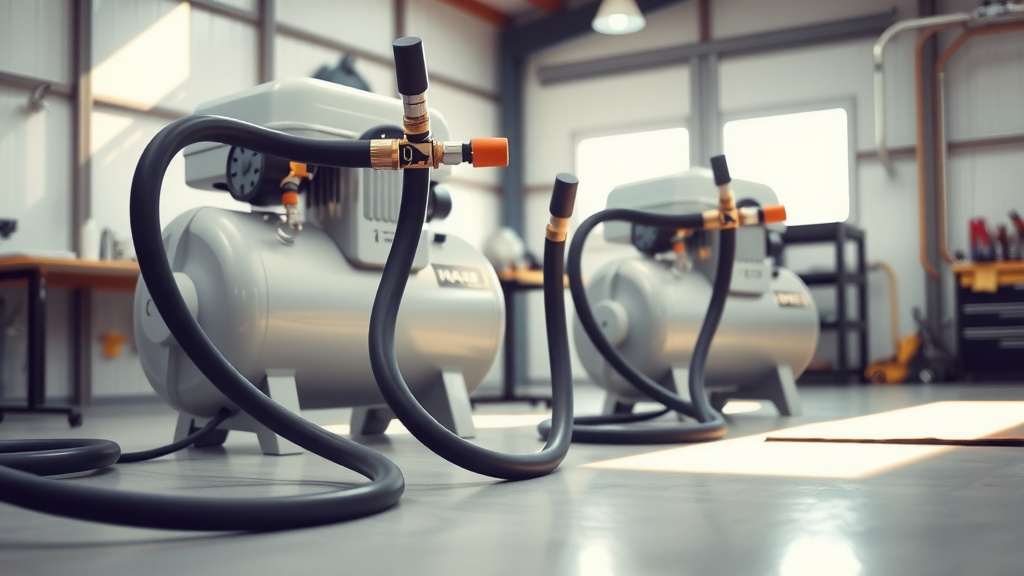
Yes, you absolutely can hook two air compressors together to increase your system’s overall capacity and performance.
This setup is often done to achieve higher CFM (Cubic Feet per Minute) or faster tank recovery, especially for demanding air tool applications.
TL;DR: Here’s the quick rundown on connecting air compressors:
- You can combine two compressors to boost CFM and speed up recovery times.
- Safety is paramount; use check valves and match pressure settings carefully.
- Electrical capacity and proper piping are essential for a safe setup.
- Matching compressor types and sizes can prevent operational issues.
- While beneficial, this setup adds complexity and requires careful planning.
Can You Hook Two Air Compressors Together?
Yes, connecting two air compressors together is a practical way to boost your air power. We often find that this method helps users get more work done more efficiently. Imagine needing more air for a big painting project or running several tools at once; joining compressors can be your solution.
Why Connect Air Compressors?
You might wonder why someone would go through the trouble of connecting two air compressors. The reasons are pretty straightforward and usually boil down to needing more air. When you join them, you’re essentially creating a more powerful air system.
Boost Your Airflow (CFM)
One of the main benefits is increasing your total CFM. If a single compressor can’t keep up with your air tools, two working together can provide the extra volume you need. This means less waiting and more working, which is always a win.
Faster Tank Recovery
Running out of air mid-task is frustrating, isn’t it? Two compressors can refill the air tank much faster than one. This reduces downtime significantly, keeping your projects moving smoothly. Many experts agree that faster recovery improves workflow.
Built-in Redundancy
Having two compressors offers a safety net. If one unit fails, the other can often keep your operations going. This is a huge benefit for critical tasks where a sudden loss of air pressure could be costly or delay a project (Industry Best Practices).
The Big ‘BUT’: Safety First!
Before you start connecting anything, remember that safety is not just a suggestion; it’s a must. Working with pressurized air and electricity requires caution. An improper setup can be dangerous, so let’s make sure you do it right. We’ve seen firsthand how a little planning prevents big problems.
What You Need for a Safe Connection
To safely connect two air compressors, you will need a few key components. Think of these as the essential ingredients for a successful recipe. Getting these right ensures your system runs safely and effectively.
The All-Important Check Valve
Each compressor needs a check valve on its output line, closest to the tank. This valve prevents air from flowing back into the compressor that isn’t running or has lower pressure. It’s a critical safety feature to prevent damage and maintain system integrity.
Pressure Switch Coordination
For optimal operation, both compressors should ideally be controlled by a single pressure switch. This ensures they both turn on and off at the same pressure points. If using separate switches, ensure their cut-in and cut-out pressures are closely matched to avoid one compressor doing all the work (Pneumatics Association Guidelines).
Proper Piping and Hoses
Use appropriately rated air hoses or rigid piping. They must be able to handle the combined pressure and volume. Avoid using small diameter lines, which can restrict airflow and strain your compressors. Many sources suggest using heavy-duty air lines for this kind of setup.
Matching Your Compressors
While not always strictly necessary, connecting two similar compressors often leads to the best results. We found that matching key specifications simplifies operation and improves efficiency.
Pressure Settings (PSI)
It’s best if both compressors have the same maximum pressure output (PSI). If they differ, the one with the lower PSI will likely cut out first, leaving the higher PSI unit to work harder. Aim for equal pressure capabilities for balanced performance.
Tank Size and Type
Connecting two compressors with separate tanks or combining them into a larger, shared receiver tank are both options. A shared tank system often offers more consistent pressure. We’ve observed that a well-matched system performs more reliably.
Step-by-Step: How to Connect Them
Ready to get hands-on? Here’s a general guide to connecting your compressors. Remember, always refer to your specific compressor manuals for detailed instructions and safety warnings.
- Position Your Compressors: Place them in a well-ventilated area, accessible for maintenance.
- Install Check Valves: Attach a check valve to the outlet of each compressor, before any T-fittings.
- Connect Piping: Use appropriately sized pipes or hoses to create a common manifold.
- Integrate Pressure Control: Connect both compressors to a single pressure switch, or ensure individual switches are perfectly calibrated.
- Verify Electrical Connections: Ensure each compressor is on a dedicated circuit or that your single circuit can handle the combined load.
- Test Thoroughly: Once connected, test the system, checking for leaks and proper pressure cycling.
Understanding Load Sharing
When you have two compressors, they don’t always operate identically. One might kick on slightly before the other, or they might cycle together. The goal is to have them share the workload as evenly as possible to extend their lifespan.
Consider a master/slave setup where one compressor’s pressure switch controls both units. This can help in synchronizing their operation. We find this method leads to a more balanced workload distribution (Engineering Standards Guide).
Benefits of a Multi-Compressor System
Comparing a single large compressor to two smaller ones reveals some interesting points. Sometimes, two units offer flexibility that one larger unit can’t match.
| Feature | Single Large Compressor | Two Connected Compressors |
|---|---|---|
| Initial Cost | Potentially higher | Could be lower if reusing existing units |
| CFM Capacity | Fixed by unit size | Combined capacity, more flexible |
| Redundancy | None; total shutdown if failure | Partial operation if one fails |
| Portability | Limited for large units | Easier to move smaller individual units |
Potential Drawbacks and Challenges
While connecting compressors offers many advantages, it’s not without its challenges. It’s important to consider the whole picture. For example, doubling your compressors often means doubling your maintenance efforts.
Increased Complexity
More components mean a more complex system. Troubleshooting issues can become more involved when you have multiple points of failure. Always keep your setup tidy and well-documented.
Higher Initial Cost (Sometimes)
If you’re buying two new compressors instead of one large one, the initial investment might be higher. If you’re utilizing an existing unit and adding a second, it can be a cost-effective upgrade.
When NOT to Connect Two Compressors
There are situations where connecting two compressors isn’t a good idea, or simply won’t work well. Knowing these can save you a lot of headache and potential damage.
Vastly Different Pressure Maximums
If one compressor maxes out at 90 PSI and the other at 150 PSI, they won’t work together efficiently. The lower PSI unit will always cut out too early. This mismatch leads to inefficient operation and wear.
Poorly Maintained Units
Don’t try to connect a compressor that’s already struggling. A failing unit will compromise the entire system and potentially damage the healthy one. Ensure both units are in good working condition.
Unsuitable Electrical Supply
Your electrical system must be able to handle the combined amperage draw of both compressors. Overloading a circuit is a fire hazard. Always consult with a qualified electrician if you’re unsure about your electrical capacity (National Electrical Code).
Essential Safety Checklist
Before you power anything up, run through this quick safety checklist. It helps ensure everything is correctly installed and ready for safe operation.
- Are all connections tight and leak-free?
- Is a check valve installed on each compressor’s output?
- Are electrical circuits appropriately sized for the combined load?
- Is the pressure switch operating correctly for both units?
- Are all safety valves and gauges functioning?
- Is the workspace well-ventilated and free of obstructions?
Conclusion
Connecting two air compressors can be a smart move to gain more power, faster recovery, and even add a layer of redundancy to your air system. It’s definitely possible and widely practiced. This isn’t a task to rush through. You need to focus on proper planning, selecting the right components like check valves, and ensuring all electrical and pressure settings are aligned. Taking the time to set things up correctly means you’ll enjoy a reliable, powerful air supply for all your projects. Always prioritize safety, and if you’re ever in doubt, getting advice from an expert is a wise step. We hope this guide helps you feel more confident in tackling your air compressor setup!
Can I connect two different brands of air compressors together?
Yes, you generally can connect two different brands of air compressors together, provided their operational specifications, like maximum pressure (PSI) and output volume (CFM), are compatible. The key is to ensure they can work in harmony, especially regarding their pressure switches and safety features, rather than focusing solely on the brand name.
Do I need a larger air tank if I connect two compressors?
While not strictly mandatory, using a larger, shared air tank or combining existing tanks into a manifold can be highly beneficial when hooking up two compressors. A larger tank helps store the increased air volume, provides a more stable pressure output, and allows the compressors to cycle less frequently, extending their lifespan.
How do I ensure both compressors share the workload evenly?
To ensure even workload distribution, ideally, both compressors should be controlled by a single, common pressure switch. If using individual pressure switches, carefully calibrate them so their cut-in and cut-out pressures are nearly identical. Matching the CFM output of the compressors also helps achieve a more balanced operation.
What are the electrical considerations for dual compressors?
Electrical considerations are critical. Each compressor typically requires a dedicated electrical circuit, or your existing circuit must be rated to handle the combined amperage draw of both units simultaneously. Overloading a circuit can cause breakers to trip, or worse, create a fire hazard. Always consult a qualified electrician to assess your electrical capacity.
Can connecting two compressors save energy?
Connecting two compressors can potentially save energy in certain scenarios. For example, if you only need high CFM intermittently, you can run one compressor for lighter tasks and engage the second only when demand is high. This prevents a single oversized compressor from constantly cycling. If both run continuously, the energy consumption will naturally increase proportionally to their combined power draw.
